417 results for: Indigenous Peoples
Photograph
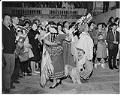
Makah tribal dancers at State Capitol building, Olympia, March 3, 1964
In the 1960s, Native Americans and their supporters began protesting Washington State laws restricting Native American fishing rights that had been granted in a series of treaties with the United States between 1854 and 1855. The Survival of the American Indian Society (SAIA), the NAACP, and the National Indian Youth Council (NIYC), coordinated a series of protests and peaceful demonstrations…
ID Number:1986.5.4415.2
Date:1964
Photograph
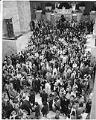
Crowd in rotunda at State Capitol building, Olympia, March 3, 1964
In the 1960s, Native Americans and their supporters began protesting Washington State laws restricting Native American fishing rights that had been granted in a series of treaties with the United States between 1854 and 1855. The Survival of the American Indian Society (SAIA), the NAACP, and the National Indian Youth Council (NIYC), coordinated a series of protests and peaceful demonstrations…
ID Number:1986.5.4415.3
Date:1964
Photograph
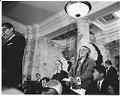
Native American men at State Capitol building, Olympia, March 3, 1964
In the 1960s, Native Americans and their supporters began protesting Washington State laws restricting Native American fishing rights that had been granted in a series of treaties with the United States between 1854 and 1855. The Survival of the American Indian Society (SAIA), the NAACP, and the National Indian Youth Council (NIYC), coordinated a series of protests and peaceful demonstrations…
ID Number:1986.5.4415.4
Date:1964
Photograph
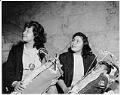
Native American women at State Capitol building, Olympia, March 3, 1964
In the 1960s, Native Americans and their supporters began protesting Washington State laws restricting Native American fishing rights that had been granted in a series of treaties with the United States between 1854 and 1855. The Survival of the American Indian Society (SAIA), the NAACP, and the National Indian Youth Council (NIYC), coordinated a series of protests and peaceful demonstrations…
ID Number:1986.5.4415.5
Date:1964
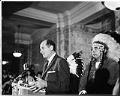
Photograph
Governor Rosellini at State Capitol building, Olympia, March 3, 1964
In the 1960s, Native Americans and their supporters began protesting Washington State laws restricting Native American fishing rights that had been granted in a series of treaties with the United States between 1854 and 1855. The Survival of the American Indian Society (SAIA), the NAACP, and the National Indian Youth Council (NIYC), coordinated a series of protests and peaceful demonstrations…
ID Number:1986.5.4415.7
Date:1964
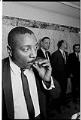
Photograph
Dick Gregory at Thurston County Superior Court, Olympia, November 20, 1966
Richard Claxton "Dick" Gregory (1932-2017) was a American comedian and civil rights activist who helped call attention to Washington State laws restricting Native American rights. The "fish wars" as they were known at the time, led to the Boldt Decision, a federal ruling guaranteeing Washington tribes half the state's salmon and catch.In this image Dick Gregory stands outside the courtroom…
ID Number:1986.5.4419.25
Date:1966
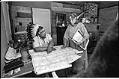
Photograph
Frank Allen and Esther Ross looking at map to plan tribal fish-in, 1968
Stillaguamish Chief Frank Allen and Esther Ruth Ross point to an area on map they say belongs to the Stillaguamish tribe. They are planning a fish-in to protest the tribe's loss of fishing rights on its ancestral lands. Handwritten on sleeve: INDIANS, Stillaguamish, Attempt to regain ancestral lands.Date photograph was published in the Seattle Post-Intelligencer: July 7, 1968.
ID Number:1986.5.4436.1
Date:1968
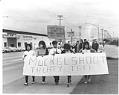
Photograph
Muckleshoot Treaty Trek in support of tribal fishing rights, 1966
In the 1960s, Native Americans and their supporters began protesting Washington State laws restricting Native American fishing rights that had been granted in a series of treaties with the United States between 1854 and 1855. The Survival of the American Indian Society (SAIA), the NAACP, and the National Indian Youth Council (NIYC), coordinated a series of protests and peaceful demonstrations…
ID Number:1986.5.4450.2
Date:1966
Photograph
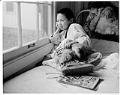
Young patient looking out of window at Firland Sanatorium, Seattle, December 1, 1954
Firland Sanatorium, Seattle’s municipal tuberculosis hospital, opened on May 2, 1911, to help combat what was at the time Seattle’s leading cause of death. Firland was located north of Seattle, on land donated by railroad magnate Horace C. Henry (1844-1928), whose son Walter had died of TB. The hospital served there until its move in 1947 to a former Naval…
ID Number:1986.5.9391.1
Date:1954
Photograph
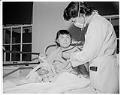
Doctor examining young patient at Firland Sanatorium, Seattle, December 1, 1954
Firland Sanatorium, Seattle’s municipal tuberculosis hospital, opened on May 2, 1911, to help combat what was at the time Seattle’s leading cause of death. Firland was located north of Seattle, on land donated by railroad magnate Horace C. Henry (1844-1928), whose son Walter had died of TB. The hospital sered there until its move in 1947 to a former Naval…
ID Number:1986.5.9391.2
Date:1954