233 results for: Animals
Photograph
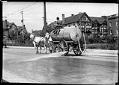
Street sprinkler, circa 1912
In 1913, Seattle had over 927 miles of streets, of which 179 were paved, 139 were planked with wood, and 609 were dirt. Starting in 1908, the city hired people to keep the streets clean and in good shape.In this photo, taken sometime between 1910 and 1914, a street washer drives his water wagon along a brick-paved street in a…
ID Number:1983.10.8655
Date:Circa 1912
Photograph
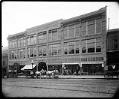
Sanitary Public Market, circa 1910
Seattle's Sanitary Public Market was built on First Avenue, near Pike Street, in 1909-1910. Some people said that the building got its name because horses were not allowed inside. The market building was destroyed by fire in 1941, and has since been rebuilt. This photo shows the Sanitary Public Market in about 1910. At that time, the street level of…
ID Number:1983.10.8707
Date:Circa 1910
Photograph
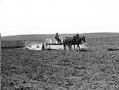
Horse-drawn equipment breaking up raw ground, circa 1913
Because of the "rain shadow" formed by the Cascade Mountains, eastern Washington is very dry. To create suitable farmland, farmers and engineers irrigated with water from the Yakima and other rivers.In this photo, a farmer drives his horse-drawn harrow to break up the ground for planting. Webster & Stevens number: 15984
ID Number:1983.10.8805.2
Date:1913
Photograph
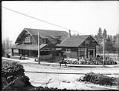
Mount Baker Clubhouse, Seattle, circa 1914
This photo shows the Mount Baker Clubhouse on South McClellan Street in Seattle. Handwritten on sleeve: Mt. Baker Club.Photographer's Reference Number: 16536
ID Number:1983.10.8910
Date:Circa 1914
Photograph
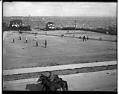
Boys playing baseball on Queen Anne High School playfield, Seattle, circa 1914
Handwritten on sleeve: Queen Anne H.S. Playfield & Baseball.Photographer's Reference Number: 16555
ID Number:1983.10.8918.2
Date:Circa 1914
Photograph
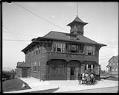
Fire Station No. 22, 1910
When Fire Station No. 22 was built on Seattle's Capitol Hill in 1909, it housed firemen and a horse-drawn hose wagon. The station's hilltop location was an advantage because the horses could easily race downhill to fires. A motor pumper replaced the horse-drawn hose wagon in 1924, and the old fire station was replaced by a new one on East…
ID Number:1983.10.8964
Date:1910
Photograph
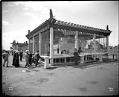
Bear cage at the Woodland Park Zoo, circa 1910
In 1899, Seattle bought Woodland Park and its small zoo from the Phinney family. Most of the animals were kept in cages with bars and concrete floors. Visitors could go right up to the cages and feed the animals.This photo shows the Woodland Park bear cage in about 1910. The city had received a gift of two bear cubs that…
ID Number:1983.10.8977
Date:Circa 1910
Photograph
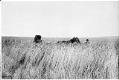
Man and buggy in wheat field, circa 1910
In 1907, twelve eastern Washington counties produced nearly 41 million bushels of wheat on land that was once open range. Some wheat farms produced up to 100 bushels of wheat per acre. Wheat was ground into flour or made into breakfast foods and other cereal products for both local and foreign tables. That year, wheat and wheat flour were Washington…
ID Number:1983.10.9042
Date:Circa 1910
Photograph
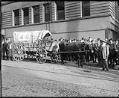
Ezra Meeker and his oxcart, 1912
In 1852, Ezra Meeker and his family came west by wagon over the Oregon Trail, eventually settling in the Puyallup Valley. As the years passed and cross-country travel became easier, Meeker worried that people wouldn't understand the hardships of the early settlers. Beginning at the age of 75, he made several trips across the Oregon Trail and urged its preservation.…
ID Number:1983.10.9471.1
Date:1912
Photograph
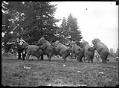
Sells-Floto Circus elephant, circa 1912
For a number of years, the Sells-Floto Circus played to standing-room-only audiences in Seattle. The company set up its tents near where Seattle Center is today, and kicked off its visit with a parade through the downtown area. The herd of elephants was particularly popular--and hungry. On May 31, 1910, the Seattle Times reported that "the peanut vendors did a…
ID Number:1983.10.9487
Date:Circa 1912