172 results for: Agriculture and Farms
Photograph
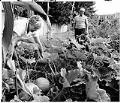
Sylvia Jones and Harold McElhoe working at Pinehurst P-Patch garden, Seattle, September 7, 1986
"P-Patch," a term specific to Seattle, refers to a parcel of property used for gardening allotments. The "P" originally stood for "Picardo," after the family that loaned its northeast Seattle farm for a community garden on property first leased and later bought by the city. In 1973 the City of Seattle bought the Picardo Farm property and created a community…
ID Number:2000.107.072.25.07
Date:1986
Photograph
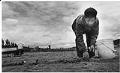
Yao Unaf Saeturn farming near Woodinville, July 21, 1982
The Indochinese Farm Project began in 1982 with 18 acres of land along the Sammamish River. Funded in part by King County and the Pike Place Market Preservation and Development Authority (Market PDA), the Indochinese Farm project was a joint project of the Washington State Commission on Asian American Affairs and Bethany Presbyterian Church. Through the project, refugees from Laos,…
ID Number:2000.107.110.16.04
Date:1982
Photograph
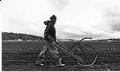
Shoua Chang working on her farm near Woodinville, 1984
The Indochinese Farm Project began in 1982 with 18 acres of land along the Sammamish River. Funded in part by King County and the Pike Place Market Preservation and Development Authority (Market PDA), the Indochinese Farm project was a joint project of the Washington State Commission on Asian American Affairs and Bethany Presbyterian church. Through the project, refugees from Laos…
ID Number:2000.107.110.16.05
Date:1984
Photograph
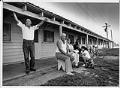
Joe Garza and others outside worker housing at Golding Farms, Yakima Valley, May 1989
The Braceros program during World War II brought Mexican workers to the Yakima Valley to ease labor shortages, and even after the program ended in 1948, Mexicans and Mexican Americans continued to provide a substantial part of the Valley’s agricultural workforce. By the 1980s, the Yakima Valley was home to large communities of Mexican immigrant workers, as well as their…
ID Number:2000.107.124.38.10
Date:1989
Photograph
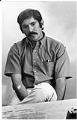
Roberto Trevino, Seattle, August 20, 1970
In this image, Roberto Trevino, a senior at University of Washington, discusses a summer voter registration drive for Mexican-Americans in Yakima Valley that he headed in his hometown of Granger, Washington. During this same period, Mr. Trevino, along with his brother Carlos Trevino and fellow student Guadalupe Gamboa, formed the first strike organizing committee in the hop fields of Yakima…
ID Number:2000.107.124.40.07
Date:1970
Photograph
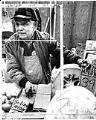
Andy Padua at Pike Place Market, Seattle, May 19, 1977
Andy Padua was a small farmer who ran a stall in Pike Place Market for more than 30 years. His stall sold onions, greens, and peppers. To his customers, Padua was known as “the Pepper Man,” due to the wide variety of peppers he grew. His peppers, winter melons, and ginger root were especially popular with Filipino and Chinese customers.…
ID Number:2000.107.137.19.02
Date:1977
Photograph
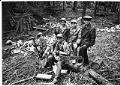
Thongdy family members clearing land for family farm, April 12, 1982
This image shows five members of the Thongdy family on an 85 acre plot of land they plan to turn into a farm. The Thongdys were from Cambodia, but the brutal Khmer Rouge regime forced them to flee. The family hid in the jungles for several months before escaping to Thailand. They spent several years in a refugee camp in…
ID Number:2000.107.151.05.01
Date:1982
Photograph
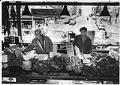
Footong Tsoy Saelee and Choi Saechao selling produce at Pike Place Market, Seattle, July 21, 1982
The Indochinese Farm Project began in 1982 with 18 acres of land along the Sammamish River. Funded in part by King County and the Pike Place Market Preservation and Development Authority (Market PDA), the Indochinese Farm project was a joint project of the Washington State Commission on Asian American Affairs and Bethany Presbyterian church. Through the project, refugees from Laos,…
ID Number:2000.107.151.05.02
Date:1982
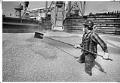
Photograph
Longshoreman spreading corn at Pier 86, Seattle, March 28, 1988
In 1970 the Port of Seattle spent millions of dollars finishing and upgrading container terminals, airport projects, and new property acquisitions to support what is a major contributor to regional economic growth. Seattle's grain exports were moved at the time to the $15 million Pier 86 Grain Facility in the Interbay neighborhood. This property replaced the Port’s Hanford Street Grain…
ID Number:2000.107.171.36.01
Date:1988
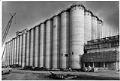
Photograph
Exterior of Pier 86 grain terminal, Seattle, January 6, 1970
In 1970 the Port of Seattle spent millions of dollars finishing and upgrading container terminals, airport projects, and new property acquisitions to support what is a major contributor to regional economic growth. Seattle's grain exports were moved at the time to the $15 million Pier 86 Grain Facility in the Interbay neighborhood. This property replaced the Port’s Hanford Street Grain…
ID Number:2000.107.171.37.01
Date:1970