1580 results for: City of Seattle
Photograph
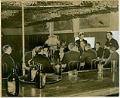
Jurors in coroner's inquest convening at speakeasy, Seattle, August 8, 1941
A deadly gun battle during an robbery attempt in Seattle left three men dead and seven more wounded on August 3, 1941, at a basement speakeasy at 410B Second Avenue. A coroner's jury was convened a few days later for the inquest into the killings. At the time, Seattleites had widely differing views over the city government's role in the…
ID Number:2000.107.174.16.02
Date:1941
Photograph
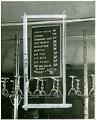
Price list displayed at Yukon Club, 87 Pike Street, Seattle, November 30, 1947
The repeal of federal prohibition in 1933 was not the end of laws controlling the sale and consumption of liquor in Seattle. Public support for prohibition had waned as liquor-related crime continued to increase and enforcement efforts continued to strain staff and budgets. However, regulating the manufacture and consumption of alcohol remained a regular part of the business of Seattle…
ID Number:2000.107.174.16.03
Date:1947
Photograph
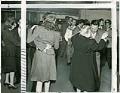
Patrons dancing during police raid at Yukon Club, Seattle, November 30, 1947
The repeal of federal prohibition in 1933 was not the end of laws controlling the sale and consumption of liquor in Seattle. Public support for prohibition had waned as liquor-related crime continued to increase and enforcement efforts continued to strain staff and budgets. However, regulating the manufacture and consumption of alcohol remained a regular part of the business of Seattle…
ID Number:2000.107.174.16.04
Date:1947
Photograph
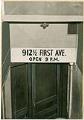
Entrance to the Stork Club, 912 1/2 1st Ave., Seattle, May 3, 1945
The repeal of federal prohibition in 1933 was not the end of laws controlling the sale and consumption of liquor in Seattle. Public support for prohibition had waned as liquor-related crime continued to increase and enforcement efforts continued to strain staff and budgets. However, regulating the manufacture and consumption of alcohol remained a regular part of the business of Seattle…
ID Number:2000.107.174.16.05
Date:1945
Photograph
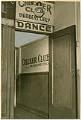
Entrance to the Checker Club, 1115 1/2 1st Ave., Seattle, May 3, 1945
The repeal of federal prohibition in 1933 was not the end of laws controlling the sale and consumption of liquor in Seattle. Public support for prohibition had waned as liquor-related crime continued to increase and enforcement efforts continued to strain staff and budgets. However, regulating the manufacture and consumption of alcohol remained a regular part of the business of Seattle…
ID Number:2000.107.174.16.06
Date:1945
Photograph
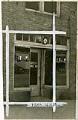
Entrance to the U&I Club, 1223 Jackson Street, Seattle, May 3, 1945
The repeal of federal prohibition in 1933 was not the end of laws controlling the sale and consumption of liquor in Seattle. Public support for prohibition had waned as liquor-related crime continued to increase and enforcement efforts continued to strain staff and budgets. However, regulating the manufacture and consumption of alcohol remained a regular part of the business of Seattle…
ID Number:2000.107.174.16.07
Date:1945
Photograph
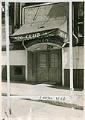
Entrance to the 420 Club, 420 2nd Ave., Seattle, May 3, 1945
The repeal of federal prohibition in 1933 was not the end of laws controlling the sale and consumption of liquor in Seattle. Public support for prohibition had waned as liquor-related crime continued to increase and enforcement efforts continued to strain staff and budgets. However, regulating the manufacture and consumption of alcohol remained a regular part of the business of Seattle…
ID Number:2000.107.174.16.08
Date:1945
Photograph
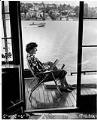
Marjorie Lothrop reading on houseboat docked on Lake Union, Seattle, July 16, 1952
The unique floating homes of Seattle got their start almost simultaneously with the development of the city itself. Seattle's first industries were logging and fishing, both seasonal enterprises, and it became common for loggers and sailors to build themselves floating shacks from scrap boards during their off seasons. As the trend spread, houseboats were built as permanent homes for families…
ID Number:2000.107.176.17.01
Date:1952
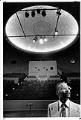
Photograph
Steve Sneed viewing restoration at Langston Hughes Cultural Arts Center, Seattle, April 11, 1993
In 1969 the City of Seattle used federal Model Cities funds to purchase a building for use as a community center, the Chevra Bikur Cholim Synagogue, which was designed in 1915 by B. Marcus Priteca (1889-1971) and located at 104 17th Avenue South in the Central District neighborhood. In 1971 the building became the home of what is now known…
ID Number:2000.107.176.29.01
Date:1993
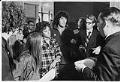
Photograph
Jeff Dowd and others at Mayor's office, July 8, 1970
The short-lived Seattle Liberation Front (SLF) was organized by University of Washington professor Michael Lerner in January 1970, after the disintegration of the Students for a Democratic Society (SDS) in 1969 left a leadership void among student-based antiwar and radical organizations. In February 1970, the group sponsored a protest that became violent at the Federal Courthouse in Seattle. Conspiracy charges…
ID Number:2000.107.176.30.04
Date:1970