416 results for: Clothing and Dress
Photograph
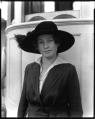
Woman aboard S.S. Tyrus Cook, circa 1918
This portrait of an unidentified woman was taken around the time of World War I. Handwritten on sleeve: S.S. Tyrus Cook.Webster & Stevens number: 66391
ID Number:1983.10.1270.1
Date:Circa 1918
Photograph
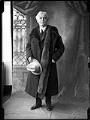
Ole Hanson posing in suit and fur stole, Seattle, circa 1919
Ole Hanson (1874-1940) was a man who packed multiple lives into one. He's best known in Washington for his role, as Seattle's mayor, in ending the city's General Strike of 1919, but he's also well known for founding the city of San Clemente, California, six years later. Though opportunistic and erratic, Hanson was a shrewd politician and realtor who left…
ID Number:1983.10.1760.2
Date:Circa 1919
Photograph
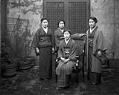
Japanese silk weavers, circa 1920
During the 1920s, millions of dollars of Japanese raw silk came through the port of Seattle on the way to mills in the eastern United States. From time to time, groups of Japanese businessmen and other Japanese citizens visited the city to promote the silk trade. In this photo, taken around 1920, four Japanese silk weavers in kimonos pose for…
ID Number:1983.10.1970.3
Date:Circa 1920
Photograph
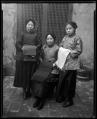
Women from the Chinese Silk Commission, circa 1920
Since the late 19th century, trade with China and other countries bordering the Pacific Ocean has been very important to Seattle. Over the years, various groups of people from these Asian nations have visited Seattle to promote their countries' products. In 1920, nearly 14 million dollars worth of Chinese goods came through Washington ports. This photo, taken about 1920, shows…
ID Number:1983.10.1971.1
Date:Circa 1920
Photograph
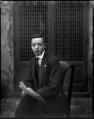
Chinese Silk Commission member, probably in Seattle, circa 1920
Since the late 19th century, trade with China and other countries bordering the Pacific Ocean has been very important to Seattle. Over the years, various groups of people from these Asian nations have visited Seattle to promote their countries' products. In 1920, nearly 14 million dollars worth of Chinese goods came through Washington ports. Handwritten on sleeve: Chinese Silk CommissionWebster…
ID Number:1983.10.1971.2
Date:Circa 1920
Photograph
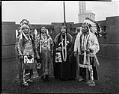
Two Yakama couples in traditional dress, Seattle, January 29, 1921
The Yakama (formerly spelled Yakima) people have lived in the Columbia River basin since time immemorial. During the winter, they lived in permanent villages built on the valley floor, where the climate was most temperate. Starting in spring, they traveled along the rivers and into the hills to gather food. Some gathered roots and berries, and others fished in rivers,…
ID Number:1983.10.2082.1
Date:1921
Photograph
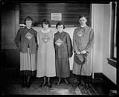
Paper clothes, circa 1921
Some ideas have trouble catching on. In the early 1920s, German and Austrian manufacturers showed off their paper clothing and accessories in Seattle. The clothing was not very stylish, compared with other clothing of the time. On the other hand, it might have been an interesting and inexpensive new product idea for Seattle's wood products industry to investigate. In this…
ID Number:1983.10.2113.2
Date:Circa 1921

Photograph
Model wearing a bathing suit, circa 1921
In 1921, Seattle's Saxony Knitting Company made bathing suits, sweaters, scarves, stockings, and other knitted products. At that time, bathing suits were usually made of wool. This photo, taken about 1921, is probably one of Webster & Stevens' advertising photos. The model is wearing the latest style in early 1920s beach wear. Webster & Stevens number: 85456
ID Number:1983.10.2122.3
Date:Circa 1921
Photograph
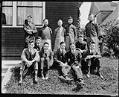
Chinese group, University of Washington, May 1921
On May 23 through 28, 1921, Seattle's Chinese residents held a week-long carnival to raise money for the Chinese Famine Fund, which was raising money for the those impacted by famine in northern China. The event was called Go-Hing and was sponsored by the China Club, Chinese consul Goon Dip, and an advisory committee of Seattle and Washington state civic…
ID Number:1983.10.2190
Date:1921
Photograph
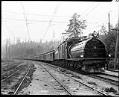
Chicago, Milwaukee, and St. Paul Railroad silk train, circa 1921
By the end of the 1920s, the single most valuable import coming through Seattle was Japanese silk. This luxury material came to Seattle on fast steamships and was sent by express train to eastern markets. Because it was both expensive and perishable, silk needed to be handled very carefully. One train carried a cargo of silk valued at $5 million.…
ID Number:1983.10.2199.1
Date:Circa 1921