1951 results for: ACT-UP/Seattle
Ephemera
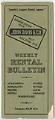
Weekly Rental Bulletin, Seattle, April 21,1928
Born in Wisconsin and raised there and in Walla Walla, Washington, John Davis (1863-1917) moved to Seattle in 1887 where he founded his eponymous real estate brokerage. Following the panic of 1893, Mr. Davis expanded into property management, mortgages, loans, and insurance sales. The company grew steadily into one of the largest real estate corporations on the West Coast, and…
ID Number:1984.142.2
Date:1928
Videorecording
Oral history interview with Alfred Schweppe, April 1985, January 1986
Alfred J. Schweppe (1895-1988) came to Seattle from Minnesota as a young lawyer. At age 31, he became dean of the University of Washington School of Law, and three years later, opened a private practice. In 1933 Schweppe, who was instrumental in drafting the State Bar Act, served as the first executive secretary of the newly formed Washington State Bar…
ID Number:1985.135.24
Date:1985
Photograph
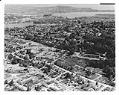
Aerial view, looking northeast, of the construction of Interstate 5, Lakeview Boulevard section, Seattle, circa 1958
The 1956 Federal-Aid Highway Act kicked off the Interstate construction program. Completed in the 1960s, Interstate-5 (I-5), of which the Tacoma-Seattle-Everett Freeway forms a part, is the only Interstate highway running from Canada to Mexico. Written on sleeve: HIGHWAYS, Freeway, Seattle, right-of-way, Lakeview BLVD. section, airview Date photograph was filed at the Seattle Post-Intelligencer (date of photograph and file date…
ID Number:1986.5.3992.1
Date:Circa 1958
Photograph
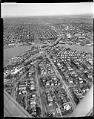
Aerial of freeway bridge under construction, Seattle, 1959
This aerial view shows the initial construction phase of the Tacoma-Seattle-Everett Freeway that was to become Interstate 5 (I-5). Bridge piers stand on either side of the Lake Washington Ship Canal. The University Bridge sits to the right of the new piers, which were used to construct a 4,429-foot-long bridge completed in fall 1961. Construction of the Tacoma-Seattle-Everett freeway, which…
ID Number:1986.5.3998.1
Date:1959
Photograph
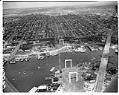
Aerial view looking north from the freeway bridge under construction, Seattle, 1959
This aerial view shows construction phase of the Tacoma-Seattle-Everett Freeway that was to become Interstate 5 (I-5). Bridge piers stand on either side of the Lake Washington Ship Canal. The 4,429-foot-long bridge completed in fall 1961.Construction of the Tacoma-Seattle-Everett freeway, which opened to traffic in December 1962, took up 6,600 parcels of land, 4,500 of them in Seattle. In 1958-59,…
ID Number:1986.5.4000.2
Date:1959
Photograph
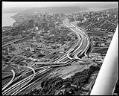
Aerial of freeway construction, Seattle, 1967
This aerial view shows the construction of the Tacoma-Seattle-Everett Freeway that was to become Interstate 5 (I-5). Construction of the Tacoma-Seattle-Everett freeway, which opened to traffic in December 1962, took up 6,600 parcels of land, 4,500 of them in Seattle. In 1958-59, the Washington State Highway Department paid homeowners fair market value for their homes, then auctioned the buildings for…
ID Number:1986.5.4077.1
Date:1967
Photograph
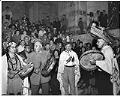
Makah tribal dancers at State Capitol building, Olympia, March 3, 1964
In the 1960s, Native Americans and their supporters began protesting Washington State laws restricting Native American fishing rights that had been granted in a series of treaties with the United States between 1854 and 1855. The Survival of the American Indian Society (SAIA), the NAACP, and the National Indian Youth Council (NIYC), coordinated a series of protests and peaceful demonstrations…
ID Number:1986.5.4415.1
Date:1964
Photograph
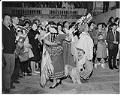
Makah tribal dancers at State Capitol building, Olympia, March 3, 1964
In the 1960s, Native Americans and their supporters began protesting Washington State laws restricting Native American fishing rights that had been granted in a series of treaties with the United States between 1854 and 1855. The Survival of the American Indian Society (SAIA), the NAACP, and the National Indian Youth Council (NIYC), coordinated a series of protests and peaceful demonstrations…
ID Number:1986.5.4415.2
Date:1964
Photograph
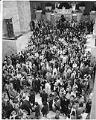
Crowd in rotunda at State Capitol building, Olympia, March 3, 1964
In the 1960s, Native Americans and their supporters began protesting Washington State laws restricting Native American fishing rights that had been granted in a series of treaties with the United States between 1854 and 1855. The Survival of the American Indian Society (SAIA), the NAACP, and the National Indian Youth Council (NIYC), coordinated a series of protests and peaceful demonstrations…
ID Number:1986.5.4415.3
Date:1964
Photograph
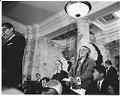
Native American men at State Capitol building, Olympia, March 3, 1964
In the 1960s, Native Americans and their supporters began protesting Washington State laws restricting Native American fishing rights that had been granted in a series of treaties with the United States between 1854 and 1855. The Survival of the American Indian Society (SAIA), the NAACP, and the National Indian Youth Council (NIYC), coordinated a series of protests and peaceful demonstrations…
ID Number:1986.5.4415.4
Date:1964