203 results for: Chinatown International District
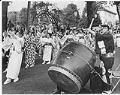
Photograph
Drummer and dancers at Bon Odori festival, Seattle, July 1977
During the summer of 1932, the Seattle Buddhist Church held the city's first Bon Odori festival. Bon Odori is a Japanese dance which is part of the observance of Obon, a Buddhist memorial service. The joyful dance, which celebrates the Buddhist tradition of selfless giving, expresses gratitude to departed family members. Over the years, the festival grew to include flower…
ID Number:2000.107.098.19.01
Date:1977
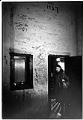
Photograph
Yoshiko Mita at stage door of old Nippon Kan Theater, Seattle, February 14, 1979
In this photo, Japanese actress Yoshiko Mita stands in the stage door of the old Nippon Kan (Japanese Hall) Theater on S. Washington Street in Seattle's Chinatown International District. The graffitied walls are covered with names and dates that predate WWII. Built with funds from the community, the theater opened in 1909, and served as the cultural center of Seattle's…
ID Number:2000.107.098.19.03
Date:1979
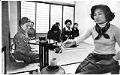
Photograph
Student practicing Japanese tea ceremony, Seattle, November 20, 1980
Here, tea ceremony teacher Yoshiko Kubota watches student Atsuko Murao pour water from a kettle to make a frothy green tea. Ms. Kubota's school at 525 S. Main Street in Seattle's Chinatown International District was based on the principles of tea articulated by Grand Master Shoshitsu Sen and the Urasenke Foundation of Kyoto. In a simple room designed specifically for…
ID Number:2000.107.098.19.05
Date:1980
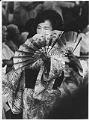
Photograph
Dancers at Bon Odori festival, Seattle, July 27, 1981
During the summer of 1932, Seattle's first Bon Odori festival was held by the Seattle Buddhist Church (Seattle Betsuin Buddhist Temple). Bon Odori is a traditional Japanese style of dancing performed during Obon, a Buddhist memorial service. The joyful dance celebrates selfless giving and expresses gratitude to departed family members and ancestors. Over the years, the annual event open to…
ID Number:2000.107.098.19.06
Date:1981
Photograph
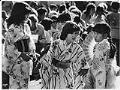
Dancers at Bon Odori festival, Seattle, July 24, 1982
During the summer of 1932, Seattle's first Bon Odori festival was held by the Seattle Buddhist Church (Seattle Betsuin Buddhist Temple). Bon Odori is a traditional Japanese style of dancing performed during Obon, a Buddhist memorial service. The joyful dance celebrates selfless giving and expresses gratitude to departed family members and ancestors. Over the years, the annual open-to-all event has…
ID Number:2000.107.098.19.09
Date:1982
Photograph
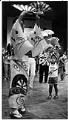
Kiki Hagimori instructs Corey Ojima for Bon Odori, Seattle, July 19, 1983
During the summer of 1932, Seattle's first Bon Odori festival was held by the Seattle Buddhist Church (Seattle Betsuin Buddhist Temple). Bon Odori is a traditional Japanese style of dancing performed during Obon, a Buddhist memorial service. The joyful dance celebrates selfless giving and expresses gratitude to departed family members and ancestors. Over the years, the annual open-to-all event has…
ID Number:2000.107.098.19.10
Date:1983
Photograph
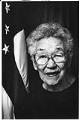
Kotaka Uomoto at Nisei Veterans Hall, Seattle, September 21, 1988
This photo shows Kotaka Uomoto posing in front of an American flag at the Nisei Veterans Hall in Seattle, where she participated in a twice-weekly nutrition program for Japanese senior citizens. Kotaka (1896-1993) and her husband Hyokichi Uomoto (1883-1965) arrived in Washington from Japan in 1916 and settled in Seattle. The couple had four sons: Yoshinori George (1919-2004), Kiyoshi Robert…
ID Number:2000.107.098.20.01
Date:1988
Photograph
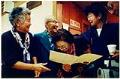
Kichisaburo Ishimitsu and friends at redress ceremony, Seattle, October 14, 1990
The Japanese American Redress Movement refers to the efforts, from the 1940s through the 1990s, to obtain the restitution of civil rights, monetary compensation, and an apology from the U.S. government for the forced removal and incarceration of Japanese Americans during World War II. Japanese Americans protested their mass incarceration with defiance and protests while living at the camps, and…
ID Number:2000.107.098.20.02
Date:1990
Photograph
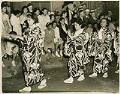
Dancers at Bon Odori festival, Seattle, August 2, 1936
During the summer of 1932, Seattle's first Bon Odori festival was held by the Seattle Buddhist Church (Seattle Betsuin Buddhist Temple). Bon Odori is a traditional Japanese style of dancing performed during Obon, a Buddhist memorial service. The joyful dance celebrates selfless giving and expresses gratitude to departed family members and ancestors. Over the years, the annual open-to-all event has…
ID Number:2000.107.098.20.03
Date:1936
Photograph
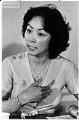
Elaine Ko speaking at press conference, Seattle, August 5, 1982
Elaine Ko (b. 1954) is a community activist in Seattle who has worked for decades on behalf of the Asian and Pacific Islander community, immigrants, refugees, women, and victims of domestic violence in the Puget Sound area. In 2006, Ko succeeded Bob Santos as Executive Director of the Inter*Im Community Development Association in Seattle's Chinatown - International District (previously the…
ID Number:2000.107.107.16.01
Date:1982