584 results for: Alaska
Photograph
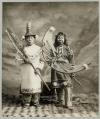
Tlingit man and woman in full potlatch costumes, Alaska, 1906
The Tlingit people have lived on the coast and islands of what is now southeastern Alaska since time immemorial. Tlingit society is organized into clans, which follow maternal descent. Fishing, gathering, and hunting were central to historic Tlingit lifeways – they used salmon, shellfish, seals, berries, deer, and other food sources. They used every part for different purposes, not wasting…
ID Number:SHS14102
Date:1906
Photograph
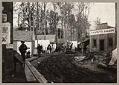
Street in Skagway during the gold rush, circa 1898
Gold seekers who were headed to the Klondike gold fields via White Pass landed in Skagway, Alaska. The weather and the conditions on the White Pass Trail were so bad that people sometimes got stuck in Skagway for several days before they could head north. Businesses in Skagway took advantage of this.This photo, taken around 1898 by Asahel Curtis, shows…
ID Number:SHS14112
Date:Circa 1898
Photograph
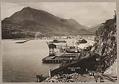
Rail wharves at Skagway, Alaska, circa 1899
By 1899, the port of Skagway had several large piers and a railroad line to Canada. This helped make Skagway, rather than Dyea, the main port of entry to the Yukon gold fields.This photo, probably taken around 1899, shows the rail wharves at Skagway. Freight and passengers could be unloaded here and loaded directly onto railroad cars for the trip…
ID Number:SHS14114
Date:Circa 1899
Photograph
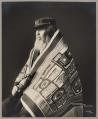
Chief Anotklosh of the Taku, Alaska, circa 1913
The Tlingit people have lived on the coast and islands of what is now southeastern Alaska since time immemorial. Tlingit society is organized into clans, which follow maternal descent. Fishing, gathering, and hunting were central to historic Tlingit lifeways – they used salmon, shellfish, seals, berries, deer, and other food sources. They used every part for different purposes, not wasting…
ID Number:SHS14163
Date:Circa 1913
Photograph
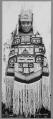
Tal Tan Billy, Alaska, circa 1898 - 1920
The Tlingit are a group of Indigenous peoples whose traditional home is on the coast of southeastern Alaska. The Tlingit, as well as neighboring groups, weave elaborate ceremonial blankets with abstracted images of animals. The blankets are called Chilkat blankets after one of the Tlingit tribes, and are traditionally worn during important events.The man in this photograph wears a woven…
ID Number:SHS14164
Date:Circa 1909
Photograph
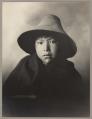
Tlingit boy wearing a woven hat, Sitka, circa 1915
The Tlingit people have lived on the coast and islands of what is now southeastern Alaska since time immemorial. Tlingit society is organized into clans, which follow maternal descent. Fishing, gathering, and hunting were central to historic Tlingit lifeways. They used salmon, shellfish, seals, berries, deer, and other food sources, making sure to use every part for different purposes, not…
ID Number:SHS14167
Date:Circa 1915
Photograph
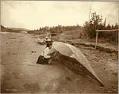
Native Alaskan woman working on a canoe by a river, circa 1909
Canoes need upkeep and repair in order to stay watertight. In this photo, an Native Alaskan woman works on the edge of her flat-bottomed craft by the side of a river. Two other canoes rest nearby on the beach. The wooden poles are probably used for drying fish. The location of the photograph is unknown, but it was most likely…
ID Number:SHS14168
Date:Circa 1909
Photograph
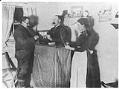
Weighing gold at the Jo Jo Hotel, circa 1900
During the Klondike and Nome gold rushes, gold dust and nuggets could be used to pay for almost anything: food, a hotel room, pack horses, a bottle of liquor, and many other business transactions.This photo shows two men weighing gold at the Jo Jo Hotel, probably so that the one on the left can have a room for the night.…
ID Number:SHS15038
Date:Circa 1900
Photograph
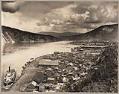
View of Dawson, Yukon Territory, circa 1898
Dawson, Yukon Territory, was wilderness in 1896. By 1898, so many Klondike stampeders had come to the area that Dawson was the largest city in Canada west of Winnipeg, Manitoba. At over 40,000 inhabitants, the crowded city was only slightly smaller than Seattle.This photo, taken around 1898, shows a general view of Dawson and its waterfronts on the Yukon (left)…
ID Number:SHS15451
Date:Circa 1898
Photograph
Portrait of Chin Yook-Nui, Seattle, circa 1925
This photograph shows Chin Yook-Nui (circa 1865-1946), the wife of prominent Chinese-American community leader, diplomat, and businessperson Goon Dip (circa 1862 -1933). Chin and Goon married in China in the late 1870s. At that time, Goon had previously lived in Portland, Oregon but returned to China for a few years. He moved back to Portland some time before 1882. Some…
ID Number:SHS15758
Date:Circa 1925