835 results for: Neighborhoods
Photograph
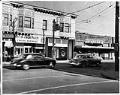
Cars passing through crosswalk at 15th and Republican, Seattle, April 15, 1951
In this image cars are shown at the intersection of 15th Avenue North and Republican Street, an intersection locals considered so dangerous due to the increase in motor traffic that they lobbied for a traffic light to replace the ineffective cross walk signal. Signs in image: Dugan's; Pittsburgh Paints, Child's Hardware; Helen's Professional Permanents; Holdsworth 10 cent storeCaption information derived…
ID Number:2000.107.190.06.03
Date:1951
Photograph
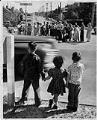
Children waiting to cross Lake Washington Blvd., Seattle, May 11, 1953
In this image three children hold hands as they wait for a car to pass before they cross Lake Washington Boulevard at 49th Avenue South. Parents, standing on the far side of the boulevard, met to protest the city's failure to put in a painted crosswalk at this spot, where three children were struck by a car on May 10,…
ID Number:2000.107.190.06.04
Date:1953
Photograph
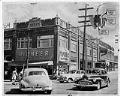
New traffic signal operating at 85th and Greenwood, Seattle, August 28, 1952
In this image a new type of traffic signal is tested by Seattle traffic engineering division at North 85th Street and Greenwood Avenue. In addition to the usual red, amber and green signals was added a glass column of green panels (indicated by added lettering). When the green signal was lit, the column at right also lit up green and…
ID Number:2000.107.190.06.06
Date:1952
Photograph
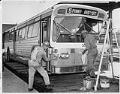
Workmen cleaning transit bus, Seattle, May 16, 1963
In this image, two transit workers clean the first of 100 new diesel buses while it is sitting on a Great Northern Railway flatcar. The new buses were intended to help improve Seattle Transit System (later Metro Transit) service to Seattle's north end neighborhoods. Caption information derived from captions written by Post-Intelligencer staff and attached to the back of the…
ID Number:2000.107.190.09.01
Date:1963
Photograph
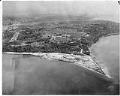
Aerial view of Fort Lawton and Magnolia, Seattle, April 24, 1964
In 1897, the city of Seattle donated land on Magnolia Bluff to the US government to build a new Army post as part of a defense system for Puget Sound; this was designated as Fort Lawton in 1900. During most of its active service, the fort served as an embarkation station where troops gathered before being sent to duty in…
ID Number:2000.107.216.25.01
Date:1964
Photograph
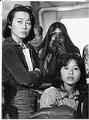
Elaine Ko and Shari Woo of the International District Housing Alliance at a meeting, July 18, 1977
In the late 1970s, the building of the Kingdome stadium put a great deal of development pressure on neighborhoods south of downtown Seattle that threatened to displace long-time residents. The International District Housing Alliance (now InterIm CDA) formed as a non-profit organization to organize residents to preserve affordable housing in their community.In this image, Alliance members Elaine Ko (left) and…
ID Number:2000.107.232.29.03
Date:1977
Photograph
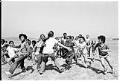
Children playing at day camp at Sand Point, August 1, 1973
In 1973 a free week-long day camp, sponsored by the Seattle Mayor's Youth Division and run by UW students, provided summer recreation for hundreds of economically disadvantaged Seattle children. At the camp, headquartered at the deactivated Sand Point Naval Air Station, the children got lots of active outdoor play, attended classes in drama and art, and went on field trips.…
ID Number:2000.107.19730801.1.14
Date:1973
Photograph
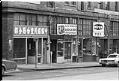
View of King Street businesses, Seattle, December 1973
This image shows storefronts in the West Kong Yick Building, located on South King Street between 7th Avenue South and Canton Alley (seen at far left). The West and East Kong Yick Buildings were constructed in 1910 by the Kong Yick Investment Company, which was made up of 170 investors from Chinese community around Seattle and led by Goon Dip.…
ID Number:2000.107.19731204.1.13
Date:1973
Photograph
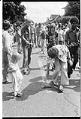
Central Area residents painting a red line down the middle of Roy Street to protest red-lining bank policies, August 17, 1975
In the mid-20th century, protesters began challenging long-established inequitable practices in housing. Racially restrictive housing covenants and discriminatory lending (“redlining”) excluded people of color from buying or renting housing in most of Seattle’s neighborhoods. Seattle passed an open housing law in 1968, making redlining illegal, but it often continued in secret and its effects have continued for decades. This photo,…
ID Number:2000.107.19750817.2.21A
Date:1975
Photograph
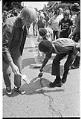
Central Area residents painting a red line down the middle of Roy Street to protest red-lining bank policies, August 17, 1975
In the mid-20th century, protesters began challenging long-established inequitable practices in housing. Racially restrictive housing covenants and discriminatory lending (“redlining”) excluded people of color from buying or renting housing in most of Seattle’s neighborhoods. Seattle passed an open housing law in 1968, making redlining illegal, but it often continued in secret and its effects have continued for decades. This photo,…
ID Number:2000.107.19750817.2.22A
Date:1975