234 results for: Northwest Coast Native Peoples
Photograph
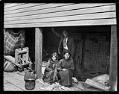
Native American family camping near the waterfront, circa 1912
Families from many different tribes camped along the Seattle waterfront, usually on their way to pick hops at inland farms. Before the area was filled with buildings and docks, they would tie up their canoes and pitch their tents along the shore.This photo shows a Native American family and their belongings at a building near the Seattle waterfront. Webster &…
ID Number:1983.10.9458
Date:Circa 1912
Photograph
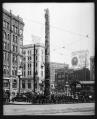
Totem pole at Pioneer Square, 1915
This Tlingit totem was carved around 1790 to honor a tribal woman named Chief-of-All-Women and it was placed in the village of Tongass on the Alaska coast. In 1899, a group of leading Seattle businessmen on a goodwill tour of southeastern Alaska stole the totem and brought it back to Pioneer Square. The businessmen were indicted for the theft, but…
ID Number:1983.10.10030.1
Date:1915
Photograph
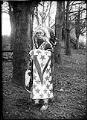
William Shelton posing in traditional garments, circa 1925
William Shelton (1868-1938) was a well-known leader of the Snohomish Tribe who lived on the Tulalip Reservation. Chief Shelton carved a number of story poles, with animals and creatures prevalent in the Coast Salish oral tradition. Among the many examples of his carving that survive today is a story pole on the State Capitol campus in Olympia.In this image Mr.…
ID Number:1983.10.10923.1
Date:Circa 1925
Photograph
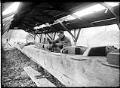
William Shelton carving a story pole, circa 1920
William Shelton (1868-1938), named Wha-ceh-dub or Whah-kay-dub in his native language of Lushootseed, was a cultural leader of the Snohomish and expert woodworker. During his lifetime, Indigenous people were confined to live on reservations and their children were taken to boarding schools. These schools prohibited Indigenous customs or languages in an attempt to “civilize” Indigenous children and eradicate their culture.…
ID Number:1983.10.10923.2
Date:Circa 1920
Photograph
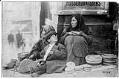
Indigenous family selling baskets in downtown Seattle, circa 1912
At the turn of 19th to 20th centuries, Indigenous artists in the Pacific Northwest were making baskets and carvings specifically for the tourist trade and were experimenting with form and design. Making baskets for sale became an important income source for many Indigenous families. In this photo, two women and a boy sit by their baskets on Second Avenue, outside…
ID Number:1983.10.PA2.1
Date:Circa 1912
Photograph
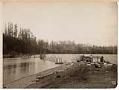
Salmon trap, circa 1911
For many years, Native Americans and others trapped migrating salmon by building wire mesh and net barriers across waterways. The fish were funneled into a trap and couldn't escape. Canneries ran traps too. Their boats regularly emptied the salmon traps and delivered the fish to the cannery. This method caught so many fish that salmon runs began to disappear. Salmon…
ID Number:1983.10.PA11.79
Date:Circa 1911
Photograph
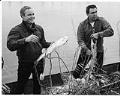
Marlon Brando and Bob Satiacum on Puyallup River, March 2, 1964
In the 1960s, Native Americans and their supporters began protesting Washington State laws restricting Native American fishing rights that had been granted in a series of treaties with the United States between 1854 and 1855. The Survival of the American Indian Society (SAIA), the NAACP, and the National Indian Youth Council (NIYC), coordinated a series of protests and peaceful demonstrations…
ID Number:1986.5.4414.1
Date:1964
Photograph
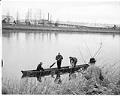
John Yaryan, Marlon Brando, and Bob Satiacum on Puyallup River, March 2, 1964
In the 1960s, Native Americans and their supporters began protesting Washington State laws restricting Native American fishing rights that had been granted in a series of treaties with the United States between 1854 and 1855. The Survival of the American Indian Society (SAIA), the NAACP, and the National Indian Youth Council (NIYC), coordinated a series of protests and peaceful demonstrations…
ID Number:1986.5.4414.5
Date:1964
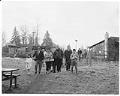
Photograph
Jack Tanner, Janet McCloud, and Marlon Brando on Puyallup Reservation, March 2, 1964
In the 1960s, Native Americans and their supporters began protesting Washington State laws restricting Native American fishing rights that had been granted in a series of treaties with the United States between 1854 and 1855. The Survival of the American Indian Society (SAIA), the NAACP, and the National Indian Youth Council (NIYC), coordinated a series of protests and peaceful demonstrations…
ID Number:1986.5.4414.6
Date:1964
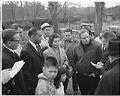
Photograph
Jack Tanner, Janet McCloud, and Marlon Brando on Puyallup Reservation, March 2, 1964
In the 1960s, Native Americans and their supporters began protesting Washington State laws restricting Native American fishing rights that had been granted in a series of treaties with the United States between 1854 and 1855. The Survival of the American Indian Society (SAIA), the NAACP, and the National Indian Youth Council (NIYC), coordinated a series of protests and peaceful demonstrations…
ID Number:1986.5.4414.7
Date:1964