134 results for: Lumber and Logging
Photograph
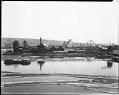
Bolcom Canal Lumber Company, Seattle, circa 1919
Lumber mills lined both sides of the Lake Washington Ship Canal near Ballard. Rafts of logs were floated to the mills, where they were cut into lumber. In this photo, taken in about 1919, log rafts float near the Bolcom Canal Lumber Company. Handwritten on sleeve: Ballard MillWebster & Stevens number: 96765
ID Number:1983.10.2476.3
Date:Circa 1919
Photograph
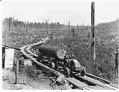
Kelly-Springfield truck hauling logs, circa 1925
Logging companies sometimes built railroads to haul logs out of the forest. Later, they used trucks. This photo was taken in the mid-1920s, somewhere in western Washington. A Kelly-Springfield logging truck hauls a large fir log along a track-like wooden logging road. Behind the truck are acres of cutover land. Wood was used for roads because it was cheap and…
ID Number:1983.10.3675.10
Date:Circa 1925
Photograph
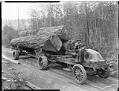
Kelly-Springfield truck hauling logs, circa 1925
By the late 1920s, many logging companies had started using trucks to haul logs out of the forest and down to the sawmill. This photo was taken in the mid-1920s, somewhere in western Washington.A Kelly-Springfield truck hauls a load of fir logs along a logging road. This photo was taken in the mid-1920s by Bellingham photographer J. Wilbur Sandison and…
ID Number:1983.10.3675.15
Date:Circa 1925
Photograph
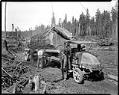
Kelly-Springfield logging truck, circa 1925
Logging companies sometimes built railroads to haul logs out of the forest. Later, they used trucks. This photo was taken in the mid-1920s, somewhere in western Washington. A Kelly-Springfield logging truck prepares to haul a large log along out of the forest. Original photo copied by Webster & Stevens. Handwritten on sleeve: Kelly Truck Co.Photographer's Reference Number: 131173
ID Number:1983.10.3675.16
Date:Circa 1925
Photograph
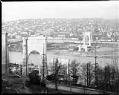
Aurora Bridge abutments, circa 1931
The Aurora Bridge stretches across the Lake Washington Ship Canal. The route of its approach road from the north was controversial. In spite of opposition, the road was build through the Aurora neighborhood and Woodland Park. This photo, taken about 1931, shows the supports of the Aurora Bridge under construction. Logs float near the lumber mill at the base of…
ID Number:1983.10.4971.70
Date:Circa 1931
Photograph
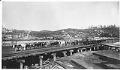
Oxen hauling logs along waterfront, Seattle, circa 1885
As Seattle grew, the hills above the city were gradually logged over. Oxen and railroads hauled the logs to the sawmills at the waterfront.This photo, taken in the 1880s, shows a long team of oxen hauling a train of huge logs along a trestle at the Seattle waterfront. It is believed to show the first load of logs carried by…
ID Number:1983.10.6232
Date:Circa 1885
Photograph
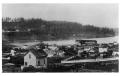
Western Mill and southern Lake Union, circa 1885
Pioneer David Denny owned the land south of Lake Union. In 1882, he opened the Western Mill on the lake's southern shore. A small community soon grew up around the lumber mill. By the end of the 1880s, streetcars and roads had been built as the area was settled.In this photo, taken around 1885 by Theodore Peiser, the Western Mill…
ID Number:1983.10.6380
Date:Circa 1885
Photograph
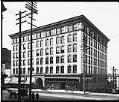
Lumber Exchange building, Seattle, circa 1911
The Lumber Exchange opened in 1903 by Seattle developer James A. Moore (1861-1929) to provide offices fo rthe growing lumber industry. Located at 119 Second Avenue, but building was demolished in 1990. Signs in image: The [L...er]. More Goods for the Same Money, The Same Goods for Less Money Than Elsewhere. Gymnasium, School. Lumber Exchange. Toklas, Singerman & Co. Max…
ID Number:1983.10.6676
Date:Circa 1911
Photograph
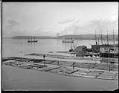
Waterfront from Moran's shipyard, circa 1900
Seattle's waterfront was busy in the early 1900s. Rafts of logs floated near the sawmills, ready to be cut into lumber. Some ships waited to be loaded with lumber or coal. Others carried passengers and cargo between Puget Sound, San Francisco, and other ports. In 1900, the editor of the Seattle Times predicted that Seattle would become the center for…
ID Number:1983.10.6762.2
Date:Circa 1900
Photograph
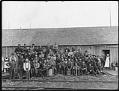
Loggers outside bunkhouse, circa 1911
The men who worked in logging camps lived together in crude bunkhouses. Conditions in the camps were harsh, uncomfortable, and dirty. Handwritten on sleeve: Group of Loggers by Bunkhouse.Webster & Stevens number: 2432
ID Number:1983.10.6881
Date:Circa 1911