47 results for: Curtis, Asahel
Photograph
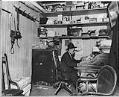
Chin Gee Hee, Chinese labor contractor, circa 1904
In the late 19th and early 20th centuries, Chinese labor contractors brought thousands of Chinese men to the Pacific Northwest to build railroads and to work in canneries, logging camps and coal mines. Companies depended on labor contractors to recruit workers, to move them where they were needed, to feed and house them, and to keep track of their pay.…
ID Number:SHS1152
Date:1901
Photograph
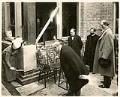
Laying the cornerstone of the Children's Orthopedic Hospital, Seattle, March 15, 1911
In this image Anna Herr Clise, founder of the Children's Orthopedic Hospital Association, holds a trowel over the cornerstone of Children's Orthopedic Hospital's new 40-bed facility at Warren Avenue and Crockett Street on Queen Anne Hill. The man closest to the building is Rev. Dr. Samuel Koch, with Rev. H. H. Gowen to his right, and at the far right,…
ID Number:SHS1226
Date:1911
Photograph
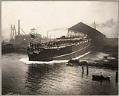
U.S.S. Nebraska launching October 7, 1904
In 1904, the Moran Brothers shipyard in Seattle launched the battleship "Nebraska." This vessel was the first steel ship to be built on Puget Sound and the first naval battleship to be built in the Pacific Northwest. At the launching, bands played, people cheered, dignitaries made speeches, and the daughter of the Governor of Nebraska christened the vessel with a…
ID Number:SHS2042
Date:1904
Photograph
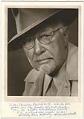
Photographer Edward S. Curtis, Seattle, 1951
Edward Sheriff Curtis was born in Wisconsin in 1868. He moved to Seattle with his mother and siblings around 1890 and became a professional photographer. Through the decade, Curtis became a respected photographer across the United States. Edward's brother Asahel was also a well-known photographer, but they were permanently estranged after Edward claimed Asahel's work as his own. In the…
ID Number:SHS5202
Date:1951
Photograph
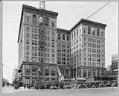
Adding floors to the County-City Building, circa 1930
In 1916, the new King County Courthouse and Municipal Building, also called the County-City Building, opened on Third Avenue in downtown Seattle. The building, designed by Seattle architect Augustus Warren Gould, was five stories tall, with a partial sixth story for the use of the city engineer. In 1929-1931, architect Henry Bittman's six story addition expanded Gould's original building upwards.This…
ID Number:SHS6523
Date:Circa 1930
Photograph
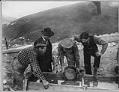
Panning for gold at Gold Hill, Yukon Territory, circa 1898
Miners used water running through sluices to wash the gold out of the pay dirt. Larger chunks of gold and gravel settled out along the uneven bottom of the sluice boxes. The smallest pieces of gold and dirt were washed to end of the sluice box where the gold was removed by panning.This photo, taken around 1898 by Asahel Curtis,…
ID Number:SHS11388
Date:Circa 1898
Photograph
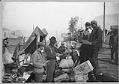
Open-air grocery store in Dawson City, circa 1898
By the end of July 1898, over 40,000 gold seekers had poured into Dawson City, Yukon Territory. Some of the city's busines was conducted in tents or in the open air.In this photo, taken around 1898 by Asahel Curtis, customers are buying pies, loaves of bread, and cans of corned beef and sausage at an open air grocery store. The…
ID Number:SHS11391
Date:Circa 1898
Photograph
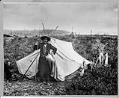
Chief Isaac of the Hän, Yukon Territory, circa 1898
The Hän people historically lived along the Yukon River near the border of eastern Alaska and western Yukon Territory. One of their largest and most important sites was Tr’ochëk, where the Klondike and Yukon Rivers meet. It was there that the Klondike Gold Rush started in 1896 and within a few years thousands of people had come to Hän lands…
ID Number:SHS12407
Date:Circa 1898
Photograph
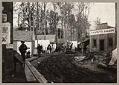
Street in Skagway during the gold rush, circa 1898
Gold seekers who were headed to the Klondike gold fields via White Pass landed in Skagway, Alaska. The weather and the conditions on the White Pass Trail were so bad that people sometimes got stuck in Skagway for several days before they could head north. Businesses in Skagway took advantage of this.This photo, taken around 1898 by Asahel Curtis, shows…
ID Number:SHS14112
Date:Circa 1898
Photograph
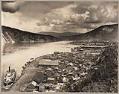
View of Dawson, Yukon Territory, circa 1898
Dawson, Yukon Territory, was wilderness in 1896. By 1898, so many Klondike stampeders had come to the area that Dawson was the largest city in Canada west of Winnipeg, Manitoba. At over 40,000 inhabitants, the crowded city was only slightly smaller than Seattle.This photo, taken around 1898, shows a general view of Dawson and its waterfronts on the Yukon (left)…
ID Number:SHS15451
Date:Circa 1898