436 results for: Urban Planning
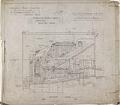
Architectural drawing
Longitudinal section of the Coliseum Theater building, Seattle, 1915
By 1915, Seattle’s downtown commercial core was booming. In March 1915, local lumber baron and businessman C.D. Stimson leased lots on the northeast corner of Fifth Avenue and Pike Streets to the newly-formed Coliseum Company to build a theater designed specifically for movies, then called photoplays. The Coliseum Photo Playhouse was designed by noted theater architect B. Marcus Priteca, and…
ID Number:2011.36.1.9
Date:1915
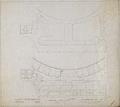
Architectural drawing
Mezzanine floor plan, supplementary version, Coliseum Theater, Seattle, 1915
By 1915, Seattle’s downtown commercial core was booming. In March 1915, local lumber baron and businessman C.D. Stimson leased lots on the northeast corner of Fifth Avenue and Pike Streets to the newly-formed Coliseum Company to build a theater designed specifically for movies, then called photoplays. The Coliseum Photo Playhouse was designed by noted theater architect B. Marcus Priteca, and…
ID Number:2011.36.1.10
Date:1915
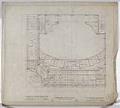
Architectural drawing
Mezzanine floor plan, Coliseum Theater, Seattle, 1915
By 1915, Seattle’s downtown commercial core was booming. In March 1915, local lumber baron and businessman C.D. Stimson leased lots on the northeast corner of Fifth Avenue and Pike Streets to the newly-formed Coliseum Company to build a theater designed specifically for movies, then called photoplays. The Coliseum Photo Playhouse was designed by noted theater architect B. Marcus Priteca, and…
ID Number:2011.36.1.11
Date:1915
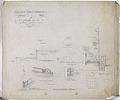
Architectural drawing
Plans and elevations for miscellaneous architectural details, Coliseum Theater, Seattle, 1915
By 1915, Seattle’s downtown commercial core was booming. In March 1915, local lumber baron and businessman C.D. Stimson leased lots on the northeast corner of Fifth Avenue and Pike Streets to the newly-formed Coliseum Company to build a theater designed specifically for movies, then called photoplays. The Coliseum Photo Playhouse was designed by noted theater architect B. Marcus Priteca, and…
ID Number:2011.36.1.12
Date:1915
Architectural drawing
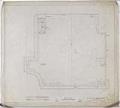
Roof plan, Coliseum Theater, Seattle, 1915
By 1915, Seattle’s downtown commercial core was booming. In March 1915, local lumber baron and businessman C.D. Stimson leased lots on the northeast corner of Fifth Avenue and Pike Streets to the newly-formed Coliseum Company to build a theater designed specifically for movies, then called photoplays. The Coliseum Photo Playhouse was designed by noted theater architect B. Marcus Priteca, and…
ID Number:2011.36.1.13
Date:1915
Architectural drawing
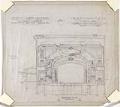
Transverse section of the Coliseum Theater building, Seattle, 1915
By 1915, Seattle’s downtown commercial core was booming. In March 1915, local lumber baron and businessman C.D. Stimson leased lots on the northeast corner of Fifth Avenue and Pike Streets to the newly-formed Coliseum Company to build a theater designed specifically for movies, then called photoplays. The Coliseum Photo Playhouse was designed by noted theater architect B. Marcus Priteca, and…
ID Number:2011.36.1.14
Date:1915
Document
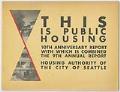
This is Public Housing 10th Anniversary Report, 1949
This booklet is the combined 1948/1949 report issued by the Housing Authority of the City of Seattle, titled "This is Public Housing, 10th Anniversary Report." The booklet commemorates the 10th anniversary of the creation of the Housing Authority and, using photographs and personal stories, illustrates how the Housing Authority came to be and its work. The booklet includes photographs and…
ID Number:2012.58.2
Date:1949
Photograph
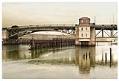
View of old South Park Bridge, Seattle, 2008
The 14th Avenue South Bridge, later renamed the South Park Bridge, connected Seattle with the nearby South Park neighborhood. Spanning the Duwamish River, it was a double-leaf bascule bridge, meaning that the two halves of the road deck opened from the middle. The bridge, shown here, opened in 1931, and by 2009 carried some 20,000 vehicles per day. It was…
ID Number:2017.14.1
Date:2008
Photograph
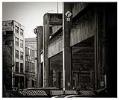
Supports beneath Alaskan Way viaduct near South Washington Street, Seattle, August 2009
The Alaskan Way Viaduct was an elevated highway in Seattle which was completed in 1966 after 16 years of construction and decades of planning. The double-decked highway ran along the Elliott Bay waterfront above the surface street, Alaskan Way, following previously existing railroad lines. The viaduct provided Seattle with its first bypass route around the downtown business district. The viaduct…
ID Number:2017.14.14
Date:2009
Photograph
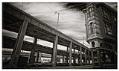
View of the Alaskan Way viaduct and ramps at First Avenue South, Seattle, October 2009
The Alaskan Way Viaduct was an elevated highway in Seattle which was completed in 1966 after 16 years of construction and decades of planning. The double-decked highway ran along the Elliott Bay waterfront above the surface street, Alaskan Way, following previously existing railroad lines. The viaduct provided Seattle with its first bypass route around the downtown business district. The viaduct…
ID Number:2017.14.19
Date:2009