416 results for: Clothing and Dress
Photograph
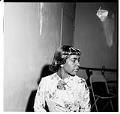
Marie Edwards Beauty School hairstyle model, circa 1955
Marie Edwards arrived in Seattle from Kansas in 1942. While working the swing shift at Boeing, Edwards decided to study the beauty business. She apprenticed with Ruth Whiteside, who owned what was probably the first African American cosmetology school in Seattle, at Seventh Avenue and Jackson Street. Edwards bought the school from Whiteside in 1946, and the Marie Edwards Beauty…
ID Number:2014.49.091.038.09
Date:Circa 1955
Photograph
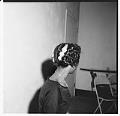
Marie Edwards Beauty School hairstyle model, circa 1955
Marie Edwards arrived in Seattle from Kansas in 1942. While working the swing shift at Boeing, Edwards decided to study the beauty business. She apprenticed with Ruth Whiteside, who owned what was probably the first African American cosmetology school in Seattle, at Seventh Avenue and Jackson Street. Edwards bought the school from Whiteside in 1946, and the Marie Edwards Beauty…
ID Number:2014.49.091.038.12
Date:Circa 1955
Photograph
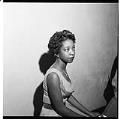
Marie Edwards Beauty School hairstyle model, circa 1955
Marie Edwards arrived in Seattle from Kansas in 1942. While working the swing shift at Boeing, Edwards decided to study the beauty business. She apprenticed with Ruth Whiteside, who owned what was probably the first African American cosmetology school in Seattle, at Seventh Avenue and Jackson Street. Edwards bought the school from Whiteside in 1946, and the Marie Edwards Beauty…
ID Number:2014.49.091.040.07
Date:Circa 1955
Photograph
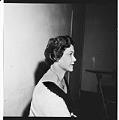
Marie Edwards Beauty School hairstyle model, circa 1955
Marie Edwards arrived in Seattle from Kansas in 1942. While working the swing shift at Boeing, Edwards decided to study the beauty business. She apprenticed with Ruth Whiteside, who owned what was probably the first African American cosmetology school in Seattle, at Seventh Avenue and Jackson Street. Edwards bought the school from Whiteside in 1946, and the Marie Edwards Beauty…
ID Number:2014.49.091.040.08
Date:Circa 1955
Photograph
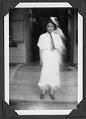
Woman standing on step in Japan, circa 1938
Albert Joseph "Al" Smith, Sr. (1916-2008) was a photographer and prolific chronicler of life in Seattle's Central Area during the mid- to late-20th century. From a hobby begun as a preteen, Mr. Smith began his "weekend job" and photography business, On the Spot, in the 1940s, capturing life in the city’s African American community, the Central Area neighborhood, and the…
ID Number:2014.49.094.008.01
Date:Circa 1938
Photograph
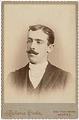
David Thomas Denny II, Seattle, circa 1890
David Thomas Denny II (1867-1939) was the sixth of eight children born to early Seattle settlers David Thomas Denny and Louisa B (Boren) Denny. In 1891 David II married Nellie Elizabeth Graham (1871-1956), daughter of another couple who had settled in Seattle in the 1850s, Elizabeth (Crammond) Graham and Walter Graham. Together Nellie and David II had three children, Inez…
ID Number:2014.81.9
Date:Circa 1890
Photograph
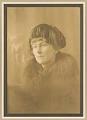
Nellie Elizabeth Graham Denny, circa 1920
Nellie Elizabeth Graham (1871-1956) was the daughter of Elizabeth Crammond and Walter Graham, who settled in Seattle in the 1850s. Graham attended the University of Washington and was a member of the First Presbyterian Church, the Washington State Pioneers Association, and the Daughters of Pioneers of Washington. In 1891 Nellie married David Thomas Denny II (1867-1939), son of another couple…
ID Number:2014.81.14
Date:Circa 1920
Ephemera
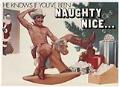
Holiday card with photo of Ric Weiland in Pegasus costume, Seattle, 1983
Richard "Ric" Weiland (1953-2006) was a software developer, programmer, philanthropist, and active member of the Northwest gay community. Interested in computers from a young age, Weiland built a computer in his basement in eighth grade, and while at Lakeside School formed the Lakeside Programming Group with classmates Bill Gates and Paul Allen. In 1975, Weiland became the first full-time employee…
ID Number:2016.10.25
Date:1983
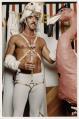
Ephemera
Ric Weiland in Pegasus costume worn at a Halloween party, Seattle, 1983
Richard "Ric" Weiland (1953-2006) was a software developer, programmer, philanthropist, and active member of the Northwest gay community. Interested in computers from a young age, Weiland built a computer in his basement in eighth grade, and while at Lakeside School formed the Lakeside Programming Group with classmates Bill Gates and Paul Allen. In 1975, Weiland became the first full-time employee…
ID Number:2016.10.25.1
Date:1983
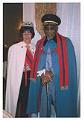
Photograph
Seafair King and Queen in Seattle, 2003
Seafair Royalty have been a part of Seattle's annual summer celebration since the festival's beginnings in 1950. Each year one man is crowned King Neptune and one woman crowned Queen Alcyone, both chosen based on their philanthropic contributions to the Puget Sound region and ability to inspire the communities in which they live. A Miss Seafair is also selected to…
ID Number:2017.59.33
Date:2003