365 results for: Homes and Housing
Videorecording
Human Rights: Kids in Crisis, Community Television Agency program, May 17, 1989
Started in 1976 by Virginia Brookbush, CTA produced up to seven half-hour public access television shows a week in the late 1970s and 1980s. Designed to let anyone use public air time to talk about local issues, CTA produced regular shows like "You Have the Right to Know," "Community Bulletin Board," "Visiting Over the Backyard Fence," "This Town's Talent," and…
ID Number:2021.84.14
Date:1989
Videorecording
You Have the Right to Know: Hungry and Homeless in Seattle, Community Television Agency program, July 14, 1989
Started in 1976 by Virginia Brookbush, CTA produced up to seven half-hour public access television shows a week in the late 1970s and 1980s. Designed to let anyone use public air time to talk about local issues, CTA produced regular shows like "You Have the Right to Know," "Community Bulletin Board," "Visiting Over the Backyard Fence," "This Town's Talent," and…
ID Number:2021.84.23
Date:1989
Photograph
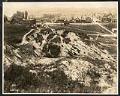
View of Seattle west from Beacon Hill, May 28, 1923
This photograph of the northwest side of Beacon Hill in Seattle is facing west out towards Elliott Bay, which is just visible at the top of the frame. Visible in the image are residential homes as well as many commercial properties and buildings, showing the early development of what would be come an important industrial area of Seattle. This area…
ID Number:Lib1988.13.7.2.33
Date:1923
Photograph
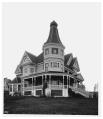
Kinnear home on Queen Anne Hill, circa 1898
George Kinnear arrived in Seattle in 1878 and became active in various civic activities. He promoted road construction through Snoqualmie Pass, organized an immigration board, and was treasurer of a local power and railway company. In 1885, he moved into a large, new mansion the south slope of Queen Anne Hill.This photo, taken by Anders Wilse between 1897 and 1900,…
ID Number:Lib1988.33.42
Date:Circa 1898
Photograph
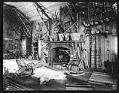
Interior of Burke home "Illahee"on Lake Washington, circa 1898
Judge Thomas Burke and his wife Caroline had a large home on Seattle's Boyleston Avenue on Capitol Hill. They built a summer home, which they named Illahee, on the western shore of Lake Washington.This photo, taken by Anders Wilse between 1897 and 1900, shows the living room at Illahee. The Burkes have followed one of the fashions of the times…
ID Number:Lib1988.33.135
Date:Circa 1898
Photograph
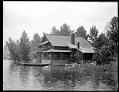
Exterior of Burke home "Illahee" on Lake Washington, circa 1898
Judge Thomas Burke and his wife Caroline had a large home on Seattle's Boyleston Avenue on Capitol Hill. They built a summer home, which they named Illahee, on the western shore of Lake Washington.This photo shows the exterior of Illahee, the Burke's summer home on Lake Washington. The Burkes built their retreat in a fashionable rustic bungalow style, with rough…
ID Number:Lib1988.33.137
Date:Circa 1898
Photograph
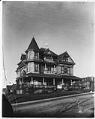
James Nugent residence, Seattle, circa 1898
Captain James Nugent began construction of this home at the corner of Cherry and Twelfth streets in 1892. According to an article published June 6 in the Seattle Post-Intelligencer, the corner tower afforded a fine view of the bay and the Sound and surrounding mountains. There were 14 rooms in all, and the home was supplied with hot water and…
ID Number:Lib1988.33.431
Date:Circa 1898
Photograph
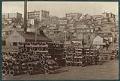
Wharf and beach homes on waterfront, Seattle, circa 1895
Predating the settlement that became the city of Seattle, the Duwamish had an encampment with two longhouses situated along the north central waterfront, roughly at the intersection of present-day Bell Street and Alaskan Way. By around the 1860s, the longhouses were gone, leaving only modest beach structures. In the 1890s the waterfront from Pike Street north to Broad Street had…
ID Number:Lib1991.5.78
Date:Circa 1895
Ephemera
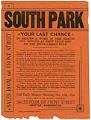
South Park, Your Last Chance to Secure a Home, 1890
The first residents of Seattle's South Park neighborhood, on the west bank of the Duwamish River, were Coast Salish Peoples of the Duwamish Tribe. Beginning in 1851, white settlers like Eli Maple (or Mapel) (1831-1911) staked claims to the land, however the area was mostly utilized by farmers. In 1889, I. William Adams purchased the Donovan farm and he platted…
ID Number:MS.COLL.252
Date:1890
Ephemera
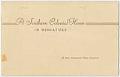
A Southern Colonial House in Miniature, circa 1948
This booklet describes the creation of the "Hammons House," a Colonial Revival miniature mansion co-designed by Claire Bagley Hammons, her husband Frederick Dent Hammons, and architect Joseph S. Coté. The model house was completed in 1948 and given as a gift to the Seattle Historical Society, now known as the Museum of History & Industry, in 1955. The pamphlet has…
ID Number:MS.COLL.814
Date:Circa 1948