27 results for: Alaska Natives
Photograph
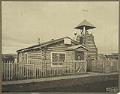
St. James Mission, Tanana, Alaska, circa 1900
St. James Mission was an Episcopal mission established in Alaska, near the confluence of the Tanana and Yukon Rivers. The point of land between the rivers had been a historic trading place for Athabascan peoples. Built over the years between 1887 and 1900, the site grew to include a school, hospital, and sawmill, as well as the reading room and…
ID Number:SHS2020
Date:Circa 1900
Photograph
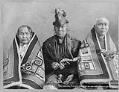
Three brothers, headmen of the Chilkat, Alaska, 1907
The Chilkat are a Tlingit tribe who have lived in and around their village of Klukwan on the Chilkat River, in southeastern Alaska since time immemorial. They lived on foods available on their lands as well as trading with other tribes on the Pacific coast and inland. Settlers came to Chilkat lands in large numbers in the early 20th century,…
ID Number:SHS11398
Date:1907
Photograph
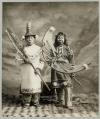
Tlingit man and woman in full potlatch costumes, Alaska, 1906
The Tlingit people have lived on the coast and islands of what is now southeastern Alaska since time immemorial. Tlingit society is organized into clans, which follow maternal descent. Fishing, gathering, and hunting were central to historic Tlingit lifeways – they used salmon, shellfish, seals, berries, deer, and other food sources. They used every part for different purposes, not wasting…
ID Number:SHS14102
Date:1906

Photograph
Chief Anotklosh of the Taku, Alaska, circa 1913
The Tlingit people have lived on the coast and islands of what is now southeastern Alaska since time immemorial. Tlingit society is organized into clans, which follow maternal descent. Fishing, gathering, and hunting were central to historic Tlingit lifeways – they used salmon, shellfish, seals, berries, deer, and other food sources. They used every part for different purposes, not wasting…
ID Number:SHS14163
Date:Circa 1913

Photograph
Tal Tan Billy, Alaska, circa 1898 - 1920
The Tlingit are a group of Indigenous peoples whose traditional home is on the coast of southeastern Alaska. The Tlingit, as well as neighboring groups, weave elaborate ceremonial blankets with abstracted images of animals. The blankets are called Chilkat blankets after one of the Tlingit tribes, and are traditionally worn during important events.The man in this photograph wears a woven…
ID Number:SHS14164
Date:Circa 1909
Photograph
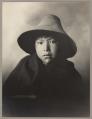
Tlingit boy wearing a woven hat, Sitka, circa 1915
The Tlingit people have lived on the coast and islands of what is now southeastern Alaska since time immemorial. Tlingit society is organized into clans, which follow maternal descent. Fishing, gathering, and hunting were central to historic Tlingit lifeways. They used salmon, shellfish, seals, berries, deer, and other food sources, making sure to use every part for different purposes, not…
ID Number:SHS14167
Date:Circa 1915
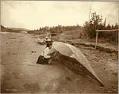
Photograph
Native Alaskan woman working on a canoe by a river, circa 1909
Canoes need upkeep and repair in order to stay watertight. In this photo, an Native Alaskan woman works on the edge of her flat-bottomed craft by the side of a river. Two other canoes rest nearby on the beach. The wooden poles are probably used for drying fish. The location of the photograph is unknown, but it was most likely…
ID Number:SHS14168
Date:Circa 1909