396 results for: Central Area
Ephemera
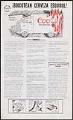
Boycott Scab Beer!/Boicotean Cerveza Esquirol! flier, 1977
The Coors boycotts began in the 1960s and lasted officially until the late 1980s, though some opposition continued after that time. The boycotts focused on three issues: the company's long opposition to organized labor; allegations of discriminatory hiring practices against Hispanics, African Americans, women, and LGBTQ people; and Joseph Coors' funding of conservative politicians and organizations. The first boycott in…
ID Number:2002.23.1.43.1
Date:1977
Ephemera
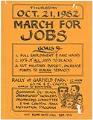
March for Jobs flier, October 21, 1982
On October 21, 1982, eleven community organizations representing a variety of Seattle minority, women, labor, and anti-war groups held a rally and march from Seattle’s Central Area to downtown Seattle. They scheduled the event close to the election to remind politicians of the importance of minority voters. Goals were full employment at fair wages, a cut in the national military…
ID Number:2002.23.1.75.1
Date:1982
Ephemera
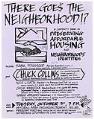
"There Goes the Neighborhood" flier, Seattle, October 1987
Founded in 1987 to protest the demolition of low-income housing stock in Seattle, Operation Homestead first became known for its occupation of vacant downtown apartment buildings. The organization was an eclectic group of social workers, college students, pastors, unhoused people, retired people and others who had spent years trying to convince the city and the state to build more affordable…
ID Number:2002.23.2.50.1
Date:1987
Ephemera
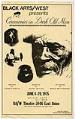
Black Arts/West presents Ceremonies in Dark Old Men poster, June 1975
Black Arts/West was Seattle's first Black theater and functioned as a three component program:, dance, and an art gallery displaying the work of local and national artists. As a division of the Central Area Motivation Program, an anti-poverty agency, it was charged with getting young people involved and learning the necessary skills to survive and flourish in society.This poster advertises…
ID Number:2002.23.3.51.1
Date:1975
Ephemera
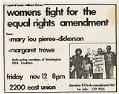
Women's Fight for the Equal Rights Amendment flier, November 1976
The Equal Rights Amendment (ERA) would have amended the US Constitution to guarantee equal rights under the law regardless of sex. It was passed by both houses of Congress in 1972 but was not ratified by enough states before the deadline set by Congress. As a result, it was not added to the Constitution, but it has been reintroduced in…
ID Number:2002.23.3.68.1
Date:1976
Ephemera
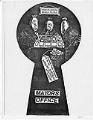
Poster on proposed site for African-American heritage museum, Seattle, 1985
In 1985, several activists occupied the abandoned Colman School in the Central Area, the proposed site for an African American museum, to claim the site and prevent its demolition. They occupied the building for 8 years, until 1993, when the non-profit African American Heritage Museum and Cultural Center was formed to oversee the museum project. The Northwest African American Museum…
ID Number:2002.23.4.69.1
Date:1985
Ephemera
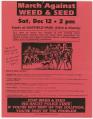
March Against Weed & Seed flier, 1992
Weed and Seed was a 1992 Bush administration initiative to provide federal grants to city governments to help “weed” drug-dealing and crime from troubled neighborhoods, and “seed” those areas with social programs. Mayor Norm Rice procured a $1.1 million grant for a Weed and Seed program for Seattle’s Central Area, but approval was delayed for several months over widespread opposition…
ID Number:2002.23.5.45.2
Date:1992
Ephemera
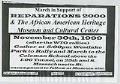
Reparations 2000 march flier, Seattle, November 30, 1999
This flier advertises a march organized by the Reparations 2000 Coalition and the African American Heritage Museum and Cultural Center (AAHM&CC), to take place on the first evening of the WTO rallies. The march was set to end at the vacant Colman School, where an encampment for anti-WTO activists would be established. Omari Tahir-Garrett and other activists first occupied this…
ID Number:2002.23.6.42.1
Date:1999
Ephemera
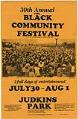
30th Annual Black Community Festival poster, 1982
For over 70 years, Seattle’s Black community has a held a summer festival that was part of Seattle's International Festival, now Seafair. The first, in 1952, was called the East Madison/East Union Mardi Gras. Mardi Gras later transformed into the Pacific Northwest Black Community Festival, and in 1997 it became the Umoja Fest African Heritage Festival.This poster advertises the 30th…
ID Number:2002.23.8.1.3
Date:1982
Photograph
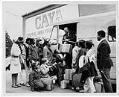
Girls with luggage outside the Central Area Youth Association (CAYA) building, Seattle, April 5, 1968
The Central Area Youth Association was formed in the 1950s to provide youth football programs in Seattle’s Central Area. In 1964, CAYA expanded its programs to include education, social development, and additional sports programs for both minority and white youth.One spring evening, sixteen girls from the CAYA track team left for an AAU (Amateur Athletic Union) invitational track meet in…
ID Number:2002.46.8225
Date:1968