396 results for: Central Area
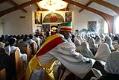
Photograph
Worshipers at St. Gebriel Ethiopian church, Seattle, January 2003
Seattle's Ethiopian community has grown rapidly since the 1970s, when many Ethiopians fled their home country to escape war, famine, and ethnic violence. In the early 2000s, there were several thousand Ethiopians living around Seattle, and five Ethiopian churches (three Protestant, two Ethiopian Orthodox) served their spiritual needs. The Ethiopian churches met more worldly needs as well, such as sharing…
ID Number:2000.107.20030105.CD01.01.001
Date:2003

Photograph
Yeshihareg Wibie at St. Gebriel Ethiopian church, Seattle, January 2003
Seattle's Ethiopian community has grown rapidly since the 1970s, when many Ethiopians fled their home country to escape war, famine, and ethnic violence. In the early 2000s, there were several thousand Ethiopians living around Seattle, and five Ethiopian churches (three Protestant, two Ethiopian Orthodox) served their spiritual needs. The Ethiopian churches met more worldly needs as well, such as sharing…
ID Number:2000.107.20030105.CD01.002
Date:2003
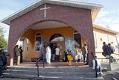
Photograph
Exterior of St. Gebriel Ethiopian church, Seattle, January 2003
Seattle's Ethiopian community has rapidly grown since the 1970s, when many Ethiopians fled their home country to escape war, famine, and ethnic violence. In the early 2000s, there were several thousand Ethiopians living around Seattle, and five Ethiopian churches (three Protestant, two Ethiopian Orthodox) served their spiritual needs. The Ethiopian churches met more worldly needs as well, such as sharing…
ID Number:2000.107.20030105.CD01.02.001
Date:2003
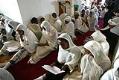
Photograph
Church members at St. Gebriel Ethiopian church, Seattle, January 2003
Seattle's Ethiopian community has rapidly grown since the 1970s, when many Ethiopians fled their home country to escape war, famine, and ethnic violence. In the early 2000s, there were several thousand Ethiopians living around Seattle, and five Ethiopian churches (three Protestant, two Ethiopian Orthodox) served their spiritual needs. The Ethiopian churches met more worldly needs as well, such as sharing…
ID Number:2000.107.20030105.CD01.03.001
Date:2003
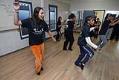
Photograph
Tap dance students practicing at TTAAPP Central, Seattle, January 2003
Darrlyn (Cook) Smith (1938-2002) and her husband Joseph Smith, both educators, relocated to Seattle from New Orleans in the early 1960s. In Seattle, Darrlyn Smith taught at Martin Luther King Jr. Elementary School, where she kept a box of tap dance shoes in her classroom and taught tap to interested students during recess. Darrlyn and Joseph Smith later owned the…
ID Number:2000.107.20030114.CD07.001
Date:2003
Photograph
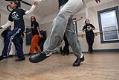
Tap dance students practicing at TTAAPP Central studio, Seattle, January 2003
Darrlyn (Cook) Smith (1938-2002) and her husband Joseph Smith, both educators, relocated to Seattle from New Orleans in the early 1960s. In Seattle, Darrlyn Smith taught at Martin Luther King Jr. Elementary School, where she kept a box of tap dance shoes in her classroom and taught tap to interested students during recess. Darrlyn and Joseph Smith later owned the…
ID Number:2000.107.20030114.CD07.002
Date:2003
Photograph
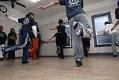
Tap dance students practicing at TTAAPP Central, Seattle, January 2003
Darrlyn (Cook) Smith (1938-2002) and her husband Joseph Smith, both educators, relocated to Seattle from New Orleans in the early 1960s. In Seattle, Darrlyn Smith taught at Martin Luther King Jr. Elementary School, where she kept a box of tap dance shoes in her classroom and taught tap to interested students during recess. Darrlyn and Joseph Smith later owned the…
ID Number:2000.107.20030114.CD07.003
Date:2003
Photograph
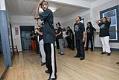
Tap dance students in front of mirror TTAAPP Central, Seattle, January 2003
Darrlyn (Cook) Smith (1938-2002) and her husband Joseph Smith, both educators, relocated to Seattle from New Orleans in the early 1960s. In Seattle, Darrlyn Smith taught at Martin Luther King Jr. Elementary School, where she kept a box of tap dance shoes in her classroom and taught tap to interested students during recess. Darrlyn and Joseph Smith later owned the…
ID Number:2000.107.20030114.CD07.004
Date:2003

Photograph
De'Andra Charleston at the Magic Dragon fast-food restaurant, Seattle, January 16, 2003
The Urban Enterprise Center, a non-profit program of the Greater Seattle Chamber of Commerce founded in 1933, worked with various organizations to create jobs, develop businesses, and improve racial understanding in south Seattle neighborhoods. By its 10-year anniversary in 2003, its successes included the placement of 7200 people in living wage jobs, $8 million in loans to small businesses, and…
ID Number:2000.107.20030116.CD02.01.001
Date:2003
Photograph
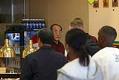
Owner Jae Oh waiting on customers at Magic Garden Chinese Eatery, Seattle, January 16, 2003
The Urban Enterprise Center, a non-profit program of the Greater Seattle Chamber of Commerce founded in 1933, worked with various organizations to create jobs, develop businesses, and improve racial understanding in south Seattle neighborhoods. By its 10-year anniversary in 2003, its successes included the placement of 7200 people in living wage jobs, $8 million in loans to small businesses, and…
ID Number:2000.107.20030116.CD02.01.002
Date:2003