705 results for: KING - TV
Photograph
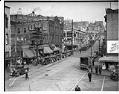
Chinatown street scene looking northeast, Seattle, 1934
In the early 1900s, Chinese businesses began moving to the area around King Street. By the 1920s, most of Seattle's Chinese residents lived and worked there. Other Asian immigrants soon followed, notably Japanese and Filipinos attracted by the area's inexpensive housing and storefronts for their own businesses and restaurants. By the late 1930s, Chinatown was established as a distinct neighborhood…
ID Number:1986.5.7828.4
Date:1934
Photograph
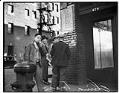
Men on a corner in Seattle's Chinatown, 1932
In the early 1900s, Chinese businesses began moving to the area around King Street. By the 1920s, most of Seattle's Chinese residents lived and worked there. Other Asian immigrants soon followed, notably Japanese and Filipinos attracted by the area's inexpensive housing and storefronts for their own businesses and restaurants. By the late 1930s, Chinatown was established as a distinct neighborhood…
ID Number:1986.5.7830.1
Date:1932
Photograph
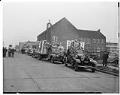
Funeral cars processing down King Street, Seattle, November 28, 1941
Born in China, Chin Fook Hing (1875-1941) came to Seattle from California around 1900. In 1911 he established the Chong Hink Knitting Company at 504 Twelfth Avenue South, which he managed until his death. Through his work in the Seattle Chinese Patriotic League, Mr. Chin was credited with raising more than $50,000 for China war relief. Long active in his…
ID Number:1986.5.7833.1
Date:1941
Photograph
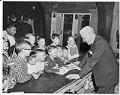
Boys joining Holly Park Boys Club, Seattle, March 13, 1960
In this image, members of the newly opened Holly Park Boys Club sign up for the club with the help of Fred O. Paulsell, president of Seattle Boys Clubs. The Boys Clubs, now Boys & Girls Clubs of King County, was founded in 1943 and continues to serve young people in 29 locations around King County. Caption information derived from…
ID Number:1986.5.8421.1
Date:1960
Photograph
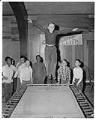
Boy jumping on trampoline at Holly Park Boys Club, Seattle, March 13, 1960
In this image members of the newly opened Holly Park Boys Club watch as one boy shows off his skills on a trampoline. The Boys Clubs, now Boys & Girls Clubs of King County, was founded in 1943 and continues to serve young people in 29 locations around King County. Caption information derived from captions written by Post-Intelligencer staff and…
ID Number:1986.5.8421.2
Date:1960
Photograph
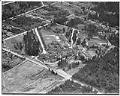
Aerial view of Firland Sanatorium, Shoreline, May 1938
Firland Sanatorium, Seattle’s municipal tuberculosis hospital, opened on May 2, 1911, to help combat what was at the time Seattle’s leading cause of death. Firland was located north of Seattle, on land donated by railroad magnate Horace C. Henry (1844-1928), whose son Walter had died of TB. The hospital served there until its move in 1947 to a former Naval…
ID Number:1986.5.9372.1
Date:1938
Photograph
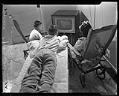
Children watching television at Firland sanatorium, Seattle, 1952
Firland Sanatorium, Seattle's municipal tuberculosis hospital, was built in 1911 to treat patients infected with TB, the leading cause of death in Seattle at the time. Originally called the Henry Sanatorium after leading founder Horace C. Henry, Firland was located 12 miles north of Seattle on a 34-acre campus with open-air cottages for its patients. In 1943 King County assumed…
ID Number:1986.5.9387.1
Date:1952
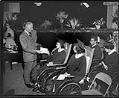
Patient graduation ceremony at Firland sanatorium, Seattle, 1952
Firland Sanatorium, Seattle's municipal tuberculosis hospital, was built in 1911 to treat patients infected with TB, the leading cause of death in Seattle at the time. Originally called the Henry Sanatorium after leading founder Horace C. Henry, Firland was located 12 miles north of Seattle on a 34-acre campus with open-air cottages for its patients. In 1943 King County assumed…
ID Number:1986.5.9388.1
Date:1952
Photograph
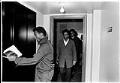
Franklin High School sit-in defendants leaving prison, Seattle, April 5, 1968
In March of 1968 two Black students, cousins Charles Oliver and Trolice Flavors, where suspended from Seattle's Franklin High School after an altercation with a white student, who was not reprimanded. Franklin's outraged Black students, with the help of UW Black Student Union (BSU) activists Carl Miller, Aaron Dixon and Larry Gossett, planned a peaceful demonstration at the school to…
ID Number:1986.5.11580.6
Date:1968
Photograph
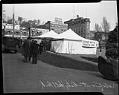
Unemployed camp at City Hall Park near Third and Yesler, Seattle, 1939
Demonstrators erected this tent in City Hall Park with the sign 'Governor Martin's Starvation Camp No. 2' in response to King County's relief crisis. 'Camp No. 1' was in Spokane. The donated tent contained chairs and benches and there were plans to open a commissary there. Another tent was planned to hold foodstuffs donated by merchants to be distributed to…
ID Number:1986.5.15173.1
Date:1939