234 results for: Northwest Coast Native Peoples
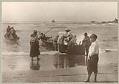
Photograph
Quileutes landing provisions at La Push, circa 1900
The Quileute are an Indigenous people whose historic lands are on the west side of the Olympic Peninsula, in the valleys of the Quillayute and Hoh Rivers. The Quileute are not related to either the Makah to the north or the Coast Salish peoples of western Washington, and the Quileute language is unrelated to any other in the world. Quileute…
ID Number:SHS7914
Date:Circa 1900
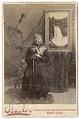
Photograph
Kikisoblu (Princess Angeline) with painting of Snoqualmie Falls, Seattle, 1890
Kikisoblu was the eldest daughter of Chief Si'ahl (Chief Seattle). During her long life, she saw the coming of white settlers, the exile of her Duwamish and Suquamish people from their traditional lands, and the growth of the new city named for her father. She didn't move to the Port Madison Reservation with the rest of her people, but stayed…
ID Number:SHS10127
Date:1890
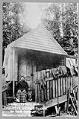
Photograph
Kikisoblu (Princess Angeline) at her home, circa 1890
Kikisoblu or Kick-is-on-lo Cud was the eldest daughter of Chief Seattle. During her long life, she saw the coming of white settlers, the exile of her Duwamish and Suquamish people from their traditional lands, and the growth of the new city named for her father. She didn't move to the Port Madison Reservation with the rest of her people, but…
ID Number:SHS10965
Date:Circa 1890
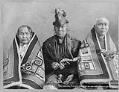
Photograph
Three brothers, headmen of the Chilkat, Alaska, 1907
The Chilkat are a Tlingit tribe who have lived in and around their village of Klukwan on the Chilkat River, in southeastern Alaska since time immemorial. They lived on foods available on their lands as well as trading with other tribes on the Pacific coast and inland. Settlers came to Chilkat lands in large numbers in the early 20th century,…
ID Number:SHS11398
Date:1907
Photograph
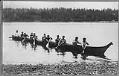
Jack Adams' racing canoe, Portage Bay, Seattle, 1909
In 1909, Jack Adams (1853-1931), a member of the Suquamish Tribe, built a canoe for a canoe race at Seattle's Alaska-Yukon-Pacific Exposition. Adams built the vessel from a single 48-foot log. On September 6, the canoes raced to the finish line at the foot of the fair's Pay Streak, in Portage Bay. In this photo, Adams and ten other men…
ID Number:SHS11726
Date:1909
Photograph
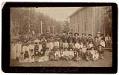
Quileute children and teachers, La Push, circa 1887
The Quileute are an Indigenous people whose historic lands are on the west side of the Olympic Peninsula, in the valleys of the Quillayute and Hoh Rivers. The Quileute are not related to either the Makah to the north or the Coast Salish peoples of western Washington, and the Quileute language is unrelated to any other in the world. Quileute…
ID Number:SHS12092
Date:Circa 1887
Photograph
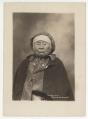
Pilchuck Julia, Snohomish, 1915
The Snohomish (written Sduhubš in their language) are a Coast Salish people who have lived along the Snohomish River since time immemorial. Their largest village was Hibulb, near the mouth of the river in what is now Everett. Like their other Coast Salish neighbors, the Snohomish used dugout canoes to travel along rivers and around Puget Sound. Salmon fishing was…
ID Number:SHS12888
Date:1915
Photograph
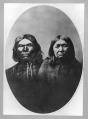
Chief Chits-A-Man-Han and his wife, circa 1884
The S’Klallam (also spelled Klallam) are a Coast Salish people whose historic lands stretch across the northern Olympic Peninsula from the current location of Port Townsend to the Hoko River, near Makah lands. They also lived on Whidbey Island and on the south shore of Vancouver Island. The S’Klallam lived in permanent longhouses during the winter, but in other seasons…
ID Number:SHS13489
Date:Circa 1884
Photograph
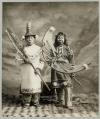
Tlingit man and woman in full potlatch costumes, Alaska, 1906
The Tlingit people have lived on the coast and islands of what is now southeastern Alaska since time immemorial. Tlingit society is organized into clans, which follow maternal descent. Fishing, gathering, and hunting were central to historic Tlingit lifeways – they used salmon, shellfish, seals, berries, deer, and other food sources. They used every part for different purposes, not wasting…
ID Number:SHS14102
Date:1906
Photograph
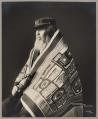
Chief Anotklosh of the Taku, Alaska, circa 1913
The Tlingit people have lived on the coast and islands of what is now southeastern Alaska since time immemorial. Tlingit society is organized into clans, which follow maternal descent. Fishing, gathering, and hunting were central to historic Tlingit lifeways – they used salmon, shellfish, seals, berries, deer, and other food sources. They used every part for different purposes, not wasting…
ID Number:SHS14163
Date:Circa 1913