234 results for: Northwest Coast Native Peoples
Photograph
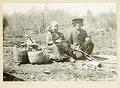
Chesheeahud and Tleebuleetsa near campfire, circa 1900
Chesheeahud was a Duwamish chief and guide to the lakes and rivers around what is now Seattle living between the mid-19th and early 20th centuries. He led a village called hehs-KWEE-kweel (meaning Skate), at the south edge of the mouth of Union Bay onto Lake Washington. hehs-KWEE-kweel was near a vital portage used by the Duwamish between Lake Union and…
ID Number:SHS1900
Date:Circa 1900
Photograph
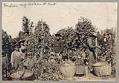
Indigenous men, women, and children working in hop field, Kent, circa 1895
From the late 1860s to the early 1890s, hop farming was an important activity in the valleys of the Puget Sound region, including Puyallup, White River, and Snoqualmie. Indigenous workers came from throughout the Pacific Northwest, Canada, and Alaska (but especially from regional tribes like the Puyallup, Snoqualmie, Muckleshoot, Duwamish, Sammamish, Lummi, and Nisqually) as a seasonal labor force to…
ID Number:SHS1975
Date:Circa 1895
Photograph
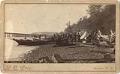
Native camp on the beach, Seattle, circa 1885
In 1865 the Board of Trustees of Seattle passed Ordinance No. 5 banning Indigenous people from living in the city unless they worked for a non-Indigenous resident and lived on their employer’s property. Despite this attempt to enforce separation between Indigenous people and the settlers, Seattle depended on Indigenous people. Settlers relied on Native people for domestic work and for…
ID Number:SHS2174
Date:Circa 1885
Photograph
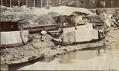
Indigenous encampment at the Seattle waterfront, circa 1895
In 1865 the Board of Trustees of Seattle passed Ordinance No. 5 banning Indigenous people from living in the city unless they worked for a non-Indigenous resident and lived on their employer’s property. Despite this attempt to enforce separation between Indigenous people and the settlers, Seattle depended on Indigenous people. Settlers relied on Native people for domestic work and for…
ID Number:SHS2210
Date:Circa 1895
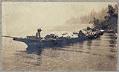
Photograph
Chesheeahud and others in a canoe on Lake Union, Seattle, circa 1885
Chesheeahud (also spelled Cheshiahud) was a Duwamish chief and guide to the lakes and rivers around what is now Seattle, living between the mid-19th and early 20th centuries. He led a village called hehs-KWEE-kweel (meaning Skate), at the south edge of the mouth of Union Bay onto Lake Washington. hehs-KWEE-kweel was near a vital portage used by the Duwamish between…
ID Number:SHS2228
Date:Circa 1885
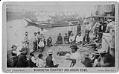
Photograph
Game of slahal on a Puget Sound beach, circa 1884
Slahal, also called the bone game, is one of many games played by Indigenous peoples of the Pacific Northwest. A team member held up their hands, each of which contained a small bone, and the members of the opposite team tried to guess if a marked bone was in the right or left hand. Slahal often also involved gambling between…
ID Number:SHS3488
Date:Circa 1884
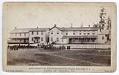
Photograph
Industrial Boarding School buildings on the Puyallup Reservation, circa 1885
The Puyallup people are a Coast Salish group whose historic lands are along the Puyallup River Valley. They call themselves “Spuyalepabs” in their native language of Lushootseed, meaning “people from the bend at the bottom of the river.” Before settlers arrived, the Puyallup lived in villages that spread from the Cascade foothills to the shores of Puget Sound. In 1854,…
ID Number:SHS3491
Date:Circa 1885
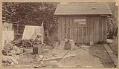
Photograph
Wako, Indigenous healer, circa 1894
The photographer's caption indicates that this woman, named Wako, was a doctor or healer. Caption on image: "Wako, the Indian doctress"Caption on image: "Photo by Frank LaRoche No. 104"
ID Number:SHS3767
Date:Circa 1894
Photograph
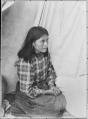
Young Indigenous woman named Tasha seated by a tent, circa 1900
From the late 1860s to the early 1890s, hop farming was an important activity in the valleys of the Puget Sound region, including Puyallup, White River, and Snoqualmie. Indigenous workers came from throughout the Pacific Northwest, Canada, and Alaska (but especially from regional tribes like the Puyallup, Snoqualmie, Muckleshoot, Duwamish, Sammamish, Lummi, and Nisqually) as a seasonal labor force to…
ID Number:SHS4880
Date:Circa 1900
Photograph
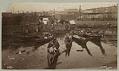
Indigenous canoes docked at the Seattle waterfront, circa 1892
In 1865 the Board of Trustees of Seattle passed Ordinance No. 5 banning Indigenous people from living in the city unless they worked for a non-Indigenous resident and lived on their employer’s property. Despite this attempt to enforce separation between Indigenous people and the settlers, Seattle depended on Indigenous people. Settlers relied on Native people for domestic work and for…
ID Number:SHS5118
Date:Circa 1892