416 results for: Clothing and Dress
Photograph
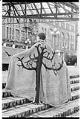
Cape designed by a "Friends of the Rag" artist, Seattle, December 1975
In the early 1970s, a group of Seattle textile and fabric artists formed Friends of the Rag, dedicating themselves to pushing the boundaries of what women and men might wear. In the 1970s and 1980s, the growing group appeared at events around Seattle, from art openings to philanthropic benefits. One outfit might be made from rubber and window screening, and…
ID Number:2000.107.19751200.2.18
Date:1975
Photograph
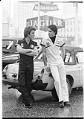
Two men modeling jumpsuits, Seattle, December 1975
Jumpsuits were invented in 1919 for parachutists to wear while jumping from planes, but they evolved beyond these origins. By the 1970s they had become part of the fashion landscape: worn on stage by Cher and Elvis, designs available from many high fashion houses, and popular both as sportswear and leisure garments. This image shows two men modeling jumpsuits decorated…
ID Number:2000.107.19751200.5.09
Date:1975
Photograph
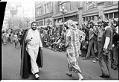
Mardi Gras parade, Seattle, February 19, 1977
In 1977, Seattle held its first Fat Tuesday (Mardi Gras) celebration in Occidental Park, Pioneer Square. The event lasted for five days and was peaceful during the day but got unruly at night. This image shows revelers on a street in Pioneer Square, including one wearing a patterned onesie and another sporting a white suit, cape, face paint, and a…
ID Number:2000.107.19770219.1.22
Date:1977
Photograph
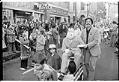
Mardi Gras parade, Seattle, February 19, 1977
In 1977, Seattle held its first Fat Tuesday (Mardi Gras) celebration in Occidental Park, Pioneer Square. The event lasted for five days and was peaceful during the day but got unruly at night. This image shows revelers on a street in Pioneer Square, including a man with a dummy in a wagon pulled by a child. Caption information source: The…
ID Number:2000.107.19770219.1.26
Date:1977
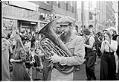
Photograph
Mardi Gras parade, Seattle, February 19, 1977
In 1977, Seattle held its first Fat Tuesday (Mardi Gras) celebration in Occidental Park, Pioneer Square. The event lasted for five days and was peaceful during the day but got unruly at night. This image shows revelers on a street in Pioneer Square, including a man playing a euphonium, possibly as part of a band. Behind the euphonium player are…
ID Number:2000.107.19770219.1.28
Date:1977
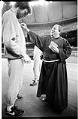
Photograph
Jack Eagle as "Brother Dominic" blessing Sounders player Derek Smethurst, June 3, 1980
In 1975, comedian Jack Eagle began starring in commercials in the role of Brother Dominic, a medieval monk who uses the "miraculous" power of Xerox machines to quickly produce many copies of handwritten documents. Eagle, who described himself as "the only Jewish father masquerading as a Catholic brother," gained national fame from his continued appearances as Brother Dominic. This image…
ID Number:2000.107.19800603.1.07
Date:1980
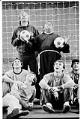
Photograph
Jack Eagle as "Brother Dominic" blessing the Sounders, June 3, 1980
In 1975, comedian Jack Eagle began starring in commercials in the role of Brother Dominic, a medieval monk who uses the "miraculous" power of Xerox machines to quickly produce many copies of handwritten documents. Eagle, who described himself as "the only Jewish father masquerading as a Catholic brother," gained national fame from his continued appearances as Brother Dominic. This image…
ID Number:2000.107.19800603.1.16
Date:1980
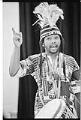
Photograph
Drummer at Festival Sundiata, February 1993
Festival Sundiata is an celebration of the art and culture of people of African descent, held annually at Seattle Center since 1980. The festival includes music, spoken word, food, art displays, and other programs, creating an opportunity to bring together diverse communities for a weekend of fun and education. Here, a drummer performs at the 1993 Festival Sundiata at the…
ID Number:2000.107.19930204.3.44
Date:1993
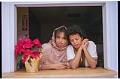
Photograph
Two women in traditional dress for Kwanzaa celebration, December 29, 1995
Kwanzaa is a nonreligious celebration of African heritage in African-American culture, usually observed for seven days beginning December 26 and culminating in gift-giving and a big feastThis photo shows two young women, identified as Meaza Kafly and Almaz Winmu, wearing traditional African dress in preparation for a Kwanzaa family festival at the Seattle Art Museum. The festival celebrated African culture…
ID Number:2000.107.19951229.3.16
Date:1995
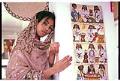
Photograph
Woman in traditional dress for Kwanzaa celebration, December 29, 1995
Kwanzaa is a nonreligious celebration of African heritage in African-American culture, usually observed for seven days beginning December 26 and culminating in gift-giving and a big feastThis photo shows a young women wearing traditional African dress in preparation for a Kwanzaa family festival being held at the Seattle Art Museum. The festival celebrated African culture with music, dance, and storytelling,…
ID Number:2000.107.19951229.3.26
Date:1995