1580 results for: City of Seattle
Photograph
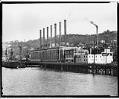
City Light power plant on Lake Union, circa 1926
Seattle City Light built a coal-burning steam plant in 1906 to generate electricity for the growing city. With its large windows and smokestacks, this distinctive building on Lake Union is still a landmark. The power plant operated until 1984. It is now the home of a research company which has preserved the building's earlier character.This photo, taken in the mid-1920s,…
ID Number:1983.10.608
Date:Circa 1926
Photograph
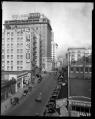
Stewart Street from First Avenue, Seattle, circa 1927
Looking east up Stewart Street, three hotels are visible on the corner with 2nd Avenue: the St. Regis and the New Washington (both extant), and the Gowman (demolished). Signs in image: Pacific Highway Garage. Radio. Hotel St. Regis. New Washington. Hotel Gowman. The Home of Wilson's Modern [Business College]. Medical Baths. Ladies & Gents Hair Cut 25 Cents. Handwritten on…
ID Number:1983.10.632.2
Date:Circa 1927
Photograph
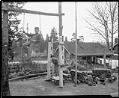
Two boys in their backyard playground, circa 1927
Health experts encouraged parents to make sure that their children got lots of fresh air. Seattle children in the 1920s played in city parks and home-built playgrounds. In this photo, taken around 1927, two boys play on a swing set in back of a Seattle home. A racing car and other homemade toys sit nearby. Webster & Stevens number: 121771
ID Number:1983.10.676.2
Date:Circa 1927
Photograph
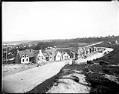
Houses under construction at Queen Anne Park, April 19, 1927
Queen Anne Hill, northwest of Seattle's downtown, became a popular place to live as the city grew. Queen Anne Park, on the northwest side of the hill, was started in 1926 and was the last major housing development in the area before the Depression. In this 1927 photo, houses are under construction at Queen Anne Park on Queen Anne Hill.…
ID Number:1983.10.700.1
Date:1927
Photograph
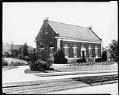
Columbia City Branch Library, Seattle, circa 1927
Opened in 1915, this was the smallest of Seattle's Carnegie libraries. The building was designed by W. Marbury Somervell and Harlan Thomas. Handwritten on sleeve: Columbia City libraryCaption information source: Seattle Public LibraryWebster & Stevens number: 122159
ID Number:1983.10.745
Date:Circa 1927
Photograph
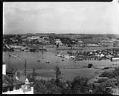
Portage Bay and University of Washington campus from north Capitol Hill, Seattle, circa 1930
This view shows Portage Bay and the University of Washington from East Boston Street on Capitol Hill. Handwritten on sleeve: City View U of W Campus from East Boston St.Webster & Stevens number: 135094
ID Number:1983.10.998.1
Date:Circa 1930
Photograph
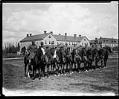
Cavalry at Fort Lawton, May 18, 1918
In 1897, the city of Seattle donated land on Magnolia Bluff to the US government to build a new Army post as part of a defense system for Puget Sound; this was designated as Fort Lawton in 1900. During most of its active service, the fort served as an embarkation station where troops gathered before being sent to duty in…
ID Number:1983.10.1017
Date:1918
Photograph
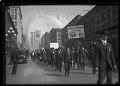
U.S. Army draftees parading through downtown, Seattle, May 10, 1918
On May 10, 1918, 62 men, conscripted from Seattle and King County through the new Selective Service system, paraded through downtown Seattle streets before entraining for Vancouver Barracks, where they would join the U.S. Army. The men assembled at the Soldiers' and Sailors' Club, where they received packages of food, tobacco, and other useful items, then marched to King Street…
ID Number:1983.10.1091.1
Date:1918
Photograph
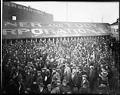
General strike participants leaving shipyards, Seattle, February 1919
The Seattle General Strike was a work stoppage by more than 65,000 workers in Seattle from February 6-11, 1919. The strike began in shipyards when workers were refused pay increases after two years of World War I wage controls. Most of the city's 110 local unions, including members of the American Federation of Labor (AFL) and the Industrial Workers of…
ID Number:1983.10.1347.3
Date:1919
Photograph
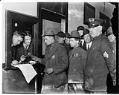
Seattle General Strike deputies receiving weapons, February 6, 1919
In 1919, Seattle shipyard workers went on strike for higher wages. Other labor unions stopped work too, thus starting the nation's first general strike. Many people feared the strike would lead to violence. Seattle's mayor and chief of police deputized groups of soldiers and sailors to help keep the peace. Most of the strikers stayed home, however, and the city…
ID Number:1983.10.1348
Date:1919