1580 results for: City of Seattle
Cartographic material
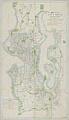
Map of the City of Seattle and Adjacent Territory, Bogue Map No. 3, 1911
Virgil Gay Bogue (1846-1916) was a civil engineer, originally from Norfolk, New York, who after working briefly as assistant engineer in Brooklyn, New York, and 10 years working with railroads in Peru, came to the Washington Territory in the 1880s as an employee of the Northern Pacific Railway. After a stint at the Union Pacific Railroad, Bogue started his own…
ID Number:1981.7231.17
Date:1911
Photograph
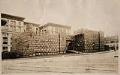
Knight Templars castle at City Hall Park, Seattle, July 1925
The Knight Templars, a Masonic order modeled after Medieval Christian Crusaders, held their 36th triennial conclave in Seattle on July 28-30, 1925. More than 10,000 participants from Washington, Oregon, Idaho, and Montana flooded into Seattle. The city was decorated with over 150 illuminated Christian crosses, the order's symbol, including a 40-foot lighted cross placed on top of the Olympic Hotel,…
ID Number:1981.7254.6
Date:1925
Photograph
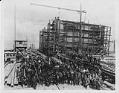
Workers at Ames Drydock, Seattle, circa 1920
St. Louis native Edgar Ames (1868-1944) moved to Seattle from Chicago in 1895 and in 1916 founded the Ames Shipbuilding & Drydock Company in Seattle. The modern plant he built on Harbor Island covered 20 acres and included a floating drydock. During World War I the yard produced 25 steel tankers and cargo steamships for the U.S. Shipping Board, and…
ID Number:1981.7286.1
Date:Circa 1920
Photograph
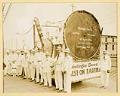
Washington Saw Works Company Golden Potlatch float, Seattle, 1912
The Tilikums of Elttaes were a fraternal, civic organization composed primarily of influential white Seattle area businessmen, who used Native American imagery to promote tourism and the economic development of the city. In July 1911 the Tilikums ("Friends" in Chinook Jargon; Elttaes is Seattle spelled backward) organized the first Golden Potlatch celebration. The Golden Potlatch was a city-wide festival held…
ID Number:1981.7351.159
Date:1912
Ephemera
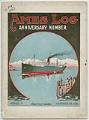
Ames Log, Issue 21, November 24, 1919
St. Louis native Edgar Ames (1868-1944) moved to Seattle from Chicago in 1895 and in 1916 founded the Ames Shipbuilding & Drydock Company in Seattle. The modern plant he built on Harbor Island covered 20 acres and included a floating drydock. During World War I the yard produced 25 steel tankers and cargo steamships for the U.S. Shipping Board, and…
ID Number:1981.7373.1
Date:1919
Photograph
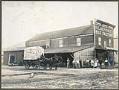
H.L. Bennett Box Factory, circa 1898
In 1898 or 1899, Harry L. Bennett opened a box factory on First Avenue South in Seattle. The factory produced wooden boxes and crates which were used by a number of local businesses for carrying and shipping goods. According to Seattle city directories, the H.L. Bennett Box Factory was in operation at various locations south of downtown Seattle until the…
ID Number:1981.7394.1
Date:Circa 1898
Poster
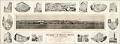
The Heart of Greater Seattle poster, June 1909
In 1909, prosperous Seattle proudly showed itself to the world as a place to do business. In addition to producing the Alaska-Yukon-Pacific Exposition world’s fair, city boosters published maps and other materials to promote commercial interests.This panorama, entitled “The Heart of Greater Seattle: The Gateway to Alaska and the Orient," shows several miles of the city’s waterfront and the Cascade…
ID Number:1982.20.47
Date:1909
Photograph
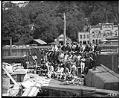
Workers in yard across from the N and S Electric Company, Seattle, circa 1903
In the late 19th century, Smith Cove was being developed as an extension of Seattle’s port facilities. This continued into the new century with the construction of the Great Northern Railroad terminus in the Interbay area and other buildings nearby. On February 1, 1902, plans were filed with the Seattle Building Inspector for a two-story machine shop to be built…
ID Number:1982.65.5
Date:1903
Postcard
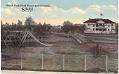
South Park Fieldhouse and playground, Seattle, circa 1913
The South Park Fieldhouse was one of the first recreation buildings constructed by the Seattle Parks Department and served the diverse community of South Park. Dedicated in 1913, the field house contained a gym complete with lockers and showers, a social room, a crafts room, kitchen, and staff room. The ball field was used by a variety of sports organizations,…
ID Number:1982.156.6
Date:Circa 1913
Ephemera
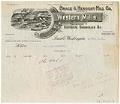
Brace & Hergert Mill Co., Western Mills receipt, April 10, 1911
In 1899, John S. Brace and Frank Hergert, purchased the Western Mill on the southern shore of Lake Union from it's founder, early Seattle settler David Thomas Denny (1832-1903). They had both previously been employed at the mill, and lived in the small community that had grown up around the mill. They changed the mill's name to Brace & Hergert,…
ID Number:1982.200.3
Date:1911