233 results for: Animals
Photograph
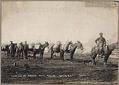
Part of the Brooks packtrain, Atlin, B.C., circa 1900
Gold was also found at Atlin, British Columbia, somewhat east of White Pass. Like Klondike stampeders, many of the gold seekers headed to Atlin used pack horses and mules to carry supplies. Carrying heavy and bulky goods was hard work, and good packtrain owners knew to load their animals carefully and feed them well.This photo, taken around 1900 by Anton…
ID Number:SHS11960
Date:Circa 1900
Photograph
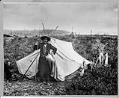
Chief Isaac of the Hän, Yukon Territory, circa 1898
The Hän people historically lived along the Yukon River near the border of eastern Alaska and western Yukon Territory. One of their largest and most important sites was Tr’ochëk, where the Klondike and Yukon Rivers meet. It was there that the Klondike Gold Rush started in 1896 and within a few years thousands of people had come to Hän lands…
ID Number:SHS12407
Date:Circa 1898
Photograph
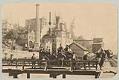
Bayview Brewery with horsedrawn wagon of beer, circa 1900
The Seattle Brewing & Malting Company was founded in 1878 and built its large new Bayview Brewery on Ninth Avenue South in 1890. When Washington state's prohibition laws closed down alcohol production in 1916, this was the state's largest brewery, and the sixth largest in the world. Rainier Beer was the firm's premium brand.This photo, taken around 1900, shows a…
ID Number:SHS12871
Date:Circa 1900
Photograph
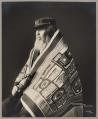
Chief Anotklosh of the Taku, Alaska, circa 1913
The Tlingit people have lived on the coast and islands of what is now southeastern Alaska since time immemorial. Tlingit society is organized into clans, which follow maternal descent. Fishing, gathering, and hunting were central to historic Tlingit lifeways – they used salmon, shellfish, seals, berries, deer, and other food sources. They used every part for different purposes, not wasting…
ID Number:SHS14163
Date:Circa 1913
Photograph
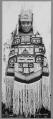
Tal Tan Billy, Alaska, circa 1898 - 1920
The Tlingit are a group of Indigenous peoples whose traditional home is on the coast of southeastern Alaska. The Tlingit, as well as neighboring groups, weave elaborate ceremonial blankets with abstracted images of animals. The blankets are called Chilkat blankets after one of the Tlingit tribes, and are traditionally worn during important events.The man in this photograph wears a woven…
ID Number:SHS14164
Date:Circa 1909
Photograph
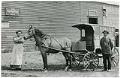
James and Ethel Stout with their delivery wagon in front of Stout Grocery, Seattle, circa 1913
James Albert Stout (1877-1962) moved to Seattle with his wife Henrietta Ethel Wilson (1876-1958) in 1910 from Michigan. They settled on Phinney Ridge in 1912 and bought a grocery store at 359 West 75th Street and later a garage and service station at 7208 Greenwood Avenue North.This image shows Ethel and James standing with their horse and delivery wagon in…
ID Number:SHS15724
Date:Circa 1913
Photograph
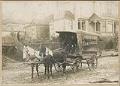
Spelger & Hurlbut Hardware delivery wagon, Seattle, circa 1900
Spelger & Hurlbut was a hardware firm run by business partners Frank P. Spelger (1864-1942) and Frederick Ward Hurlbut (1863-1936). The two men first formed their partnership in Louisville, Kentucky, and brought their business to Seattle in 1890, opening their first store at Fifth Avenue and Pike Street. In 1930 the partners retired and sold their firm to Ernst Hardware…
ID Number:SHS15944
Date:Circa 1900
Photograph
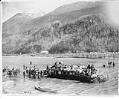
Unloading freight at Skagway, 1898
Gold seekers heading to the Klondike gold fields via the Inland Passage could land at Skagway or Dyea. At first, ships had to anchor offshore and unload their passengers and freight onto barges which carried them ashore. There was usually an extra charge for this.This 1898 photo of the tidal flats at Skagway shows freight being unloaded from a barge.…
ID Number:SHS16696
Date:1898
Photograph
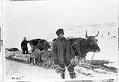
Two men and oxen on Skagway Trail, 1898
In 1897 and 1898, some of the Klondike stampeders used oxen to carry supplies along the White Pass Trail. Others used dogs, horses, mules, and even goats. Once the railroad was completed from Skagway through White Pass, there was less need for these pack animals.In this 1898 photo taken by Asahel Curtis, two men stand in the snow near their…
ID Number:SHS16716
Date:1898
Photograph
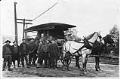
Seattle City Light line crew with horse-drawn wagon, January 1914
By the 1910s, electricity from Seattle City Light powered homes and businesses as well as the streetlights and trolleys. This photo, taken in 1914, shows a Seattle City Light line crew and their horse-drawn wagon parked near a power line. The caption on the photo notes that this was one of four line crews, and identifies the workers as, left…
ID Number:SHS17525
Date:1914