3251 results for: Seattle Post-Intelligencer, The
Photograph
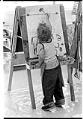
Terrez Weir painting at El Centro de la Raza's bilingual child care program, Seattle, September 1974
As more women started working outside the home, child day care and after-school activities became critical. In the Seattle area, El Centro de la Raza (The Center for People of All Races) stepped in to provide this. In 1974, El Centro opened a bilingual day care program in the basement of Beacon Hill United Methodist Church. The center, run by…
ID Number:2000.107.19740924.2.11
Date:1974
Photograph
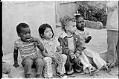
Children at El Centro de la Raza's bilingual child care program, Seattle, September 1974
As more women started working outside the home, child day care and after-school activities became critical. In the Seattle area, El Centro de la Raza (The Center for People of All Races) stepped in to provide this. In 1974, El Centro opened a bilingual day care program in the basement of Beacon Hill United Methodist Church. The center, run by…
ID Number:2000.107.19740924.2.14
Date:1974
Photograph
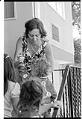
Director Lucia Rios at bilingual child care program sponsored by El Centro de la Raza, Seattle, September 1974
As more women started working outside the home, child day care and after-school activities became critical. In the Seattle area, El Centro de la Raza (The Center for People of All Races) stepped in to provide this. In 1974, El Centro opened a bilingual day care program in the basement of Beacon Hill United Methodist Church. The center, run by…
ID Number:2000.107.19740924.2.20
Date:1974
Photograph
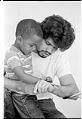
Bobby Richmond with teacher Jack Esparza at El Centro de la Raza's bilingual child care program, Seattle, September 1974
As more women started working outside the home, child day care and after-school activities became critical. In the Seattle area, El Centro de la Raza (The Center for People of All Races) stepped in to provide this. In 1974, El Centro opened a bilingual day care program in the basement of Beacon Hill United Methodist Church. The center, run by…
ID Number:2000.107.19740924.2.36
Date:1974
Photograph
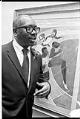
Jacob Lawrence at Seattle Art Museum, December 15, 1974
Painter Jacob Lawrence (1917-2000) was known for his portrayal of the African-American experience, using blacks and browns juxtaposed with vivid colors. Lawrence referred to his style as "dynamic cubism," though by his own account the primary influence was not so much French art as the shapes and colors of Harlem. Lawrence also taught, and spent 15 years as a professor…
ID Number:2000.107.19741215.1.10
Date:1974
Photograph
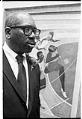
Jacob Lawrence at Seattle Art Museum, December 15, 1974
Painter Jacob Lawrence (1917-2000) was known for his portrayal of the African-American experience, using blacks and browns juxtaposed with vivid colors. Lawrence referred to his style as "dynamic cubism," though by his own account the primary influence was not so much French art as the shapes and colors of Harlem. Lawrence also taught, and spent 15 years as a professor…
ID Number:2000.107.19741215.1.13
Date:1974
Photograph
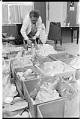
Margaret Jensen, coordinator at South Park food bank, with boxes of food, Seattle, February 4, 1975
In 1975, Seattle and the nation were still suffering from the effects of a nationwide recession brought on by the Boeing Bust and a worldwide oil crisis. Unemployment was still growing. Federal funds supported Neighbors in Need, which ran 15 King County food banks that fed some 55,000 people.When this photo was taken, Margaret Jensen had coordinated Seattle’s South Park…
ID Number:2000.107.19750204.1.16A
Date:1975
Photograph
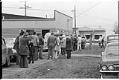
Families lined up outside South Park food bank, February 4, 1975
In 1975, Seattle and the nation were still suffering from the effects of a nationwide recession brought on by the Boeing Bust and a worldwide oil crisis. Unemployment was still growing. Federal funds supported Neighbors in Need, which ran 15 King County food banks that fed some 55,000 people, but these funds were scheduled to end soon.In this early February…
ID Number:2000.107.19750204.1.21A
Date:1975
Photograph
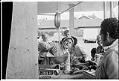
Customers on the first day of the new Inner City Farmer's Market, Seattle, August 2, 1975
In August 1975, the Inner City Farmers’ Market opened at 18th Avenue and Cherry Street in Seattle’s Squire Park neighborhood. During the harvest season, farmers from Yakima, Renton, and elsewhere drove in to provide fresh produce to Central Area residents. Here, Renton farmer Joe Torlai weighs zucchini for a customer as others look on. Caption information source: “A New Market…
ID Number:2000.107.19750802.2.17
Date:1975
Photograph
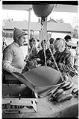
Customers on the first day of the new Inner City Farmer's Market, Seattle, August 2, 1975
In August 1975, the Inner City Farmers’ Market opened at 18th Avenue and Cherry Street in Seattle’s Squire Park neighborhood. During the harvest season, farmers from Yakima, Renton, and elsewhere drove in to provide fresh produce to Central Area residents. Here, Renton farmer Joe Torlai holds a head of romaine lettuce while he waits for payment. Caption information source: “A…
ID Number:2000.107.19750802.2.22
Date:1975