417 results for: Indigenous Peoples
Photograph
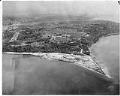
Aerial view of Fort Lawton and Magnolia, Seattle, April 24, 1964
In 1897, the city of Seattle donated land on Magnolia Bluff to the US government to build a new Army post as part of a defense system for Puget Sound; this was designated as Fort Lawton in 1900. During most of its active service, the fort served as an embarkation station where troops gathered before being sent to duty in…
ID Number:2000.107.216.25.01
Date:1964
Photograph
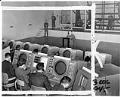
Staff at work at Fort Lawton, Seattle, January 21, 1960
In 1897, the city of Seattle donated land on Magnolia Bluff to the US government to build a new Army post as part of a defense system for Puget Sound; this was designated as Fort Lawton in 1900. During most of its active service, the fort served as an embarkation station where troops gathered before being sent to duty in…
ID Number:2000.107.216.25.03
Date:1960
Photograph
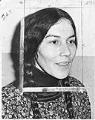
Yvonne Wanrow, February 17, 1976
Yvonne Swan Wanrow (now Yvonne Swan) is an activist advocating for the rights of Native Americans and women. She is a member of the Colville Tribes of eastern Washington. On August 11, 1972, Wanrow shot and killed a convicted sex offender when he attempted to assault her young son. She was convicted of murder and sentenced to twenty years in…
ID Number:2000.107.222.03.01
Date:1976
Photograph
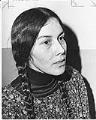
Yvonne Wanrow, February 17, 1976
Yvonne Swan Wanrow is an activist advocating for the rights of Native Americans and women. She is a member of the Colville Tribes of eastern Washington. On August 11, 1972, Wanrow shot and killed a convicted sex offender when he attempted to assault her young son. She was convicted of murder and sentenced to twenty years in prison, but appealed…
ID Number:2000.107.222.03.02
Date:1976
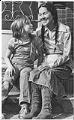
Photograph
Yvonne (Wanrow) Swan and her daughter sitting on steps, April 7, 1983
Yvonne Swan, formerly Yvonne Wanrow, is an activist advocating for the rights of Native Americans and women. She is a member of the Colville Tribes of eastern Washington. On August 11, 1972, Wanrow shot and killed a convicted sex offender when he attempted to assault her young son. She was convicted of murder and sentenced to twenty years in prison,…
ID Number:2000.107.222.03.03
Date:1983
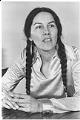
Photograph
Yvonne (Wanrow) Swan, April 7, 1983
Yvonne Swan, formerly Yvonne Wanrow, is an activist advocating for the rights of Native Americans and women. She is a member of the Colville Tribes of eastern Washington. On August 11, 1972, Wanrow shot and killed a convicted sex offender when he attempted to assault her young son. She was convicted of murder and sentenced to twenty years in prison,…
ID Number:2000.107.222.03.04
Date:1983
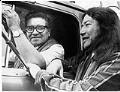
Photograph
Bernie Whitebear receiving lumber delivered by Bill Boyd, Seattle, November 10, 1974
In 1970, a group of activists led by Bernie Whitebear (1937-2000), Sin-Aikst, or Sinixt (now one of the Confederated Tribes of the Colville Reservation), began a protest which culminated in approval for the development of both a cultural center for Indigenous peoples and a municipal park on decommissioned surplus land at Seattle's Fort Lawton site. After several years spent raising…
ID Number:2000.107.230.06.01
Date:1974
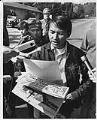
Photograph
Bernie Whitebear reading proclamation ending protester's encampment at Fort Lawton, Seattle, April 3, 1970
On March 8, 1970, about 100 members and sympathizers of United Indian People's Council (later United Indians of All Tribes Foundation, or UIATF) occupied Fort Lawton, a 1,100-acre army post in Seattle's Magnolia neighborhood. They were inspired by the passage of a bill signed by President Richard Nixon, which granted non-federal entities the ability to obtain surplus federal lands for…
ID Number:2000.107.230.06.02
Date:1970
Photograph
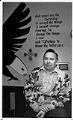
Leo Whiteford at Puyallup tribal substance-abuse treatment center, March 19, 1990
This photo shows Leo Whiteford, who was in charge of the Puyallup Indian substance abuse treatment center, sitting at the center. The Serenity Prayer, written by Reinhold Niebuhr and adopted by Alcoholics Anonymous (AA) in 1942, is painted on the wall behind him. As of 2019, the Puyallup Tribe's Community/Family Services Program continues to provide drug and alcohol screening, assessments…
ID Number:2000.107.230.07.01
Date:1990
Photograph
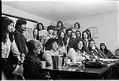
Jim Robideau and others at BIA protest, Seattle, November 6, 1972
On November 2nd, 1972, several hundred Indigenous people occupied the headquarters of the Bureau of Indian Affairs (BIA) in Washington, DC. They presented 20 demands for better conditions for Indigenous peoples in the United States, including reform of the BIA, enforcement of existing treaties, protection of Indigenous lands, and improved treaty procedures. Over the following days, BIA offices in other…
ID Number:2000.107.19721106.1.24
Date:1972