424 results for: Entertainment
Photograph
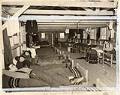
Civilian workers lying in beds at Denny Regrade Transient Camp, Seattle, April 13, 1943
In the spring of 1943, new barracks were built in the Denny Regrade area to house civilian men awaiting transport to Alaska to work with the U.S. Army Corps of Engineers. Sometimes called the Denny Regrade Transient Camp, the fifteen barracks had a total capacity of 600, and were built because of the difficulty of finding hotel accommodations for non-military…
ID Number:2000.107.176.17.03
Date:1943
Photograph
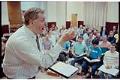
Dennis Coleman conducting Seattle Men's Chorus rehearsal, November 26, 1990
In 2016, Dennis Coleman (1949-) retired from the Seattle Men's Chorus, having served 35 years as artistic director of the organization, one of the largest gay men's choruses in the world. The chorus continues to be a treasured part of Seattle culture, touring widely, recording often, and performeding with the Seattle Symphony. In this image, singers watch director Dennis Colman…
ID Number:2000.107.177.01.01
Date:1990
Photograph
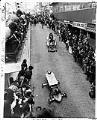
Spectators watching Pike Place Soap Box Derby, Seattle, March 26, 1972
The idea for Seattle's All-American Pike Place Soap Box Derby came from Bill King, an artist selected Mayor of Pike Place Market by leaders within the market vendor community. Federally funded and sponsored by the Seattle Arts Commission, the event started in 1970 as part of the annual Pike Place Market Street Fair and was intended to encourage the making…
ID Number:2000.107.179.21.02
Date:1972
Photograph
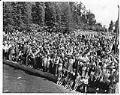
Crowd watching Pow Wow event in Seward Park, Seattle, August 7, 1949
The Rainier District Pow Wow began in the midst of the Great Depression as a day-long community picnic at Seward Park. Between 1934 and 1992, when it ended, pow wow events paralleled what was going on in the rest of the country, celebrating neighborhood commerce in the 1930s, patriotism during World War II, the Baby Boom of the late 1940s…
ID Number:2000.107.185.01.01
Date:1949
Photograph
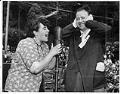
Women in husband-calling contest at Rainier District Pow Wow, Seattle, August 7, 1949
The Rainier District Pow Wow began in the midst of the Great Depression as a day-long community picnic at Seward Park. Between 1934 and 1992, when it ended, pow wow events paralleled what was going on in the rest of the country, celebrating neighborhood commerce in the 1930s, patriotism during World War II, the Baby Boom of the late 1940s…
ID Number:2000.107.185.01.02
Date:1949
Photograph
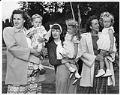
Mothers holding Baby Beauty Contest winners, Seattle, August 7, 1949
The Rainier District Pow Wow began in the midst of the Great Depression as a day-long community picnic at Seward Park. Between 1934 and 1992, when it ended, pow wow events paralleled what was going on in the rest of the country, celebrating neighborhood commerce in the 1930s, patriotism during World War II, the Baby Boom of the late 1940s…
ID Number:2000.107.185.01.03
Date:1949
Photograph
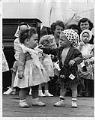
Toddlers in Pow Wow baby beauty contest, Seattle, August 9, 1954
The Rainier District Pow Wow began in the midst of the Great Depression as a day-long community picnic at Seward Park. Between 1934 and 1992, when it ended, pow wow events paralleled what was going on in the rest of the country, celebrating neighborhood commerce in the 1930s, patriotism during World War II, the Baby Boom of the late 1940s…
ID Number:2000.107.185.02.01
Date:1954
Photograph
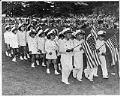
Japanese Baby Drill Team marching at Pow Wow, Seattle, August 12, 1951
The Rainier District Pow Wow began in the midst of the Great Depression as a day-long community picnic at Seward Park. Between 1934 and 1992, when it ended, pow wow events paralleled what was going on in the rest of the country, celebrating neighborhood commerce in the 1930s, patriotism during World War II, the Baby Boom of the late 1940s…
ID Number:2000.107.185.02.02
Date:1951
Photograph
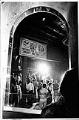
Interior of Shelly's Leg bar, Seattle, March 22, 1976
Shelly's Leg was the first publicly gay disco and bar in Seattle when it opened on November 13, 1973, in a converted hotel in Pioneer Square at the intersection of South Main Street and Alaskan Way. Co-owner Shelly Bauman (1947-2010) funded the wildly popular party spot with settlement money from an accident at the Bastille Day Parade in 1970 which…
ID Number:2000.107.189.27.01
Date:1976
Photograph
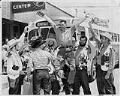
C. E. Talbert "held up" by Lake City Vigilantes, Seattle, July 3, 1956
In this image bus driver C. E. Talbert, who made the first Seattle Transit System run to Lake City, is hoisted up and jokingly "robbed" by the Lake City Vigilantes. The Vigilantes, founded in 1946 as the "Keystone Cops," was a group of civic and business leaders in Lake City who appeared at various community celebrations. Still around as of…
ID Number:2000.107.190.09.03
Date:1956