424 results for: Entertainment
Photograph
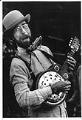
Musician performing at Folklife Festival, Seattle Center, May 28, 1989
In this image Beaureguard Victor Dobbs performs as part of the duo Gumbo Jazz during Seattle's annual Northwest Folklife Festival. The festival has been held each Memorial Day weekend since 1972 at Seattle Center as a free celebration of folk and ethnic music, dance, and arts. Caption information derived from captions written by Post-Intelligencer staff and attached to the back…
ID Number:2000.107.172.37.07
Date:1989
Photograph
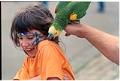
Child and parrot at Folklife Festival, Seattle Center, May 29, 1993
In this image Emma Land,5, is greeted by Cleopatra, a 16-year-old blue-fronted Amazon parrot, during Seattle's annual Northwest Folklife Festival. The festival has been held each Memorial Day weekend since 1972 at Seattle Center as a free celebration of folk and ethnic music, dance, and arts. Caption information derived from captions written by Post-Intelligencer staff.
ID Number:2000.107.172.37.09
Date:1993
Photograph
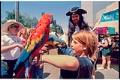
Girl holding parrots at Fremont Fair, Seattle, June 20, 1993
In this image 11-year-old Saba Presley from Port Townsend holds trained parrots at the Fremont Fair, an annual festival begun in 1971 in Seattle's Fremont neighborhood. The exotic birds are owned by Chris Biro, standing behind Saba in pirate gear, who runs "Chris Biro's Exotic Birds" educational workshops for schools. Caption information derived from captions written by Post-Intelligencer staff.
ID Number:2000.107.173.03.09
Date:1993
Photograph
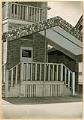
Old Rocking Chair Club, 115 14th Ave. S., Seattle, May 3, 1945
The origin of Seattle's Jazz scene grew out of the unique political and social climate of Prohibition and 1920s and was centered around Jackson Street in what is now the Chinatown - International District neighborhood. A decade later, the beginning of the swing era attracted new listeners to jazz music, particularly young people. The relatively small size of the jazz…
ID Number:2000.107.174.16.01
Date:1945
Photograph
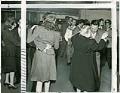
Patrons dancing during police raid at Yukon Club, Seattle, November 30, 1947
The repeal of federal prohibition in 1933 was not the end of laws controlling the sale and consumption of liquor in Seattle. Public support for prohibition had waned as liquor-related crime continued to increase and enforcement efforts continued to strain staff and budgets. However, regulating the manufacture and consumption of alcohol remained a regular part of the business of Seattle…
ID Number:2000.107.174.16.04
Date:1947
Photograph
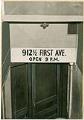
Entrance to the Stork Club, 912 1/2 1st Ave., Seattle, May 3, 1945
The repeal of federal prohibition in 1933 was not the end of laws controlling the sale and consumption of liquor in Seattle. Public support for prohibition had waned as liquor-related crime continued to increase and enforcement efforts continued to strain staff and budgets. However, regulating the manufacture and consumption of alcohol remained a regular part of the business of Seattle…
ID Number:2000.107.174.16.05
Date:1945
Photograph
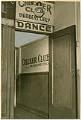
Entrance to the Checker Club, 1115 1/2 1st Ave., Seattle, May 3, 1945
The repeal of federal prohibition in 1933 was not the end of laws controlling the sale and consumption of liquor in Seattle. Public support for prohibition had waned as liquor-related crime continued to increase and enforcement efforts continued to strain staff and budgets. However, regulating the manufacture and consumption of alcohol remained a regular part of the business of Seattle…
ID Number:2000.107.174.16.06
Date:1945
Photograph
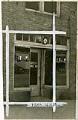
Entrance to the U&I Club, 1223 Jackson Street, Seattle, May 3, 1945
The repeal of federal prohibition in 1933 was not the end of laws controlling the sale and consumption of liquor in Seattle. Public support for prohibition had waned as liquor-related crime continued to increase and enforcement efforts continued to strain staff and budgets. However, regulating the manufacture and consumption of alcohol remained a regular part of the business of Seattle…
ID Number:2000.107.174.16.07
Date:1945
Photograph
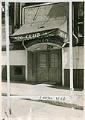
Entrance to the 420 Club, 420 2nd Ave., Seattle, May 3, 1945
The repeal of federal prohibition in 1933 was not the end of laws controlling the sale and consumption of liquor in Seattle. Public support for prohibition had waned as liquor-related crime continued to increase and enforcement efforts continued to strain staff and budgets. However, regulating the manufacture and consumption of alcohol remained a regular part of the business of Seattle…
ID Number:2000.107.174.16.08
Date:1945
Photograph
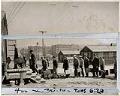
Civilian workers moving into Denny Regrade Transient Camp, Seattle, April 13, 1943
In the spring of 1943, new barracks were built in the Denny Regrade area to house civilian men awaiting transport to Alaska to work with the U.S. Army Corps of Engineers. Sometimes called the Denny Regrade Transient Camp, the fifteen barracks had a total capacity of 600, and were built because of the difficulty of finding hotel accommodations for non-military…
ID Number:2000.107.176.17.02
Date:1943