94 results for: Chicano/a Latino/a Culture
Photograph
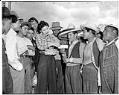
Mexican farm workers receiving paychecks, Skagit Valley, 1943
The entrance of the United States into World War II created a shortage of farm laborers, as American men left to serve in the war. In the Yakima Valley and western Washington, the labor shortage was exacerbated by the incarceration of Japanese-Americans, many of whom worked on farms. The Braceros program, a series of laws and diplomatic agreements between the…
ID Number:1986.5.2907.10
Date:1943
Photograph
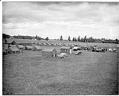
Migrant workers camp, Skagit Valley, 1943
The entrance of the United States into World War II created a shortage of farm laborers, as American men left to serve in the war. In the Yakima Valley and western Washington, the labor shortage was exacerbated by the incarceration of Japanese-Americans, many of whom worked on farms. The Braceros program, a series of laws and diplomatic agreements between the…
ID Number:1986.5.2907.12
Date:1943
Photograph
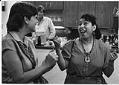
Yolanda Alaniz at victory celebration, April 27, 1992
Yolanda Alaniz was born in 1950 in Texas, and grew up in Sunnyside, Washington, in the Yakima Valley. She and her family worked as farm laborers. Alaniz began attending the University of Washington in 1969 and during her time there she became an activist for Chicano rights and women’s rights. At UW, Alaniz was a member of MEChA (Movimiento Estudiantil…
ID Number:2000.107.005.11.01
Date:1992
Photograph
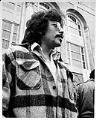
Juan Boanegra speaking at immigration rally on UW campus, Seattle, March 17, 1974
Juan Jose Bocanegra (b. 1949) was born in Mexico and raised in Corpus Christi, Texas. He moved to Seattle in 1971 to earn a graduate degree in social work from the University of Washington (UW), where he helped lead a successful campaign to diversify the UW School of Social work and create its multi-ethnic practice program. Mr. Bocanegra then began…
ID Number:2000.107.023.19.01
Date:1974
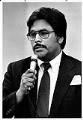
Photograph
Juan Bocanegra speaking at 34th District Democrats meeting, Seattle, July 12, 1989
Juan Jose Bocanegra (b. 1949) was born in Mexico and raised in Corpus Christi, Texas. He moved to Seattle in 1971 to earn a graduate degree in social work from the University of Washington (UW), where he helped lead a successful campaign to diversify the UW School of Social work and create its multi-ethnic practice program. Mr. Bocanegra then began…
ID Number:2000.107.023.19.02
Date:1989
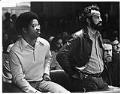
Photograph
Larry Gossett and Roberto Maestas at City Council meeting, Seattle, November 10, 1972
Larry Gossett (1945-) was born and raised in Seattle, and by the late 1960s was one of Seattle’s best known young black radicals. In 1967 he was active in the Seattle chapter of the Student Nonviolent Coordinating Committee (SNCC), and in 1968 he co-founded the University of Washington Black Student Union (UW BSU). Gossett served as executive director of CAMP,…
ID Number:2000.107.077.01.01
Date:1972
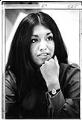
Photograph
Laverne Lane, December 3, 1971
This photo shows Laverne Lane, a Seattle University (SU) junior who was the Indian-Chicano coordinator for ethnic cultural activities at SU. Part of her job was recruiting Native students for the university from reservation high schools. Lane grew up on the Lummi reservation in Bellingham and had first hand experience of the problems that Native students from a reservation faced…
ID Number:2000.107.110.02.01
Date:1971
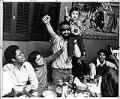
Photograph
Roberto Maestas, Larry Gossett and others celebrating in restaurant , Seattle, December 26, 1972
Seattle had a growing Latino population in the late 1960s, and activists had been pressing the city for a building in which to establish a Chicano community center. Tired of having their requests ignored, in October 1972 they took over the abandoned Beacon Hill School on 16th Avenue South and renamed it El Centro de la Raza. After a 75-day…
ID Number:2000.107.117.04.01
Date:1972
Photograph
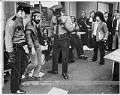
Roberto Maestas being escorted out of mayor's office, Seattle, April 5, 1973
Seattle had a growing Latino population in the late 1960s, and activists had been pressing the city for a building in which to establish a Chicano community center. Tired of having their requests ignored, in October 1972 they took over the abandoned Beacon Hill School on 16th Avenue South and renamed it El Centro de la Raza. After a 75-day…
ID Number:2000.107.117.04.02
Date:1973
Photograph
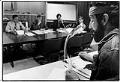
Roberto Maestas speaking to city council members, Seattle, June 11, 1974
Seattle had a growing Latino population in the late 1960s, and activists had been pressing the city for a building in which to establish a Chicano community center. Tired of having their requests ignored, in October 1972 they took over the abandoned Beacon Hill School on 16th Avenue South and renamed it El Centro de la Raza. After a 75-day…
ID Number:2000.107.117.04.03
Date:1974