165 results for: Klondike-Alaska Gold Rush
Photograph
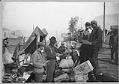
Open-air grocery store in Dawson City, circa 1898
By the end of July 1898, over 40,000 gold seekers had poured into Dawson City, Yukon Territory. Some of the city's busines was conducted in tents or in the open air.In this photo, taken around 1898 by Asahel Curtis, customers are buying pies, loaves of bread, and cans of corned beef and sausage at an open air grocery store. The…
ID Number:SHS11391
Date:Circa 1898
Photograph
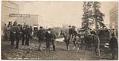
Men on the street of Atlin, British Columbia, May 24, 1899
The Klondike was not the only gold mining area. In the late 1890s, gold was also found Atlin, British Columbia, to the east of White Pass. Many gold seekers left Dawson to try their luck in Atlin.//This photo, taken by Anton Vogee, shows a group of men in the street at Atlin, B.C. Three men ride a single horse (center…
ID Number:SHS11958
Date:1899
Photograph
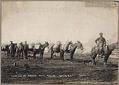
Part of the Brooks packtrain, Atlin, B.C., circa 1900
Gold was also found at Atlin, British Columbia, somewhat east of White Pass. Like Klondike stampeders, many of the gold seekers headed to Atlin used pack horses and mules to carry supplies. Carrying heavy and bulky goods was hard work, and good packtrain owners knew to load their animals carefully and feed them well.This photo, taken around 1900 by Anton…
ID Number:SHS11960
Date:Circa 1900
Photograph
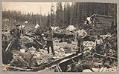
Gold miners at Spruce Creek, circa 1898
Much of the gold in the Klondike region ranged from the size of cornmeal to that of whole grains of corn. Much larger nuggets were sometimes found.This photo of miners and sluices on claim West 126 at Spruce Creek was probably taken sometime between 1897 and 1900. One of the men holds a large object, which may be the 83…
ID Number:SHS11963
Date:Circa 1898
Photograph
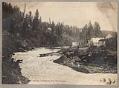
Miners at work on banks of Pine Creek, circa 1899
Between 1897 and 1900, small groups of miners staked claims along many of the Yukon region's small creeks looking for gold.This photo shows a miners' camp on Pine Creek, probably in the Yukon Territory. Tents and a shelter line the edge of the creek where a group of men are working with a sluice and a rocker. Judging by the…
ID Number:SHS11972
Date:Circa 1899
Photograph
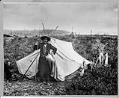
Chief Isaac of the Hän, Yukon Territory, circa 1898
The Hän people historically lived along the Yukon River near the border of eastern Alaska and western Yukon Territory. One of their largest and most important sites was Tr’ochëk, where the Klondike and Yukon Rivers meet. It was there that the Klondike Gold Rush started in 1896 and within a few years thousands of people had come to Hän lands…
ID Number:SHS12407
Date:Circa 1898
Photograph
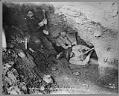
Underground mining at Gold Hill, circa 1898
In Alaska and the Yukon, placer gold was found along ancient stream beds, some of which were twelve to forty feet underground at bedrock. The gold was frozen in the dirt or gravel. Miners chopped away at the frozen earth with picks or tried to thaw it with fires or steam machines. They "drifted" all winter, digging in the direction…
ID Number:SHS12491
Date:1900
Photograph
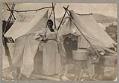
Laundry woman during gold rush, circa 1902
While some women traveled to the gold fields with their husbands, others made the trip on their own. Women worked on mining claims, taught school, or set up businesses of their own. They did laundry, cooked meals, ran hotels and dance halls, and otherwise provided services to others in the community.This photo shows an African American woman at her laundry…
ID Number:SHS12965
Date:Circa 1902
Photograph
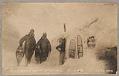
Snowshoers at Archie Burns freight office scale, December 16, 1898
Those gold seekers who traveled in winter usually used snowshoes. This photo of two showshoers at Archie Burns freight office scale was taken by Anton Vogee in the winter of 1898. The roof of the office and nearby piles of freight are covered with deep snow. The scale mentioned in the title cannot be seen in the photo, which was…
ID Number:SHS12973
Date:1898
Photograph
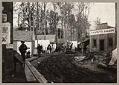
Street in Skagway during the gold rush, circa 1898
Gold seekers who were headed to the Klondike gold fields via White Pass landed in Skagway, Alaska. The weather and the conditions on the White Pass Trail were so bad that people sometimes got stuck in Skagway for several days before they could head north. Businesses in Skagway took advantage of this.This photo, taken around 1898 by Asahel Curtis, shows…
ID Number:SHS14112
Date:Circa 1898