1580 results for: City of Seattle
Photograph
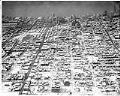
Aerial view of the Central Area after snowstorm, November 22, 1946
This aerial view of the Seattle's Central Area was taken after two days of snow blanketed the city in late November 1946. The view looks west across the Central District, toward Elliiott Bay. At the time, most of Seattle's Black population was concentrated in the Central Area because of housing and job discrimination, and restrictive covenants that prohibited the rental…
ID Number:PI27592
Date:1948
Photograph
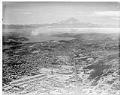
Aerial view of the Rainier Valley after snowstorm, November 22, 1946
This aerial view of the Seattle's Rainier Valley was taken after two days of snow blanketed the city in late November 1946. The view looks southeast towards Mount Rainier, with Rainier Avenue South running upward from the bottom of the frame. Sick's Stadium is visible to the left of Rainier Avenue, in the lower third of the photo.At the time…
ID Number:PI27593
Date:1946
Photograph
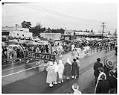
Parade in Bellevue, December 1955
The city of Bellevue, Washington, incorporated in 1953. Two years later, Bellevue was named an All-America City by the National Municipal League and Look Magazine. When the award arrived, the city closed the schools early and quickly organized a parade.This photo, taken on a rainy day in December 1955, shows the parade which celebrated Bellevue's winning the title of All-America…
ID Number:PI27860
Date:1955
Photograph
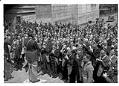
Gas mask instruction in front of the Armory, Seattle, August 2, 1942
Civilian defense units donned gas masks as the entire city went through its biggest practice air raid on August 2, 1942. Fifty-eight thousand men and women took part in the 90-minute test as army and navy planes simulated a bomb attack. The control headquarters was located at the Field Artillery Armory, where "incidents" were reported by telephone. Civilian defense workers…
ID Number:PI27963
Date:1942
Photograph
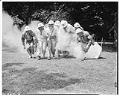
Madrona air raid wardens drilling with gas masks, August 1942
On August 2, 1942, Seattle staged a city-wide air raid drill to test its wartime emergency preparedness. Sirens wailed and army and navy planes roared low over the city as 58,000 civil defense workers handled traffic, dealt with imaginary fires, gave first aid and evacuated people from areas where bombs had supposedly landed. During the drill one theoretical bomb landed…
ID Number:PI27965
Date:1942
Photograph
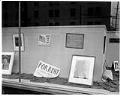
Jackson Studio store window after exclusion of Japanese Americans, Seattle, May 1942
The exclusion of Seattle's Japanese families by the federal government during World War II changed the city in numerous ways. Among the more obvious signs were the shuttered and boarded up Japanese businesses along Main, Jackson and upper King Streets. Many of the families who managed or worked in the stores and shops never returned to the city after they…
ID Number:PI28066
Date:1942
Photograph
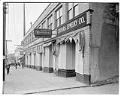
Boarded up window displays on Jackson Street after forced removal of Japanese Americans, Seattle, 1942
The exclusion of Seattle's Japanese families by the federal government during World War II changed the city in numerous ways. Among the more obvious signs were the shuttered and boarded up Japanese businesses along Main, Jackson and upper King Streets. Many of the families who managed or worked in the stores and shops never returned to the city after they…
ID Number:PI28067
Date:1942
Photograph
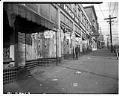
Vacant stores after exclusion of Japanese Americans, Seattle, 1942
The exclusion of Seattle's Japanese families by the federal government during World War II changed the city in numerous ways. Among the more obvious signs were the shuttered and boarded up Japanese businesses along Main, Jackson and upper King Streets. Many of the families who managed or worked in the stores and shops never returned to the city after they…
ID Number:PI28068
Date:1942
Photograph
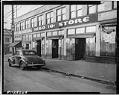
Vacant stores after exclusion of Japanese Americans, 1942
The exclusion of Seattle's Japanese families by the federal government during World War II changed the city in numerous ways. Among the more obvious signs were the shuttered and boarded up Japanese businesses along Main, Jackson and upper King Streets. Many of the families who managed or worked in the stores and shops never returned to the city after they…
ID Number:PI28069
Date:1942
Photograph
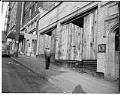
Boarded up storefronts on 6th Ave. S after forced removal of Japanese Americans, Seattle, June 1942
The exclusion of Seattle's Japanese families by the federal government during World War II changed the city in numerous ways. Among the more obvious signs were the shuttered and boarded up Japanese businesses along Main, Jackson and upper King Streets. Many of the families who managed or worked in the stores and shops never returned to the city after they…
ID Number:PI28071
Date:1942