177 results for: Immigration
Audio recording
Oral history interview with John Kusakabe, September 2, 1987
This interview with John I. Kusakabe (1922-200) was conducted by Lorraine McConaghy for the Winter Holidays Oral History Project on September 2, 1987. Kusakabe discusses his family's immigration to Denver, Colorado from Japan, moving to Seattle in 1927, and celebrations of Buddhist traditions in the Seattle area.
ID Number:2019.35.2.5
Date:1987
Audio recording
Oral history interview with Lydia Offman, September 20, 1987
This interview with Lydia Pearl Offman (1912-2012) was conducted by Lorraine McConaghy for the Winter Holidays Oral History Project on September 20, 1987. Offman discusses her childhood in Seattle, including Jewish traditions, her family's immigration to Seattle, and living in an "international" neighborhood near Providence Hospital.
ID Number:2019.35.2.7
Date:1987
Audio recording
Oral history interview with Bulent Ertur, January 22, 2002
This interview with Bulent Ertur, the owner/operator of Cafe Antalya in Capitol Hill a Turkish German immigrant, was conducted by Kate Czajkowski for the play Verbatim: In the Words of Seattle's Workforce on January 22, 2002. Note: As of 2024, MOHAI's transcripts are created in line with best practices for oral histories, including respecting and preserving the narrator's dialects and…
ID Number:2019.35.5.12
Date:2002

Ephemera
Punjab Sweets takeout menu, Kent, WA, 2019
Punjab Sweets is a vegetarian Indian bakery and restaurant in Kent, Washington. Opened just months before 9/11, it became a staple for the Sikh community during a time when they faced discrimination and hostility. The restaurant is run by the Dha family, who immigrated to Kent from India. Iqbal Dha is the founder and owner, and runs the restaurant with…
ID Number:2019.39.1
Date:2019
Photograph
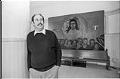
Ricardo Garcia at KDNA studio, Granger, February 13, 1992
Radio KDNA or Radio Cadena is a community public radio station broadcasting on 91.9 FM, founded in 1979 by activists Ricardo Garcia, Julio Cesar Guerrero, Rosa Ramon, and Daniel Robleski. From the beginning, it has focused on the Yakima Valley's Latino/a population, especially farm workers. KDNA broadcasts news and educational content about health, employment opportunities, English language learning, and information…
ID Number:2020.42.3.19.02.09
Date:1992
Photograph
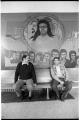
Ricardo Garcia and Bill Nicacio at KDNA studio, Granger, February 13, 1992
Radio KDNA or Radio Cadena is a community public radio station broadcasting on 91.9 FM, founded in 1979 by activists Ricardo Garcia, Julio Cesar Guerrero, Rosa Ramon, and Daniel Robleski. From the beginning, it has focused on the Yakima Valley's Latino/a population, especially farm workers. KDNA broadcasts news and educational content about health, employment opportunities, English language learning, and information…
ID Number:2020.42.3.19.02.21
Date:1992
Scrapbook
"Chinese Crisis," Seattle Daily Call, February 8, 1886
Seattle's earliest Chinese residents are believed to have arrived in the early 1860s, and while welcomed at first for the role they played in the region's development, Chinese immigrants were not allowed to vote and were subjected to numerous laws that restricted their rights. In the mid-1870s and early 1880s the national economy took a downturn, increasingly leading white workers…
ID Number:2022.3.3.2.1
Date:1886
Scrapbook
"More Quiet," Seattle Daily Call, February 9, 1886
Seattle's earliest Chinese residents are believed to have arrived in the early 1860s, and while welcomed at first for the role they played in the region's development, Chinese immigrants were not allowed to vote and were subjected to numerous laws that restricted their rights. In the mid-1870s and early 1880s the national economy took a downturn, increasingly leading white workers…
ID Number:2022.3.3.2b.1
Date:1886
Scrapbook
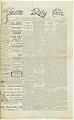
"Martial Law,"Seattle Daily Call, February 10, 1886
Seattle's earliest Chinese residents are believed to have arrived in the early 1860s, and while welcomed at first for the role they played in the region's development, Chinese immigrants were not allowed to vote and were subjected to numerous laws that restricted their rights. In the mid-1870s and early 1880s the national economy took a downturn, increasingly leading white workers…
ID Number:2022.3.3.3.1
Date:1886
Scrapbook
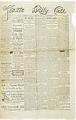
"The Situation," Seattle Daily Call, February 11, 1886
Seattle's earliest Chinese residents are believed to have arrived in the early 1860s, and while welcomed at first for the role they played in the region's development, Chinese immigrants were not allowed to vote and were subjected to numerous laws that restricted their rights. In the mid-1870s and early 1880s the national economy took a downturn, increasingly leading white workers…
ID Number:2022.3.3.3b.1
Date:1886