450 results for: Military
Photograph
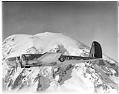
Boeing bomber B-17 in flight with Mount Rainier in the background, 1941
Under military contract, the bomber went from design to flight test in just 12 months. Making its first flight on July 28, 1935, it was Boeing's first military aircraft with a flight deck instead of an open cockpit and was armed with bombs and five .30-caliber machine guns. Boeing plants built 6,981 of more than 12,000 B-17's delivered during World…
ID Number:1986.5.159.3
Date:1941
Photograph
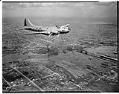
Aerial view of an early Boeing B-17E in flight, Seattle, 1941
The redesigned B-17E differed from previous models in that it included an enlarged tail, more guns and extra armor. It also included a tail gunner position, reducing its vulnerability from the rear. Only about 500 B17Es were built. This view looks northeast from the Magnolia area, showing the Ballard bridge below and Green Lake in the distance. Date photograph was…
ID Number:1986.5.186.1
Date:1941
Photograph
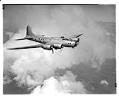
Aerial view of an early Boeing B-17E in flight, Washington State, 1941
The redesigned B-17E differed from previous models in that it included an enlarged tail, more guns and extra armor. It also included a tail gunner position, reducing its vulnerability from the rear. Only about 500 B17Es were built. Date photograph was filed at the Seattle Post-Intelligencer (date of photograph and file date may differ by a month or more): September…
ID Number:1986.5.186.3
Date:1941
Photograph
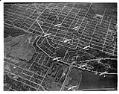
Aerial view looking down on nine Martin bombers in formation, 1938
Date photograph was filed at the Seattle Post-Intelligencer (date of photograph and file date may differ by a month or more): August 9, 1938
ID Number:1986.5.255.3
Date:1938
Photograph
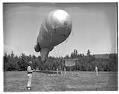
Soldiers with barrage balloon, Seattle, 1942
During World War II, barrage balloons were used to guard against low-flying enemy air attacks. Each balloon was moored to a wagon by cables, which were strong enough to destroy any aircraft colliding with them. Barrage balloons operated from Jefferson Park and other locations in the Seattle area. Handwritten on sleeve: BALLOONS, Barrage. Date photograph was filed at the Seattle…
ID Number:1986.5.643.2
Date:1942
Photograph
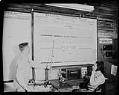
Barrage balloon operations board, Seattle, 1943
The U.S. Army operated barrage balloons as part of its defensive startegy to protect Seattle (and particularly the Boeing Company) from enemy attacks. The balloons were launched from Jefferson Park and other locations around the city. This photo shows Army personnel with a balloon operations board and monitoring equipment. Handwritten on sleeve: BALLOONS, Barrage. Date photograph was filed at the…
ID Number:1986.5.646.1
Date:1943
Photograph
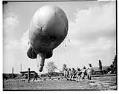
Barrage balloon, Seattle, 1943
During World War II, barrage balloons were used to guard against low-flying enemy air attacks. Each balloon was moored to a wagon by cables, which were strong enough to destroy any aircraft colliding with them. Barrage balloons operated from Jefferson Park and other locations in the Seattle area. Handwritten on sleeve: BALLOONS, Barrage. Date photograph was filed at the Seattle…
ID Number:1986.5.646.2
Date:1943
Photograph
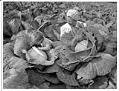
Woman and boy in a cabbage field, 1943
In 1943, workers harvested some 15,500 tons of cabbage in Bellevue and Bothell and in the White River and Sammamish Valleys. This wartime record exceeded the 1942 crop by 50%. Sauerkraut factories canned most of the crop, and the rest was dried into flakes for military meals or sold fresh to homemakers. That year, fresh cabbage was not rationed. This…
ID Number:1986.5.1346.1
Date:1943
Photograph
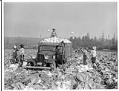
Workers harvesting cabbage near Kent, October 25, 1943
In 1943, workers harvested a record-breaking 15,500 tons of cabbage in Bellevue and Bothell and in the White River and Sammamish Valleys. Many of the wartime farmworkers were volunteers. Sauerkraut factories canned most of the crop. The rest was dried into flakes for military meals or sold fresh to homemakers.This 1943 photo shows workers harvesting cabbages at Ivan Unbedacht's farm…
ID Number:1986.5.1346.2
Date:1943
Photograph
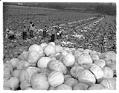
Workers harvesting cabbage, Kent Valley, 1943
This photo shows a large pile of harvested cabbage with workers at Ivan Unbedacht's farm near Kent, Washington. The entire cabbage crop on Unbedacht's 105 acre farm went to a sauerkraut factory. In 1943, workers harvested a record-breaking 15,500 tons of cabbage in Bellevue and Bothell and in the White River and Sammamish Valleys. Many of the wartime farm workers…
ID Number:1986.5.1346.3
Date:1943