185 results for: Coast Salish Peoples
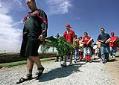
Photograph
Traditional Indigenous ceremony honoring first salmon of the season, Seattle, November 9, 2002
In November of 2002 the Seattle Post-Intelligencer completed a six-month investigation into the ecological health of the Puget Sound. They published their findings in a series of articles from November 18-22, outlining the ways in which recent efforts to curtail dumping and pollution had failed to negate decades of human-caused damage to sea life and the marine environment.In this image,…
ID Number:2000.107.20021101.CD01.011
Date:2002
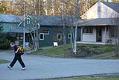
Photograph
Larry Yanity walking past homes to be razed for new casino, Arlington, January 9, 2003
In 2003 the Stillaguamish Tribe of Indians was facing high rates of unemployment, high school dropouts, teen pregnancy, alcoholism, and drug abuse. The tribe's Business Development Department began plans to build a casino on part of their traditional lands near Arlington and Stanwood, Washington. Despite some concern that it would lead to dispersal of the tribe, about 150 people were…
ID Number:2000.107.20030109.CD04.01.001
Date:2002
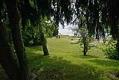
Photograph
Old Man House Park, Suquamish, June 11, 2004
One-acre Old Man House Park is but a fragment of the Kitsap peninsula land occupied by the Suquamish people. The Tribe’s “mother village” had been located here, as was Chief Seattle’s 600-foot-long cedar longhouse, known as Old Man House. After the US military burned the longhouse in 1870, the Tribe rebuilt the village, only to have the US acquire the…
ID Number:2000.107.20040611.CD01.001
Date:2004
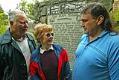
Photograph
William and Virginia Whiteley with Rob Purser at Old Man House Park, Suquamish, June 11, 2004
One-acre Old Man House Park is but a fragment of the Kitsap peninsula land occupied by the Suquamish people. The Tribe’s “mother village” had been located here, as was Chief Seattle’s 600-foot-long cedar longhouse, known as Old Man House. After the US military burned the longhouse in 1870, the Tribe rebuilt the village, only to have the US acquire the…
ID Number:2000.107.20040611.CD01.002
Date:2004
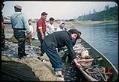
Photograph
Group of people tending to a fishing canoe, La Push, Washington, circa 1955
This photo is one of a sequence of scenes of smelt fishing taken by the photographer at La Push, Washington, on Quileute land. Here, Men and women tend to a canoe and nets on shore. Three of the individuals have been identified as Ramona Bennett, Walter Bennett, and Cynthia Davis.
ID Number:2004.43.1386
Date:Circa 1955
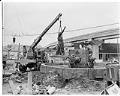
Photograph
Removal of Chief Si'ahl (Chief Seattle) statue for cleaning before the Century 21 Exposition, Seattle, 1962
The Chief Si'ahl (Chief Seattle) statue is an outdoor life-size sculpture by local artist James Wehn, installed at Tilikum Place Park, at the intersection of Fifth Avenue, Denny Way, and Cedar Street in Seattle. Si'ahl (c. 1786-1866), known to settlers as Chief Seattle, became the leader of the Suquamish and Duwamish people sometime around 1810. When settlers started moving to…
ID Number:2009.23.603
Date:1962
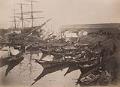
Photograph
Native American camp with canoes, Ballast Island, Washington Street, Seattle, circa 1890
By the late 19th century, most Seattle-area Native Americans had been moved to reservations and were not allowed to live in the city. Sometime before 1895, visiting Native American people started camping on Ballast Island, at the foot of Washington Street. After 1895, waterfront development forced the encampment away from here. This photo shows canoes and tents at the Ballast…
ID Number:2011.26.7.43
Date:Circa 1890
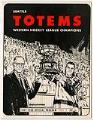
Program
Seattle Totems program, 1967
The Seattle Totems were a professional ice hockey franchise in the Pacific Coast Hockey League (later Western Hockey League or WHL) from 1944-1974 and in the Central Hockey League for the 1974-1975 season. The Totems won three WHL Lester Patrick Cup championships: 1959, 1967, and 1968.The appropriation of Indigenous names for professional sports teams has been popular since the 19th…
ID Number:2017.19.1
Date:1967
Program
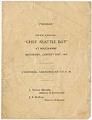
Chief Seattle Day program, 1915
The Tilikums of Elttaes were a fraternal, civic organization composed primarily of influential white Seattle area businessmen, who used Native American imagery to promote tourism and the economic development of the city. In 1912 the Tilikums ("Friends" in Chinook Jargon; Elttaes is Seattle spelled backward) organized the first Potlatch celebration (an early version of Seafair) and financed the statue of…
ID Number:2018.3.3.32
Date:1915
Photograph
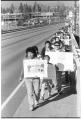
Muckleshoot memorial and protest march on Highway 164, February 27, 1991
On February 27, 1991, a group of Muckleshoot tribal members held a march along Highway 164, also called the Auburn-Enumclaw Road. The march was a memorial to tribal members who had been hit and killed by cars on the highway, as well as a protest to lower the speed limit to 45 mph on Highway 164. Despite high pedestrian traffic…
ID Number:2020.42.3.05.03.01
Date:1991