69 results for: Discrimination
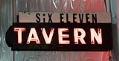
Neon Sign for Six Eleven Tavern, 1962
For many years in the mid-20th century, the only public place gay people could gather and feel relatively safe from discrimination and harrassment, were gay bars. Bars became a safe second home for them and others like them. This sign hung outside of the Six Eleven Tavern located at 611 2nd Ave in Pioneer Square, the center of gay life…
ID Number:2000.41.1
Date:1962
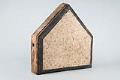
Home plate from Sick's Stadium in Seattle, ca. 1960s-1970s
Businessman Emil Sick bought the Seattle Indians baseball team in 1937. The appropriation of Indigenous names for professional sports teams has been popular since the 19th century and is one common example of discrimination and marginalization faced by Native peoples in the United States. Sick renamed the team the Seattle Rainiers and started work on a new steel and concrete…
ID Number:2001.22.32
Date:Circa 1960-1970
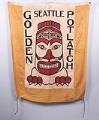
Seattle Golden Potlatch banner, ca. 1911-1940
Seattle's first Golden Potlatch was celebrated in 1911. Its organizers, a group of prominent businessmen, wanted to promote the city in hopes of continuing the boomtimes of the Gold Rush, and the attention drawn by the 1909 Alaska-Yukon-Pacific Exposition. They expected the festival to rival New Orleans' Mardi Gras and Portland's Rose Festival. For a week, residents and visitors enjoyed…
ID Number:2003.9.50
Date:1911-1940
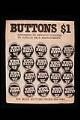
Button display for 1978 campaign, "No on I-13"
In 1973, the City of Seattle adopted a fair employment ordinance which specifically prohibited discrimination against gay people in the workplace, followed by a fair housing ordinance in 1975. Initiative 13 was a 1978 attempt to repeal these ordinances and to dissolve the City of Seattle's Office of Women's Rights. Citizens to Retain Fair Employment (CRFE) sold pins in Seattle…
ID Number:2005.21.1
Date:1978
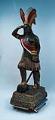
Native American carved figure for cigar store, ca. 1850
These life-sized wooden figures, popular from 1840–1890, stood at tobacco shop doorways. Some were attached or chained to the store front; others, such as this figure, were placed on wooden platforms that could be wheeled inside and out. The Native American figure alluded to the fact that the these cultures introduced Europeans to tobacco during the 1600s. This wooden sculpture,…
ID Number:2005.33.1
Date:Circa 1850
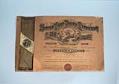
Alaska-Yukon-Pacific Exposition (AYPE) Diploma and Grand Prize ribbon awarded to Smith Cannery Machines Co. for the "Iron Chink" fish cleaning machine, 1909
The Smith Cannery Machine Company invented the world's first fish cleaning machine and was awarded the Grand Prize at the Alaska-Yukon-Pacific Exposition in Seattle in 1909. The nickname for the machine, "Iron Chink," illustrates the derogative attitude towards Chinese immigrant laborers the machine was intended to replace.
ID Number:2005.52.1
Date:1909
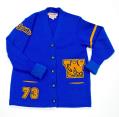
West Seattle High School blue letterman sweater, 1973
This sweater belonged to Laurie Sleight Kleespies who lettered in multiple sports at West Seattle High School after the passage of Title IX in 1972. Title IX banned discrimination on the basis of sex in federally-funded educational institutions and included sports and recreational activities. Laurie was born and raised in West Seattle and grew up playing tennis with her brother.…
ID Number:2013.131.1
Date:1973
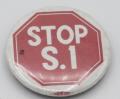
Button pin, "Stop S.1," ca. 1950
It is believed this button refers to the Smith Act, also known as the Alien Registration Act, that was enacted in 1940 and repealed in 1952. Officially, it was "an act to prohibit certain subversive activities; to amend certain provisions of law with respect to the admission and deportation of aliens; to require the fingerprinting and registration of aliens; and…
ID Number:2014.56.7
Date:Circa 1950
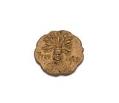
Token coin, "Tyee 1913 Klahowya! Potlatch, Seattle" made by Mayer Bros. Makers
This token is from the Seattle "Potlatch" of 1913 and made by the Mayer Bros., prominent Seattle jewelry maker. "Klahowya" means "Welcome" in Chinook jargon and “Tyee” means chief or an important person. The name "Golden Potlatch" appropriates a Chinook Jargon word describing a Native ceremony celebration and gift giving. It also reflects the importance of the Klondike Gold Rush…
ID Number:2016.34.1
Date:1913
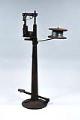
Foot-pedal stapler from the Moritani Farm on Bainbridge Island, ca. 1930s
This foot-pedal stapler, made by St. Joseph Iron Works in Michigan, was used by the Moritani family on their farm located at 542 Winslow Way W. on Bainbridge Island, ca. 1930s-1950s. It’s called a “foot-pedal stapler” because it creates and punches the staples that put the berry trays together. These shallow trays were made specifically for raspberries and Olympic Loganberries…
ID Number:2016.58.1
Date:Circa 1930