69 results for: Discrimination
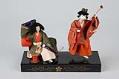
Two dolls from Boys’ Day, ca. 1930-1940
Boy’s Day (Tango no Sekku) is traditionally celebrated with the display of samurai armor or samurai dolls, and with carp streamers (koinobori). These may be dancers or performers of some kind. In 1942, the majority of the student body of the Bailey Gatzert Elementary School was of Japanese descent and all of these children were incarcerated during WWII. Because they…
ID Number:1973.5711.34
Date:1930-1940
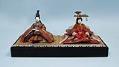
Emperor and Empress dolls from a Girls’ Day set, ca. 1930-1940
Girls’ Day (Hinamatsuri) is traditionally celebrated with a display of decorative dolls representing the Imperial Court. The dolls are arranged on a series of platforms, draped in red cloth. At the top of the display are the Emperor and Empress. In 1942, the majority of the student body of the Bailey Gatzert Elementary School was of Japanese descent and all…
ID Number:1973.5711.36
Date:1930-1940
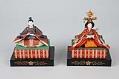
Emperor and Empress dolls from a Girls’ Day set, ca. 1930-1940
Girls’ Day (Hinamatsuri) is traditionally celebrated with a display of decorative dolls representing the Imperial Court. The dolls are arranged on a series of platforms, draped in red cloth. At the top of the display are the Emperor and Empress. In 1942, the majority of the student body of the Bailey Gatzert Elementary School was of Japanese descent and all…
ID Number:1973.5711.37
Date:1930-1940
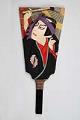
Decorative Hagoita paddle, ca. 1930-1940
This paddle is called "Hagoita" and is associated with a game called Hanetsuki. These highly decorative versions are usually not used for play but are given as a good luck gift to girls on their first New Year.In 1942, the majority of the student body of the Bailey Gatzert Elementary School was of Japanese descent and all of these children…
ID Number:1973.5711.40
Date:1930-1940
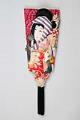
Decorative Hagoita paddle, ca. 1930-1940
This paddle is called "Hagoita" and is associated with a game called Hanetsuki. These highly decorative versions are usually not used for play but are given as a good luck gift to girls on their first New Year. In 1942, the majority of the student body of the Bailey Gatzert Elementary School was of Japanese descent and all of these…
ID Number:1973.5711.41
Date:1930-1940
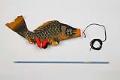
Two small carp streamers for celebrating Boys’ Day, ca. 1930-1940
Boy’s Day (Tango no Sekku) is traditionally celebrated with the display of samurai armor or samurai dolls, and with carp streamers (koinobori). In 1942, the majority of the student body of the Bailey Gatzert Elementary School was of Japanese descent and all of these children were incarcerated during WWII. Because they were only able to take a few belongings with…
ID Number:1973.5711.43
Date:1930-1940
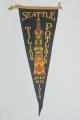
Souvenir pennant from the Seattle Tilikum Potlatch, 1914
The Golden Potlatch was a city-wide festival first held in July of 1911. It was organized by civic boosters who were hoping to capitalize on the success of the Alaska-Yukon-Pacific Exposition of 1909. The organizers called themselves the Tilikums of Elttaes (Tilikum is "Friends" in Chinook Jargon; Elttaes is Seattle spelled backward). They were a fraternal, civic organization composed primarily…
ID Number:1980.7094.317
Date:1914
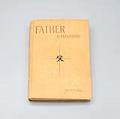
Book entitled "Father," by O. Kubushiro, 1942
This book is part of the Sagamiya Confectionery collection. The bakery, founded in 1904 and closed in the 1970s, was located at 6th and Main in the area previously known as Nihonmachi, or Japantown, now in Seattle's Chinatown International District. Sagamiya used traditional Japanese methods in the making of mochi and other wagashi (Japanese sweets). A stamp on the back…
ID Number:1984.54.117
Date:1942
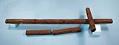
Cross that was placed in the front yard of a Bothell home, 1991
This eight foot cross, made from cherry wood fence timber, was built by a young adult Bothell resident in protest of a Black family living in the neighborhood in 1991. Several young men helped place the cross in the front yard of the family and the base was set on fire. When a member of the family flashed the porch…
ID Number:1996.44.1
Date:1991
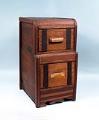
Vanity or dressing table, ca. 1942
The Iwasaki family owned the Star Lake Nursery in Auburn, Washington. During World War II, the family was incarcerated in California in the Fresno Pinedale camp, then Tule Lake Camp. This vanity was made by a family friend and given to them while they were at Tule Lake. Another friend of the family maintained the nursery back in Washington while…
ID Number:1997.46.2
Date:Circa 1942