259 results for: Innovation and Invention
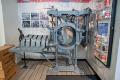
Automated salmon cleaner, "Iron Chink," made by Smith Cannery Machine Company in Seattle, 1909
The "Iron Chink" was named after the Chinese laborers it was invented to replace. Racist terms like this were painfully common in the 1900s, a time marked by anti-Chinese violence throughout the Northwest. Although much of the salmon canning process was mechanised in the early years of the 20th century, the butchering process was done by hand by laborors who…
ID Number:1970.4992
Date:1909
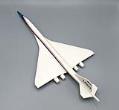
Model, Boeing 2707 Supersonic Transport (SST) airplane, ca. 1965
The Boeing SST project was hampered by design and environmental concerns. Though the U.S. government eventually cut funding to the project and prototypes were never completed, contributing to massive Boeing layoffs, this project was the first of its kind in the United States and was part of a supersonic transport technology race against the Soviets during the Cold War years,…
ID Number:1971.5158.1
Date:Circa 1965
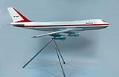
Model of the first Boeing 747 long-range transport jet airliner, ca. 1968
Boeing began building its first 747 in September 1967. Malcolm Stamper, General Manager of Boeing's 747 program put together a group of 50,000 engineers, administrators, secretaries and construction workers he called "The Incredibles." They were incredible for producing the world's largest civil airplane in only 16 months. The first 747 rolled out of Boeing's Everett plant on September 30, 1968.…
ID Number:1971.5158.3
Date:Circa 1968
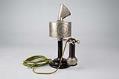
High-powered industrial telephone used by Seattle City Light, 1916
The amplifier on this telephone was invented in Seattle by P.J. Hackett and produced by the Universal High Power Telephone Company. Hackett was an assistant to William Dubilier who created the first successful wireless telephone in 1910. After Dubilier left Seattle, Hackett continued to work on microphones and amplifiers that could handle the heavy currents of radio and landline telephones…
ID Number:1972.5366.1
Date:1916
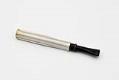
Kirsten cigar holder patented by Professor Frederick K. Kirsten, ca. 1930-1950s
Frederick K. Kirsten was a German immigrant who became a professor of aeronautical engineering. In addition to the first Boeing wind tunnel, various machinery and ship parts, Professor Kirsten also invented and patented many pipes and cigarette holders, including this example, ca. 1930s-1950s.
ID Number:1974.5841.7
Date:1930-1950
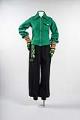
Green and black wool ski suit, ca. 1948
This ensemble was made, in part, by the Seattle Woolen Company, which began with a focus on menswear and water-repellant garments to appeal to “woodsmen, cannery workers, and fishermen.” They soon expanded to include clothing for sport and recreation, and began making more for women. As it became increasingly acceptable for women to participate in sporting activities, local companies met…
ID Number:1976.6342.C2251
Date:1948
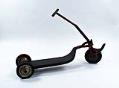
Red frame power scooter, 1931
This scooter is powered by pumping the handle and kicking. The purpose of the invention was to create a more simplified and practical toy for children. William Neuman, Jr., of Seattle designed and patented the scooter in 1931.
ID Number:1977.6433
Date:1931
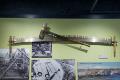
Puget Sound Falling Axe, ca. 1910
Falling or felling is a term for cutting down trees. Like most falling axes this one is double-bit, meaning it has a blade on either end. What makes the Puget Sound axe different is that the bit is longer and narrower, typically about 12 to 14 inches from end to end. It also has a longer handle. This one is…
ID Number:1978.6600.1
Date:Circa 1910
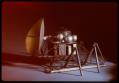
Mock up model of Boeing Lunar Landing Module, ca. 1965
During the space race of the 1960s, several aerospace companies were inventing and mocking up model lunar landing modules, including engineers at Boeing. This is a Boeing model of a lunar module that was never built. For the 1969 Apollo moon landing, Grumman Aircraft Engineering Corp. built the Lunar Excursion Module (LEM), and Boeing later designed and built the Lunar…
ID Number:1979.6767
Date:Circa 1965-1968
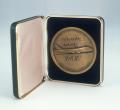
Boeing 747 medal, 1968
This bronze medal commemorates the first roll out of the Boeing 747 on September 30, 1968. Boeing began building its first 747 in September 1967. Malcolm Stamper, General Manager of Boeing's 747 program put together a group of 50,000 engineers, administrators, secretaries and construction workers he called "The Incredibles." They were incredible for producing the world's largest civil airplane in…
ID Number:1979.6799.1
Date:1968