259 results for: Innovation and Invention
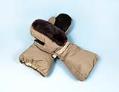
Eddie Bauer brand insulated mittens, ca. 1963
Seattle outdoorsman and entrepreneur Eddie Bauer helped bring high-quality outdoor gear to a greater population. His efforts dismissed the notion that adventure-type recreation was only for backwoods eccentrics or world-class athletes. Eddie Bauer based the design of this type of mitten on ones custom made for Jim Whittaker’s Mt. Everest expedition in 1963. In that historic expedition, the local climber…
ID Number:1967.4134.2
Date:Circa 1963
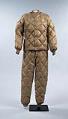
Eddie Bauer goose-down insulated jacket and pants, 1940s-1960s
Seattle outdoorsman and entrepreneur Eddie Bauer helped bring high-quality outdoor gear to a greater population. His company was established in 1920, and in 1940 Bauer patented the first quilted down jacket. His efforts dismissed the notion that adventure-type recreation was only for backwoods eccentrics or world-class athletes.
ID Number:1967.4134.3
Date:Circa 1940-1960
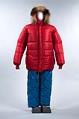
Mt. Everest Parka with wolverine fur muff and pants, 1967
Seattle outdoorsman and entrepreneur Eddie Bauer helped bring high-quality outdoor gear to a greater population. His company was established in 1920, and in 1940 Bauer patented the first quilted down jacket. Bauer supplied all of the down equipment for the 1963 American Mount Everest expeditions and used the name in its product line. In that historic expedition, the local climber…
ID Number:1967.4134.6C1288
Date:1967
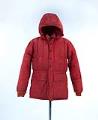
Man's goose down parka from Eddie Bauer, 1953
In 1953, a group of mountain climbers ascended Mt Godwin Austen (aka K2), the highest peak in Asia's Karakoram Range. The group spent over a month at 20,000 feet at temps as low as negative 70. All wore red windproof and water repellant parkas designed by Eddie Bauer for the ascent. The so-called "K2 Parka" later became a bestseller for…
ID Number:1967.4134.7C1289
Date:1953
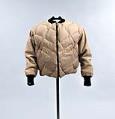
First goose-down insulated jacket made by Eddie Bauer, 1936
During an excursion on the Olympic Peninsula, local outdoorsman and retailer Eddie Bauer had his wool garments become soaked with freezing rain. He started to experience serious signs of hypothermia. After his near-death experience, Bauer set out to make a better coat for cold weather activities, one that would be lighter and warmer and allow for good air circulation. He…
ID Number:1967.4134.8
Date:1936
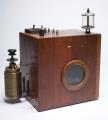
Dubilier Wireless Telephone, 1910
On June 21, 1909, at the Alaska-Yukon-Pacific Exposition (AYPE), inventor William Dubilier amazed fairgoers with his wireless telephone. The device used a capacitor, and was surprisingly small—two advances that had a big impact on radio technology in years to come.
ID Number:1968.4479.1
Date:1910
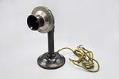
The "Wonderphone," made in Seattle by Universal High Power Telephone Co., ca. 1917
The Universal High Power Telephone Company operated in Seattle from about 1910-1933. The company produced the "Wonderphone," a specialized, high-power carbon microphone designed for early wireless arc transmitters and improved telephone line transmission. It featured a larger transmitter than the standard at the time, offering superior modulation capabilities for early radio and telephony. The Wonderphone was developed to overcome the…
ID Number:1968.4479.3a
Date:Circa 1917
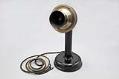
The "Wonderphone," made in Seattle by Universal High Power Telephone Co., ca. 1917
The Universal High Power Telephone Company operated in Seattle from about 1910-1933. The company produced the "Wonderphone," a specialized, high-power carbon microphone designed for early wireless arc transmitters and improved telephone line transmission. It featured a larger transmitter than the standard at the time, offering superior modulation capabilities for early radio and telephony. The Wonderphone was developed to overcome the…
ID Number:1968.4479.3b
Date:Circa 1917
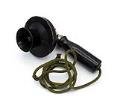
Telephone handset made by Universal High Power Telephone Co., 1917-1933
The "Wonderphone" featured a large transmitter assembly designed to overcome losses in early telephone lines. The Universal High-Powered Telephone Company was located at Carleton and Eddy Streets in Seattle.
ID Number:1968.4479.4
Date:1917-1933
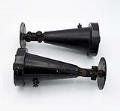
Wonderphone loudspeaker units made by Universal High Power Telephone Co. in Seattle, 1917-1933
The "Wonderphone" featured a large transmitter assembly designed to overcome losses in early telephone lines. The Universal High-Powered Telephone Company was located at Carleton and Eddy Streets in Seattle.
ID Number:1968.4479.5
Date:1917-1933