40 results for: Construction and Urban Planning
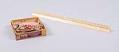
Measuring tape used by James Casey Embree, ca. 1903-1939
James Casey Embree (1881-1940) was an early Seattle civil engineer. He was responsible for surveying various Seattle neighborhoods and, from 1906-1924, he worked on the Alaskan Engineering Commission that would provide railroads to parts of Alaska following the Gold Rush of 1897.
ID Number:2018.54.4
Date:Circa 1920-1939
Triangular ruler used by James Casey Embree, ca. 1903-1939
James Casey Embree (1881-1940) was an early Seattle civil engineer. He was responsible for surveying various Seattle neighborhoods and, from 1906-1924, he worked on the Alaskan Engineering Commission that would provide railroads to parts of Alaska following the Gold Rush of 1897.
ID Number:2018.54.5
Date:Circa 1920-1939
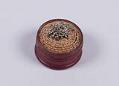
Straight pins in holder used by James Casey Embree, ca. 1903-1939
James Casey Embree (1881-1940) was an early Seattle civil engineer. He was responsible for surveying various Seattle neighborhoods and, from 1906-1924, he worked on the Alaskan Engineering Commission that would provide railroads to parts of Alaska following the Gold Rush of 1897.
ID Number:2018.54.6
Date:Circa 1920-1939

Button pin, "I Dig Downtown Metro," ca. 1990
This button promotes the project to build the Downtown Seattle Transit Tunnel (DSTT), or Metro Bus Tunnel, which opened in 1990. Only buses used the tunnel until 2005 when light rail was added.
ID Number:2019.40.16
Date:Circa 1990
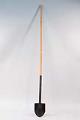
Extra-long handled shovel, or "spade," used for digging power pole holes, ca. 1910s-1940s
This type of long-handled shovel was used prior to electric augurs or hole digging machines. A crew of ten to twelve men would work together to dig power pole holes using a "spade, spoon, and bar," which consisted of a pointed shovel (spade), round shovel (spoon), and steel bar. These extra-long tools may have been used by predecessors of Joe…
ID Number:2019.68.1
Date:Circa 1910-1940
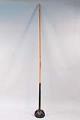
Extra-long handled shovel, or "spoon," used for digging power pole holes, ca. 1910s-1940s
This type of long-handled shovel was used prior to electric augurs or hole digging machines. A crew of ten to twelve men would work together to dig power pole holes using a "spade, spoon, and bar," which consisted of a pointed shovel (spade), round shovel (spoon), and steel bar. These extra-long tools may have been used by predecessors of Joe…
ID Number:2019.68.2
Date:Circa 1910-1940
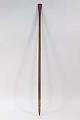
Long steel bar used for digging power pole holes, ca. 1910s-1940s
This steel bar was used along with shovels to dig power pole holes prior to electric augurs or hole digging machines. A crew of ten to twelve men would work together to dig power pole holes using a "spade, spoon, and bar," which consisted of a pointed shovel (spade), round shovel (spoon), and steel bar. These extra-long tools may have…
ID Number:2019.68.3
Date:Circa 1910-1940

Two pieces of concrete rubble salvaged from the Seattle Alaskan Way Viaduct demolition in 2019
Considered seismically vulnerable, the Alaskan Way Viaduct, a circa 1949 elevated freeway and stretch of State Route 99 that ran along the Seattle waterfront, was demolished in 2019 and replaced with a new, more tourist-friendly surface street and an underground tunnel. Concrete rubble from the demolition was collected by local organization Friends of Waterfront Seattle and given away free to…
ID Number:2019.Rubble
Date:Circa 1950
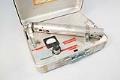
Slope Indicator 200 and case, early inclinometer probe, 1960s
The inclinometer is a tilt sensing device used to measure lateral displacement of earth or structures in various applications such as landslide monitoring, high-rise building pit excavations, bridge foundations, and more. The inclinometer was invented in the 1950s by Stanley D. Wilson, co-founder of the Slope Indicator Company (SINCO), which was established in Seattle in 1958. This device was used…
ID Number:2021.69.1
Date:Circa 1960

Friends of the Monorail T-shirt, ca. 1997-2000
Interest in expanding Seattle’s 1962 monorail line throughout the city gained momentum with signature-gathering petitions in 1994. The “Friends of the Monorail” were the main organizers and instigators of the campaign. In 1997, in spite of almost total opposition by the political establishment, city voters approved Initiative 41 for monorail expansion. Three years later voters approved an additional measure for…
ID Number:2023.Monorail.1
Date:1997-2000