112 results for: Asian American
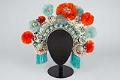
Chinese headdress worn by Lillian Goon Dip, ca. 1900-1920
This Chinese headdress belonged to Lillian Goon Dip (1900-1975) and she is shown wearing it in a circa 1925 photo in the MOHAI Collection (shs14125). Lillian was born Lillian Goon in Portland Oregon and spent most of her early life at the Milwaukee Hotel in Seattle’s Chinatown. Her father was Seattle’s Chinese consul and hotel owner, Goon Dip (circa 1862-1933).…
ID Number:1974.5914.36
Date:Circa 1900-1920

Igorot spear from the Alaska-Yukon-Pacific Exposition (AYPE) replica village, 1909
The Igorot (meaning "people of the mountains") are indigenous, Austronesian-speaking ethnic groups that live in the Cordillera Mountains of Northern Luzon, Philippines. A group of Igorot people lived in a village on the Pay Streak at the Alaska-Yukon-Pacific Exposition (AYPE), held in Seattle in 1909. During the 1899 Philippine-American War, the Igorot were allied first with the independence fighters and…
ID Number:1974.5919.118
Date:1909
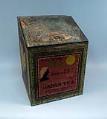
Wah-sun Tea cannister, ca. 1900-1920
This tea canister was distributed by the Wason Brothers, a food distribution company in Seattle, and then sold in Ernie Baer's store in the Rainier Valley.
ID Number:1975.6156.2
Date:Circa 1900-1920
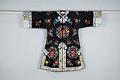
Woman's Chinese robe, ca. 1890-1910
This Chinese robe belonged to Seattleite Ann Dulien Diamond (1909-1984), who was a collector of art and clothing from Japan and China. She was born Ann Fabrikant in Russia (now Poland) in 1909 and came to the United States in 1911. She grew up in New York and moved to Seattle after her marriage to Louis T. Dulien in the…
ID Number:1978.6597.15C2364
Date:Circa 1890-1910
Igorot spear from the Alaska-Yukon-Pacific Exposition (AYPE) replica village, 1909
The Igorot (meaning "people of the mountains") are indigenous, Austronesian-speaking ethnic groups that live in the Cordillera Mountains of Northern Luzon, Philippines. A group of Igorot people lived in a village on the Pay Streak at the Alaska-Yukon-Pacific Exposition (AYPE), held in Seattle in 1909. During the 1899 Philippine-American War, the Igorot were allied first with the independence fighters and…
ID Number:1983.47.1
Date:1909
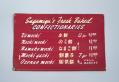
Hand-lettered sign for mochi, used at the Sagamiya Confectionery Co., ca. 1905-1950
This sign was from the Sagamiya Confectionery, formerly located at 6th and Main in the area previously known as Nihonmachi, or Japantown, now in Seattle's Chinatown International District. Sagamiya used traditional Japanese methods in the making of mochi and other wagashi (Japanese sweets). The bakery was founded in 1904 and closed in the early 1970s.
ID Number:1984.54.1
Date:1905-1950
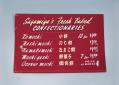
Hand-lettered sign for mochi, used at the Sagamiya Confectionary Co., ca. 1905-1950
This sign was from the Sagamiya Confectionery, formerly located at 6th and Main in the area previously known as Nihonmachi, or Japantown, now in Seattle's Chinatown International District. Sagamiya used traditional Japanese methods in the making of mochi and other wagashi (Japanese sweets). The bakery was founded in 1904 and closed in the early 1970s.
ID Number:1984.54.2
Date:1905-1950
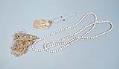
Buddhist prayer beads from Sagamiya Confectionary Co., ca. 1905-1920
These prayer beads were donated along with the other materials from the Sagamiya Confectionery, formerly located at 6th and Main in the area previously known as Nihonmachi, or Japantown, now in Seattle's Chinatown International District. Sagamiya used traditional Japanese methods in the making of mochi and other wagashi (Japanese sweets). The bakery was founded in 1904 and closed in the…
ID Number:1984.54.25
Date:1905-1920
Jyuzu (Buddhist prayer beads) bracelet from Sagamiya Confectionary Co., ca. 1905-1920
This prayer bracelet was donated along with the other materials from the Sagamiya Confectionery, formerly located at 6th and Main in the area previously known as Nihonmachi, or Japantown, now in Seattle's Chinatown International District. Sagamiya used traditional Japanese methods in the making of mochi and other wagashi (Japanese sweets). The bakery was founded in 1904 and closed in the…
ID Number:1984.54.26
Date:1905-1920
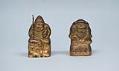
Daitoku good fortune figurine, used at Sagamiya Confectionary Co., ca. 1905-1920
Figurines of this particular god were said to provide good luck to those in the food industry. It was donated along with other materials from the Sagamiya Confectionery, formerly located at 6th and Main in the area previously known as Nihonmachi, or Japantown, now in Seattle's Chinatown International District. Sagamiya used traditional Japanese methods in the making of mochi and…
ID Number:1984.54.29
Date:1905-1920