38 results for: Cultural Appropriation
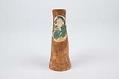
Potlatch vase with image of Kikisoblu (Princess Angeline), 1905
The image of Kikisoblu (Princess Angeline) was replicated on many souvenir items that sold in Seattle. Kikisoblu (Princess Angeline), also known in Lushootseed as Kikisoblu, Kick-is-om-lo, or Wewick, was the eldest daughter of Chief Si'ahl (Chief Seattle). She was born around 1820 and passed away in the 1890s. Due to the date stamped on the vase, this souvenir was most…
ID Number:1972.5342.1
Date:1905
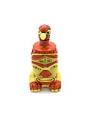
Painted ceramic Potlatch "Bug" souvenir, ca. 1911
This Potlatch “Bug” is a souvenir of the Golden Potlatch, a city-wide festival first held in July of 1911. It was organized by civic boosters who were hoping to capitalize on the success of the Alaska-Yukon-Pacific Exposition of 1909. The organizers called themselves the Tilikums of Elttaes (Tilikum is "Friends" in Chinook Jargon; Elttaes is Seattle spelled backward). They were…
ID Number:1972.5567.46
Date:1911

Painting of Indigenous person paddling a canoe on Lake Union, ca. 1900
Anna L. Fonda (1863-1917) was born in New York and settled in the Tacoma/Seattle area around 1892. She is best known for her landscapes and still-life works.
ID Number:1973.5723
Date:Circa 1900

Igorot spear from the Alaska-Yukon-Pacific Exposition (AYPE) replica village, 1909
The Igorot (meaning "people of the mountains") are indigenous, Austronesian-speaking ethnic groups that live in the Cordillera Mountains of Northern Luzon, Philippines. A group of Igorot people lived in a village on the Pay Streak at the Alaska-Yukon-Pacific Exposition (AYPE), held in Seattle in 1909. During the 1899 Philippine-American War, the Igorot were allied first with the independence fighters and…
ID Number:1974.5919.118
Date:1909
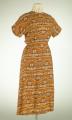
Woman's day dress with Chilkat blanket pattern, ca.1935
Viola Garfield, an anthropology professor at the University of Washington, purchased this dress at the University Book Store in 1935 or 1936. Dr. Garfield studied totem poles and other indigenous Northwest Coast material culture.
ID Number:1977.6515.C2309
Date:1935
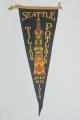
Souvenir pennant from the Seattle Tilikum Potlatch, 1914
The Golden Potlatch was a city-wide festival first held in July of 1911. It was organized by civic boosters who were hoping to capitalize on the success of the Alaska-Yukon-Pacific Exposition of 1909. The organizers called themselves the Tilikums of Elttaes (Tilikum is "Friends" in Chinook Jargon; Elttaes is Seattle spelled backward). They were a fraternal, civic organization composed primarily…
ID Number:1980.7094.317
Date:1914
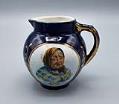
Cream pitcher with image of Kikisoblu (Princess Angeline), 1909
The image of Kikisoblu (Princess Angeline) was replicated on many souvenir items that sold in Seattle. This creamer was most likely purchased at the Alaska-Yukon-Pacific Exposition held in 1909. Kikisoblu (Princess Angeline), also known in Lushootseed as Kikisoblu, Kick-is-om-lo, or Wewick, was the eldest daughter of Chief Si'ahl (Chief Seattle). She was born around 1820 and lived until she was…
ID Number:1981.7249.1
Date:1909
Igorot spear from the Alaska-Yukon-Pacific Exposition (AYPE) replica village, 1909
The Igorot (meaning "people of the mountains") are indigenous, Austronesian-speaking ethnic groups that live in the Cordillera Mountains of Northern Luzon, Philippines. A group of Igorot people lived in a village on the Pay Streak at the Alaska-Yukon-Pacific Exposition (AYPE), held in Seattle in 1909. During the 1899 Philippine-American War, the Igorot were allied first with the independence fighters and…
ID Number:1983.47.1
Date:1909
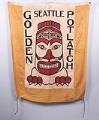
Seattle Golden Potlatch banner, ca. 1911-1940
Seattle's first Golden Potlatch was celebrated in 1911. Its organizers, a group of prominent businessmen, wanted to promote the city in hopes of continuing the boomtimes of the Gold Rush, and the attention drawn by the 1909 Alaska-Yukon-Pacific Exposition. They expected the festival to rival New Orleans' Mardi Gras and Portland's Rose Festival. For a week, residents and visitors enjoyed…
ID Number:2003.9.50
Date:1911-1940
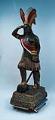
Native American carved figure for cigar store, ca. 1850
These life-sized wooden figures, popular from 1840–1890, stood at tobacco shop doorways. Some were attached or chained to the store front; others, such as this figure, were placed on wooden platforms that could be wheeled inside and out. The Native American figure alluded to the fact that the these cultures introduced Europeans to tobacco during the 1600s. This wooden sculpture,…
ID Number:2005.33.1
Date:Circa 1850