38 results for: Cultural Appropriation
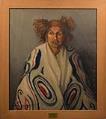
Portrait, "Makah Indian Neah Bay" by Jeanie Walter Walkinshaw, 1937
Controversial oil portrait by Jeanie Walter Walkinshaw (1885-1976). The subject in the painting, possibly fellow artist Jacob Elshin, is dressed in ceremonial dance robe and headdress. If this is indeed Elshin, it is an example of redface and the appropriation of Native culture and dress by white settlers. This was one common example of discrimination and marginalization faced by Native…
ID Number:1951.50
Date:1937
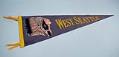
High school pennant, "West Seattle," ca. 1920-1960
This West Seattle High School pennant (date unknown) displays the controversial former "mascot" of an Indian chief. The symbol of the school has since been changed to Wildcats.The appropriation of Indigenous culture as mascots, or to market products or events, are some common examples of discrimination and marginalization faced by Native peoples in the United States.
ID Number:1961.2427.1
Date:Circa 1920-1960
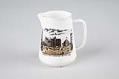
Souvenir pitcher with image of "Pioneer Place and Totem Pole," ca. 1905
This Seattle souvenir from around 1905 shows “Pioneer Place” (now called Pioneer Square) “and Totem Pole.” While difficult to spot in the illustration this refers to a Tlingit totem pole that was a tourist attraction in Seattle for decades. The totem was carved around 1870 to honor a high-ranking tribal woman named Aanséet. The pole was named Naas-shagee-yéil and it…
ID Number:1962.2550.3
Date:Circa 1905
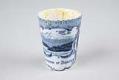
Blue and white souvenir tumbler, ca. 1909
This tumbler is a Seattle souvenir, likely from the time of the Alaska-Yukon-Pacific Exposition (AYPE) of 1909. The AYPE publicized the development of the Pacific Northwest and positioned Seattle as a gateway to Alaska and the Pacific Rim. This tumbler includes three important sites and views from around Seattle: Mount Rainier, Snoqualmie Falls, and the Totem pole at Pioneer Square.…
ID Number:1962.2652.3
Date:Circa 1909
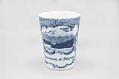
Blue and white souvenir tumbler, ca. 1909
This tumbler is a Seattle souvenir, likely from the time of the Alaska-Yukon-Pacific Exposition (AYPE) of 1909. The AYPE publicized the development of the Pacific Northwest and positioned Seattle as a gateway to Alaska and the Pacific Rim. This tumbler includes three important sites and views from around Seattle: Mount Rainier, Snoqualmie Falls, and the Totem pole at Pioneer Square.…
ID Number:1962.2652.4
Date:Circa 1909
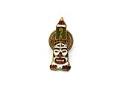
Potlatch pin, ca. 1911-1914
This pin depicts the Potlatch “Bug,” the official emblem for the Golden Potlatch, a city-wide festival first held in July of 1911. It was organized by civic boosters who were hoping to capitalize on the success of the Alaska-Yukon-Pacific Exposition of 1909. The organizers called themselves the Tilikums of Elttaes (Tilikum is "Friends" in Chinook Jargon; Elttaes is Seattle spelled…
ID Number:1962.2652.8
Date:Circa 1911-1914
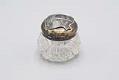
Souvenir inkwell from the Alaska-Yukon-Pacific Exposition (AYPE), 1909
This inkwell is a Seattle souvenir from the Alaska-Yukon-Pacific Exposition (AYPE) of 1909. The AYPE publicized the development of the Pacific Northwest and positioned Seattle as a gateway to Alaska and the Pacific Rim. The silver top of this inkwell shows the Totem Pole in Pioneer Square which was a major tourist attraction at the time. The totem was carved…
ID Number:1962.2838.179
Date:1909
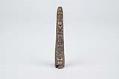
Souvenir metal totem pole from the Golden Potlatch celebration, 1912
The Golden Potlatch was a city-wide festival first held in July of 1911. It was organized by civic boosters who were hoping to capitalize on the success of the Alaska-Yukon-Pacific Exposition of 1909. The event continued for each of the next three summers before being suspended during wartime, and then was started up again as the Potlatch Festival from 1934…
ID Number:1962.2846.7
Date:1912
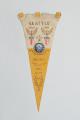
Souvenir pennant of the Golden Potlatch, 1911
The Golden Potlatch was a city-wide festival first held in July of 1911. It was organized by civic boosters who were hoping to capitalize on the success of the Alaska-Yukon-Pacific Exposition of 1909. The event continued for each of the next three summers before being suspended during wartime, and then was started up again as the Potlatch Festival from 1934…
ID Number:1963.3029
Date:1911
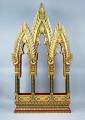
Scale model of Thai Shrine, Seattle World's Fair, 1962
The Seattle World's Fair featured the Thai Pavilion on the International Mall with exhibits designed to reflect Thailand's natural and cultural opulence. At the rear of the Pavilion, on a polished marble floor, murals of Thailand formed a backdrop for a 3-D abstract temple that set the theme of the exhibit.
ID Number:1963.3119.83
Date:1962