95 results for: Great Depression
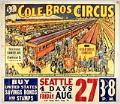
Poster
Cole Brothers Circus and War Bonds poster, August 1943
William Washington Cole (1847-1915) began "W. W. Cole's Colossal Circus" in 1871 in Quincy, Illinois. In 1904 Cole sold his circus to Canadian showman Martin Downs and his son, James, the name became "Cole Bros. Circus." After the Depression almost shut it down, in 1934 two veteran circus managers -- Jesse Adkins (1886–1940) and Zack Terrell (1879–1954) -- teamed up…
ID Number:1975.6159.3.12
Date:1943
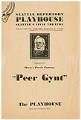
Program
Program for Peer Gynt at Seattle Repertory Playhouse, February 1931
Seattle Repertory Playhouse founders Florence and Burton James left the theater scene in New York in 1923 for teaching positions at Cornish College of the Arts. Outspoken proponents of theater's social mission, the Jameses were critical to establishing the contemporary "art theatre" scene in Seattle. The couple resigned from Cornish in 1928, when their artistic decisions and political commitments clashed…
ID Number:1977.6405.1
Date:1931
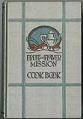
Book
Fruit and Flower Mission Cookbook, 1930
The Fruit and Flower Mission was formed in 1907 by a group of Seattle women who met in the home of Mrs. Park Weed Willis at 1316 Columbia Street. A part of the growing women's club movement in the early 20th century, the original goal of the Fruit and Flower Mission was to provide fresh flowers, fruit, and vegetables to…
ID Number:1980.7051.164
Date:1930
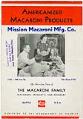
Document
Americanized Macaroni Products: An Interesting Story of the Macaroni Family, 1939
Guido P. Merlino (1903-1991) founded the Mission Macaroni Mfg. Company during the economically challenging times of the Great Depression in 1932. Originally from Taranta Peligna, Italy, Merlino immigrated to the United States in 1920 at age 17, settling near his brother in Fresno, California. He later joined his cousins in Seattle as an owner of Pacific Coast Macaroni Co., producing…
ID Number:1980.7051.187
Date:1939
Photograph
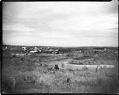
Alderwood Manor, Lynnwood, circa 1929
In 1917 Puget Mill Company began to sell off five-acre tracts of logged land in what would become Alderwood Manor. To encourage sales, a 30-acre demonstration farm was constructed. The farm included a hatchery, gardens, and orchards. Alderwood Manor became one of the largest egg producing regions during the 1920s, but when the Great Depression hit many of the farmers…
ID Number:1983.10.3630.4
Date:Circa 1929
Photograph
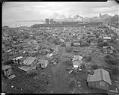
Hooverville, August 19, 1933
During the hard times of the 1930s economic depression, many unemployed and homeless people settled just west of where Seattle's Kingdome now stands. They built ramshackle houses out of scrap material and elected their own mayor. The area was nicknamed Hooverville or Hoover City by people who blamed President Herbert Hoover for causing the Depression.This 1933 photo, taken at Seattle's…
ID Number:1983.10.4435.2
Date:1933
Photograph
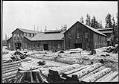
Great Western Iron and Steel Company, Kirkland, circa 1892
In 1888, Seattle investors convinced British industrialist Peter Kirk to open a steel mill in Kirkland, named in his honor. They hoped that the Moss Bay Iron and Steel Works, reorganized in 1890 as the Great Western Iron and Steel Company, would turn Kirkland into the Pittsburgh of the West. The city boomed as speculators subdivided land and built substantial…
ID Number:1983.10.6113
Date:Circa 1892
Photograph
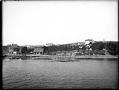
Kirkland from Lake Washington, 1906
In 1888, Seattle investors convinced British industrialist Peter Kirk to open a steel mill in Kirkland, named in his honor. They hoped that the Moss Bay Iron and Steel Works, reorganized in 1890 as the Great Western Iron and Steel Company, would turn Kirkland into the Pittsburgh of the West. The city boomed as speculators subdivided land and built substantial…
ID Number:1983.10.7887
Date:1906
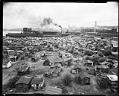
Photograph
Hooverville, Seattle, March 1933
During the hard times of the 1930s economic depression, many unemployed and homeless people settled just west of where Seattle's sports stadiums now stand. They built ramshackle houses out of scrap material and elected their own mayor. The area was nicknamed Hooverville or Hoover City by people who blamed President Herbert Hoover for causing the Depression. This 1933 photo, taken…
ID Number:1983.10.10788
Date:1933
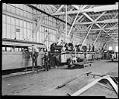
Photograph
Assembling buses at Pacific Car and Foundry, Renton, Washington, July 13, 1939
Pacific Car and Foundry Company (later called PACCAR) originally made its name building railroad cars for the logging industry. In 1936, during the Great Depression, the Renton, Washington, firm diversified into buses and trucks. Seattle and many other cities began to replace their trolleys and streetcars with buses powered by electricity or gasoline in the late 1930s, and Pacific Car…
ID Number:1983.10.13326.2
Date:1939