333 results for: World War II, 1941-1945 (WWII)
Photograph
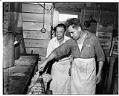
Two men cooking in a kitchen of migrant camp, 1944
The entrance of the United States into World War II created a shortage of farm laborers, as American men left to serve in the war. In the Yakima Valley and western Washington, the labor shortage was exacerbated by the incarceration of Japanese-Americans, many of whom worked on farms. The Braceros program, a series of laws and diplomatic agreements between the…
ID Number:1986.5.2905.2
Date:1944
Photograph
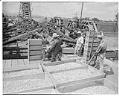
Migrant workers harvesting, Skagit Valley, 1943
The entrance of the United States into World War II created a shortage of farm laborers, as American men left to serve in the war. In the Yakima Valley and western Washington, the labor shortage was exacerbated by the incarceration of Japanese-Americans, many of whom worked on farms. The Braceros program, a series of laws and diplomatic agreements between the…
ID Number:1986.5.2907.1
Date:1943
Photograph
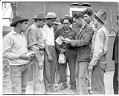
Migrant workers, Skagit Valley, 1943
The entrance of the United States into World War II created a shortage of farm laborers, as American men left to serve in the war. In the Yakima Valley and western Washington, the labor shortage was exacerbated by the incarceration of Japanese-Americans, many of whom worked on farms. The Braceros program, a series of laws and diplomatic agreements between the…
ID Number:1986.5.2907.2
Date:1943
Photograph
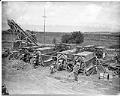
Mexican farm workers operating pea sheller, Skagit Valley, August 1943
The entrance of the United States into World War II created a shortage of farm laborers, as American men left to serve in the war. In the Yakima Valley and western Washington, the labor shortage was exacerbated by the incarceration of Japanese-Americans, many of whom worked on farms. The Braceros program, a series of laws and diplomatic agreements between the…
ID Number:1986.5.2907.6
Date:1943
Photograph
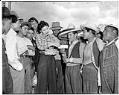
Mexican farm workers receiving paychecks, Skagit Valley, 1943
The entrance of the United States into World War II created a shortage of farm laborers, as American men left to serve in the war. In the Yakima Valley and western Washington, the labor shortage was exacerbated by the incarceration of Japanese-Americans, many of whom worked on farms. The Braceros program, a series of laws and diplomatic agreements between the…
ID Number:1986.5.2907.10
Date:1943
Photograph
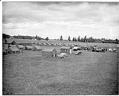
Migrant workers camp, Skagit Valley, 1943
The entrance of the United States into World War II created a shortage of farm laborers, as American men left to serve in the war. In the Yakima Valley and western Washington, the labor shortage was exacerbated by the incarceration of Japanese-Americans, many of whom worked on farms. The Braceros program, a series of laws and diplomatic agreements between the…
ID Number:1986.5.2907.12
Date:1943
Photograph
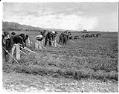
Teenage farm workers in Puyallup Valley, May 1942
World War II caused a shortage of farm labor in Washington state. Some workers had left to serve in the military. Japanese Americans, many of whom farmed on Bainbridge Island or in eastern King County, had been forcibly removed to inland incarceration camps.This May 1942 photo shows a row of high school students working as farm hands in a field…
ID Number:1986.5.2909.1
Date:1942
Photograph
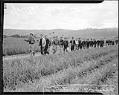
Teenage farm workers returning from the fields, June 1942
World War II caused a shortage of farm labor in Washington state. Some workers had left to serve in the military. Japanese Americans, many of whom farmed in King County, had been forcibly removed to inland incarceration camps. Governor Arthur B. Langlie declared the first week of June 1942 as "Farm Labor Week," and called for volunteers to help harvest…
ID Number:1986.5.2909.2
Date:1942
Photograph
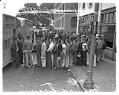
Young men board buses for the Victory Youth Farm Aid Corps, 1942
With farmers' pressing demand for workers during World War II, the United States Employment Service and the Council of Social Agencies supplied youthful workers for the Victory Youth Farm Aid Corps. Written on sleeve: FARMS, Youth workers Written on image: Farms & Farming; Youth Farm Labor [crossed out] Date photograph was filed at the Seattle Post-Intelligencer (date of photograph and…
ID Number:1986.5.2909.5
Date:1942
Photograph
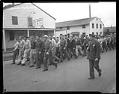
German prisoners at Fort Lawton, Seattle, 1945
In 1897, the city of Seattle donated land on Magnolia Bluff to the US government to build a new Army post as part of a defense system for Puget Sound; this was designated as Fort Lawton in 1900. During most of its active service, the fort served as an embarkation station where troops gathered before being sent to duty in…
ID Number:1986.5.3533.1
Date:1945