887 results for: Performing Arts and Music
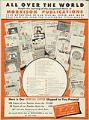
Poster
Morrison Music Company advertisement, Seattle, circa 1950
Howell O. “Morrie” Morrison (1888-1984) and Alice Nadine (Lanterman) Morrison (1982-1978) created the Pacific Northwest’s first local popular music empire, the Morrison Music Company. The Morrison’s business began as a sheet music publication company, capitalizing on the success of Alice’s hit songs, the royalties from which provided the company’s start-up capital. The sheet music company evolved into a series of…
ID Number:Lib1990.8.198
Date:Circa 1950
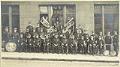
Photograph
Seattle Police Department Band, 1915
Seattle’s Police Department Band started out by playing Sunday evening concerts at police headquarters. By the 1920s, they marched in city parades, played for city celebrations, played concerts in parks, and participated in funeral ceremonies for fallen comrades. This 1915 image shows the members of the Seattle Police Department Band posed on the sidewalk outside department headquarters. That year, the…
ID Number:Lib1991.21.1
Date:1915
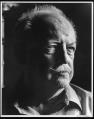
Photograph
August Werner, Seattle, March 1973
August Hansen Werner (1893-1980) settled in Seattle in 1931 after an American career as a singer, particularly in the Norwegian American community. Werner had a thirty-year career as a University of Washington School of Music professor and became known as advocate for music and the arts within Scandinavian communities. Additionally, Werner was a visual artist who created the Leif Erikson…
ID Number:Lib1993.20.231
Date:1973
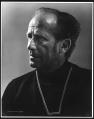
Photograph
Maestro Milton Katims, 1964
Milton Katims (1909-2006) was the director and conductor of the Seattle Symphony from 1954 until 1976. This portrait by photographer Josef Scaylea shows the conductor in 1964.Photographer Josef Scaylea (1913-2004) worked for 35 years as chief photographer for the Seattle Times, winning over 1000 awards for his photographs highlighting the scenery and people in the Pacific Northwest. He donated a…
ID Number:Lib1993.20.242
Date:1964
Photograph
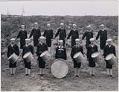
Navy marching band at U.S. Naval Training Station, University of Washington, circa 1918
In 1917, a committee from the University of Washington offered campus facilities to the United States Navy, which decided to build a temporary Naval Training Station on campus grounds along Portage Bay on Lake Union (near the area now occupied by the UW Health Sciences Center). The station was established on August 1, 1917, largely through the efforts of Navy…
ID Number:Lib1993.35.1.13
Date:Circa 1918
Music, notated
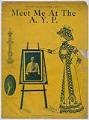
Meet Me at the A.Y.P.
Seattle held its first world’s fair, the Alaska-Yukon-Pacific Exposition (AYPE) in 1909. The fair promoted the region’s growth and prosperity that had begun with the 1897 arrival of the first shipment of Yukon gold. “Meet Me At The A.Y.P” was but one of the songs written at the time to promote the AYPE. Harry G. Robinson wrote the music and…
ID Number:Lib1993.41.343
Date:1909
Music, notated
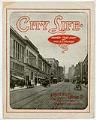
City Life
The music for "City Life," a march and two-step, was composed by George A. Edmunds and arranged by musician Sol Levi (1881-). The sheet music was printed by Liberal Music Printing Co. in Seattle, and sold at Rhodes Bros. in Seattle. Considering the date of publication, the song was likely one of many written for the Alaska-Yukon-Pacific Exposition (or A.Y.P.E.),…
ID Number:Lib1996.10.10
Date:1909
Music, notated
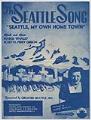
Seattle, My Own Home Town
The music and lyrics for "Seattle, My Own Home Town," were written by two women who were born elsewhere but spent their adult lives in the greater Seattle area. A songwriter born in Illinois who enjoyed considerable success in Seattle, Rosetta Adelle (Perry) Gibbon (1904-1988), also wrote "Hail, the Navy," which won a 1933 Chamber of Commerce Fleet Week contest,…
ID Number:Lib1996.28.13
Date:1952
Music, notated
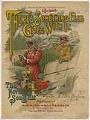
There's Something Else Goes With It!
Between 1900 and 1925 Seattle was a thriving music publishing center with at least half a dozen houses printing songs. As many as 10,000 copies of each musical piece would be sold, some of them peddled from door to door. Most songs were written by amateur or professional singers, although many songs were written as "singing commercials" to promote a…
ID Number:Lib1996.28.14
Date:1907
Music, notated
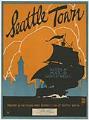
Seattle Town
The popularity of songs about cities prompted the Young Men's Business Club of Seattle to commission local composer Harold Taylor Weeks to write a song for Seattle. Weeks had already gained a national reputation for a number of hits, including his popular 1918 jazz song "Hindustan," which he wrote with Oliver G. Wallace. The Seattle Times reported that the composer…
ID Number:Lib1996.28.16
Date:1923