1580 results for: City of Seattle
Photograph
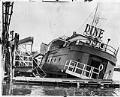
Surfside 9 listing on Lake Union, Seattle, July 23, 1966
Seattle's floating restaurant Surfside 9 opened about 1960 on a converted ferry originally built in 1900 as the steamer City of Everett, a member of Puget Sound's Mosquito Fleet. Docked at the south end of Lake Union from about 1950, the restaurant was initially known as the Four Winds, famous as the headquarters of the Seafair Pirates. This image of…
ID Number:2000.107.185.26.03
Date:1966
Photograph
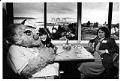
Wheedle sitting with diners at the Space Needle, Seattle, July 19, 1982
In 1974, the children's book "Wheedle on the Needle" debuted, offering a fanciful explanation of the blinking red light atop Seattle's Space Needle. Seattleites warmed to the gentle character of Wheedle, eventually adopting it as an icon of their city. From 1978-1985, the Seattle Supersonics made a redesigned Wheedle their mascot, and for most of the 1990s the Wheedle was…
ID Number:2000.107.185.26.08
Date:1982
Photograph
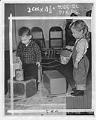
Two young children playing at B. F. Day school, Seattle, November 17, 1950
In this image, Peter Gray and Judith Frankle, students in the Toddler's Class (now part of the Seattle Preschool Program), play with pails and brushes at B. F. Day Elementary School in Seattle's Fremont neighborhood, the oldest continually operating school in the city. Caption information also derived from captions written by Post-Intelligencer staff and attached to the back of the…
ID Number:2000.107.185.35.02
Date:1950
Photograph
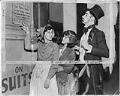
Blaine School students in costume viewing Catharine Blaine plaque, Seattle, January 12, 1954
In 1853, Catharine (Paine) Blaine (1829-1908) and her husband, Reverend David E. Blaine (1824-1900), arrived in Seattle from Seneca Falls, New York. The Blaines were Methodist missionaries and David founded Seattle's first church, called the Little White Church. Catharine became Seattle's first teacher and school administrator when she was hired to teach children in a "select," or private, school located…
ID Number:2000.107.186.07.01
Date:1954
Photograph
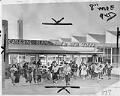
Blaine School students exiting at end of day, Seattle, October 14, 1952
In 1853, Catharine (Paine) Blaine (1829-1908) and her husband, Reverend David E. Blaine (1824-1900), arrived in Seattle from Seneca Falls, New York. The Blaines were Methodist missionaries and David founded Seattle's first church, called the Little White Church. Catharine became Seattle's first teacher and school administrator when she was hired to teach children in a "select," or private, school located…
ID Number:2000.107.186.07.03
Date:1952
Photograph
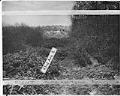
View of sanitary landfill on 43rd. Ave. S. looking south, Seattle, December 1942
This image shows a sanitary landfill on 43rd Ave S between Genesee St. and Lake Washington Boulevard. A sanitary landfill, or fill, was a type of garbage dump in which trash was deposited, spread out and compacted, then covered in several inches of dirt. The city had proposed to expand the fill eastward to 45th Ave S, but residents of…
ID Number:2000.107.188.33.01
Date:1942
Photograph
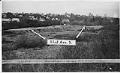
View of sanitary landfill on 43rd. Ave. S. looking west, Seattle, December 1942
This image shows a sanitary landfill on 43rd Ave S between Genesee St. and Lake Washington Boulevard. A sanitary landfill, or fill, was a type of garbage dump in which trash was deposited, spread out and compacted, then covered in several inches of dirt. The city had proposed to expand the fill eastward to 45th Ave S, but residents of…
ID Number:2000.107.188.33.02
Date:1942
Photograph
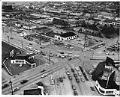
Aerial view of South Lake Union neighborhood looking northeast, 1953
The shores of Lake Union were inhabited by the Duwamish people since time immemorial. They called the lake “meman hartshu” meaning “little lake” and had several settlements surrounding it. Seattle’s Cascade or South Lake Union (SLU) neighborhood began growing quickly in the 1880s, as the city expanded north from downtown. Industrial activity on the lake increased in the early 1900s…
ID Number:2000.107.188.36.01
Date:1953
Photograph
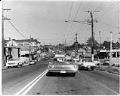
Street in the Central Area, Seattle, May 8, 1969
The Central Area (also called the Central District or the CD) is one of the oldest residential neighborhoods in Seattle. Known historically as Seattle’s Black neighborhood, other ethnic groups also called the Central Area home in the early 20th century. Urban development in the area first accelerated in the 1890s, as Seattle’s population rapidly grew. The first settlers were mostly…
ID Number:2000.107.189.01.01
Date:1969
Photograph
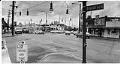
Intersection of Beacon Avenue S. and 15th Avenue S., 1974
Beacon Hill was originally inhabited by the Duwamish people, who had a village called Tal-tal-kus at the western foot of the hill. Settlers began moving onto Beacon Hill in the 1850s and growth accelerated around the turn of the 20th century. Starting in the 1920s, Chinese, Italian, and Japanese immigrants settled in Beacon Hill. After World War II, the trend…
ID Number:2000.107.189.08.01
Date:1974