780 results for: Activism

Scrapbook
"The Chinese," Seattle Daily Post-Intelligencer, February 9, 1886
Seattle's earliest Chinese residents are believed to have arrived in the early 1860s, and while welcomed at first for the role they played in the region's development, Chinese immigrants were not allowed to vote and were subjected to numerous laws that restricted their rights. In the mid-1870s and early 1880s the national economy took a downturn, increasingly leading white workers…
ID Number:2022.3.3.23.3
Date:1886
Scrapbook
"Martial Law," Seattle Daily Post-Intelligencer, February 10, 1886
Seattle's earliest Chinese residents are believed to have arrived in the early 1860s, and while welcomed at first for the role they played in the region's development, Chinese immigrants were not allowed to vote and were subjected to numerous laws that restricted their rights. In the mid-1870s and early 1880s the national economy took a downturn, increasingly leading white workers…
ID Number:2022.3.3.24.3
Date:1886
Scrapbook
"What the Press Say," Seattle Daily Post-Intelligencer, February 11, 1886
Seattle's earliest Chinese residents are believed to have arrived in the early 1860s, and while welcomed at first for the role they played in the region's development, Chinese immigrants were not allowed to vote and were subjected to numerous laws that restricted their rights. In the mid-1870s and early 1880s the national economy took a downturn, increasingly leading white workers…
ID Number:2022.3.3.25.1
Date:1886
Scrapbook
"The Crisis Past," Seattle Daily Post-Intelligencer, February 11, 1886
Seattle's earliest Chinese residents are believed to have arrived in the early 1860s, and while welcomed at first for the role they played in the region's development, Chinese immigrants were not allowed to vote and were subjected to numerous laws that restricted their rights. In the mid-1870s and early 1880s the national economy took a downturn, increasingly leading white workers…
ID Number:2022.3.3.25.2
Date:1886
Scrapbook
"The Situation," Seattle Daily Post-Intelligencer, February 11, 1886
Seattle's earliest Chinese residents are believed to have arrived in the early 1860s, and while welcomed at first for the role they played in the region's development, Chinese immigrants were not allowed to vote and were subjected to numerous laws that restricted their rights. In the mid-1870s and early 1880s the national economy took a downturn, increasingly leading white workers…
ID Number:2022.3.3.25.3
Date:1886
Scrapbook
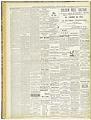
"To the Citizen Soldiers and People," Seattle Daily Post-Intelligencer, February 12, 1886
Seattle's earliest Chinese residents are believed to have arrived in the early 1860s, and while welcomed at first for the role they played in the region's development, Chinese immigrants were not allowed to vote and were subjected to numerous laws that restricted their rights. In the mid-1870s and early 1880s the national economy took a downturn, increasingly leading white workers…
ID Number:2022.3.3.26.2
Date:1886

Scrapbook
"Good Order Once More," Seattle Daily Post-Intelligencer, February 12, 1886
Seattle's earliest Chinese residents are believed to have arrived in the early 1860s, and while welcomed at first for the role they played in the region's development, Chinese immigrants were not allowed to vote and were subjected to numerous laws that restricted their rights. In the mid-1870s and early 1880s the national economy took a downturn, increasingly leading white workers…
ID Number:2022.3.3.26.3
Date:1886
Scrapbook
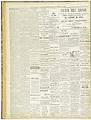
"An Accurate View," Seattle Daily Post-Intelligencer, February 13, 1886
Seattle's earliest Chinese residents are believed to have arrived in the early 1860s, and while welcomed at first for the role they played in the region's development, Chinese immigrants were not allowed to vote and were subjected to numerous laws that restricted their rights. In the mid-1870s and early 1880s the national economy took a downturn, increasingly leading white workers…
ID Number:2022.3.3.27.2
Date:1886
Scrapbook
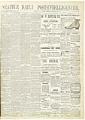
"Sixth Day," Seattle Daily Post-Intelligencer, February 14, 1886
Seattle's earliest Chinese residents are believed to have arrived in the early 1860s, and while welcomed at first for the role they played in the region's development, Chinese immigrants were not allowed to vote and were subjected to numerous laws that restricted their rights. In the mid-1870s and early 1880s the national economy took a downturn, increasingly leading white workers…
ID Number:2022.3.3.28.1
Date:1886
Scrapbook
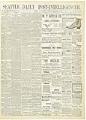
"Military Rule," Seattle Daily Post-Intelligencer, February 16, 1886
Seattle's earliest Chinese residents are believed to have arrived in the early 1860s, and while welcomed at first for the role they played in the region's development, Chinese immigrants were not allowed to vote and were subjected to numerous laws that restricted their rights. In the mid-1870s and early 1880s the national economy took a downturn, increasingly leading white workers…
ID Number:2022.3.3.29.1
Date:1886