517 results for: Museum of History
Photograph
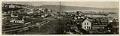
Panorama of Seattle, 1878
This image of Seattle faces southeast across Pike Street, toward Mount Rainier, which is just visible beyond Beacon Hill. According to "Choir's Pioneer Directory," at the time of this photo Seattle had 4,681 residents, 586 buildings, and seven miles of wooden sidewalks. The large square building in the upper left corner of the frame is the Territorial University, built in…
ID Number:1980.6923.38
Date:1878
Photograph
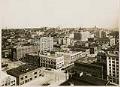
View of 3rd Ave. and Pine St., Seattle, 1908
This image of the intersection of Third Avenue and Pine Street was taken facing southeast. Visible in the distance are the two towers of St. James Cathedral (completed in 1907) at 804 Ninth Avenue in the First Hill neighborhood. A transitional period in transportation is illustrated here, with a streetcar, several automobiles, and horse-drawn vehicles in evidence. Signs in image:…
ID Number:1980.6923.48
Date:1908
Photograph
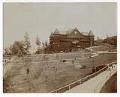
Lake Washington Casino at Leschi Park, Seattle, circa 1890
As Seattle’s wooded hills were logged, realtors developed the newly cleared lands. To attract prospective buyers to the new house lots, developers built a cable car line from Pioneer Square to the shores of Lake Washington, at what is now Leschi, and opened an amusement park there in 1888. Seattle entertainment manager John Cort opened his Lake Washington Casino (later…
ID Number:1980.6923.61
Date:Circa 1890
Photograph
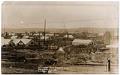
Southwest view of Seattle after fire, July 1889
The Great Fire of June 6, 1889 was a significant turning point in Seattle's history and changed both the physical and political landscapes of the City, destroying 100 acres of Seattle's business district and waterfront. The city didn't take much time to mourn; most businesses decided to rebuild where they had been, and rebuilding began almost immediately, creating a building…
ID Number:1980.6923.118
Date:1889
Photograph
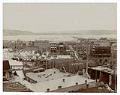
South-facing view of Seattle after fire, July 1889
The Great Fire of June 6, 1889 was a significant turning point in Seattle's history and changed both the physical and political landscapes of the City, destroying 100 acres of Seattle's business district and waterfront. The city didn't take much time to mourn; most businesses decided to rebuild where they had been, and rebuilding began almost immediately, creating a building…
ID Number:1980.6923.122
Date:1889
Photograph
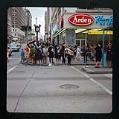
People waiting to cross Pike Street at Fourth Ave., Seattle, 1967
This image shows the intersection of 4th Avenue and Pike Street, looking south along 4th. A Sander's Lunch diner advertising Arden ice cream is visible across the intersection, in the Joshua Green Building. The Carroll's Fine Jewelry street clock, which is now located at the Museum of History & Industry in Lake Union Park, can be seen behind the Pike…
ID Number:1980.7067.1.17.1
Date:1967
Photograph
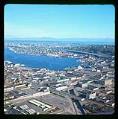
Aerial view of Lake Union, taken from the southwest, Seattle, 1967
In 1882, lumber mills, shipyards, and other industries began to move north from Seattle’s waterfront to the shores of Lake Union. Industrial development continued with Seattle’s growth but shrank after World War II. A few shipyards remained by the late 1960s, plus some light industry, apartments, parking lots, fast food restaurants, marinas, and a seaplane terminal. Roads were built and…
ID Number:1980.7067.1.24.1
Date:1967
Photograph
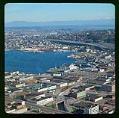
Aerial view of South Lake Union looking northeast, Seattle, 1967
In 1882, lumber mills, shipyards, and other industries began to move north from Seattle’s waterfront to the shores of Lake Union. Industrial development continued with Seattle’s growth but shrank after World War II. A few shipyards remained by the late 1960s, plus some light industry, apartments, parking lots, fast food restaurants, marinas, and a seaplane terminal. Roads were built and…
ID Number:1980.7067.1.36.1
Date:1967
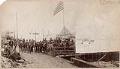
Photograph
Men posing outside Jewel Saloon after Great Seattle Fire, June 1889
The Great Fire of June 6, 1889 was a significant turning point in Seattle's history and changed both the physical and political landscapes of the City. The fire completely consumed 100 acres of Seattle's business district and waterfront. The city didn't take much time to mourn; most businesses decided to rebuild where they had been, and quickly set up tents…
ID Number:1980.7092.1
Date:1889
Ephemera
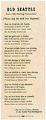
Old Seattle lyrics, circa 1940
Carlton Fitchett (1886-1946) was a reporter and columnist for the Seattle Post-Intelligencer from 1917 to 1946 and known for writing rhymes. He was friends with Ivar Haglund, owner of Ivar's restaurant chain and noted local showman, and would write songs about the region for Haglund to sing.This card, with the lyrics for "Old Seattle," includes notes to sing to the…
ID Number:1981.7200.23
Date:Circa 1940