1344 results for: Seattle Center
Photograph
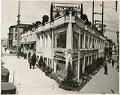
Malmo Seed and Nursery Company, Seattle, circa 1931
Norwegian immigrant Charles Malmo (1862-1938) established the Malmo Seed and Nursery Company in Seattle in 1893. Malmo propagated nursery stock of ornamental shrubs, which previously had to be imported from Japan, Holland, and England. In the 1920s, Malmo sold seeds and nursery stock from a store at 6th Avenue and Stewart Street at Westlake, and at his Georgetown rhododendron fields…
ID Number:2000.107.176.33.02
Date:Circa 1931
Photograph
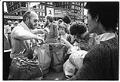
J. B. McCrummen selling produce at U-District farmers market, Seattle, April 23, 1977
In this image J. B. McCrummen, director of the Hunger Action Center, sells produce at a farmer's market on University Way NE in Seattle's University District neighborhood. Beginning in 1993, the Neighborhood Farmers Market Alliance sought to bring various farmer's markets in Seattle together and as of 2018 operates eight markets around the city, including the U-District Neighborhood Farmers Market.…
ID Number:2000.107.176.37.09
Date:1977
Photograph
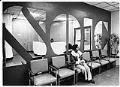
Florence Donley sitting in lobby of new SOIC building, Seattle, January 17, 1975
The Seattle Opportunities Industrialization Center, or SOIC (pronounced "So I see"), was established in 1966, largely through a grant from the Office of Economic Opportunity, the federal agency funding "war on poverty" programs. Modeled after the original OIC started by a Philadelphia minister two years earlier, the community-based program recruited, trained and placed unemployed people in the labor market. The…
ID Number:2000.107.177.26.01
Date:1979
Photograph
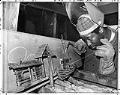
Man learning to weld at SOIC, August 1975
The Seattle Opportunities Industrialization Center, or SOIC (pronounced "So I see"), was established in 1966, largely through a grant from the Office of Economic Opportunity, the federal agency funding "war on poverty" programs. Modeled after the original OIC started by a Philadelphia minister two years earlier, the community-based program recruited, trained and placed unemployed people in the labor market. The…
ID Number:2000.107.177.26.02
Date:1975
Photograph
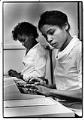
Women learning keypunch at SOIC, January 1979
The Seattle Opportunities Industrialization Center, or SOIC (pronounced "So I see"), was established in 1966, largely through a grant from the Office of Economic Opportunity, the federal agency funding "war on poverty" programs. Modeled after the original OIC started by a Philadelphia minister two years earlier, the community-based program recruited, trained, and placed unemployed people in the labor market. The…
ID Number:2000.107.177.26.03
Date:1979
Photograph
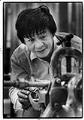
Plumbing student at SOIC, January 15, 1979
The Seattle Opportunities Industrialization Center, or SOIC (pronounced "So I see"), was established in 1966, largely through a grant from the Office of Economic Opportunity, the federal agency funding "war on poverty" programs. Modeled after the original OIC started by a Philadelphia minister two years earlier, the community-based program recruited, trained and placed unemployed people in the labor market. The…
ID Number:2000.107.177.26.04
Date:1979
Photograph
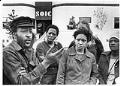
Students complaining about problems at SOIC, April 21, 1980
The Seattle Opportunities Industrialization Center, or SOIC (pronounced "So I see"), was established in 1966, largely through a grant from the Office of Economic Opportunity, the federal agency funding "war on poverty" programs. Modeled after the original OIC started by a Philadelphia minister two years earlier, the community-based program recruited, trained and placed unemployed people in the labor market. The…
ID Number:2000.107.177.26.05
Date:1980
Photograph
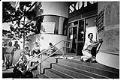
Teacher and class on steps of closed SOIC building, August 1986
The Seattle Opportunities Industrialization Center, or SOIC (pronounced "So I see"), was established in 1966, largely through a grant from the Office of Economic Opportunity, the federal agency funding "war on poverty" programs. Modeled after the original OIC started by a Philadelphia minister two years earlier, the community-based program recruited, trained and placed unemployed people in the labor market. The…
ID Number:2000.107.177.26.06
Date:1986
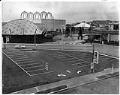
Photograph
Empty parking lot after World's Fair, Seattle, December 28, 1962
After the closing of the Seattle World's Fair, or Century 21 Exposition, on October 21, 1962, nearby parking prices plummeted. At this lot, near what is now the Pacific Science Center, prices dropped from $2.00 for the day to 50 cents.The domed building to the left was the Ford exhibit. Queen Anne Hill and what is now Climate Pledge Arena…
ID Number:2000.107.178.04.01
Date:1962
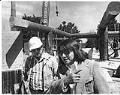
Photograph
Bernie Whitebear and Pete Schnurman at Daybreak Star construction site, Seattle, June 9, 1976
In 1970, a group of activists led by Bernie Whitebear (1937-2000), Sin-Aikst, or Sinixt (now one of the Confederated Tribes of the Colville Reservation), began a protest which culminated in approval for the development of both a cultural center for Indigenous peoples and a municipal park on decommissioned surplus land at Seattle's Fort Lawton site. After several years spent raising…
ID Number:2000.107.178.13.01
Date:1976